




|
In the glittering heart of the financial district, a petrochemicals company was a rising star. For years, it had dazzled investors with soaring quarterly earnings and a balance sheet that gleamed with promise. The board, laser-focused on financial metrics, steered the company with one eye firmly on the next profit report, dismissing whispers of environmental concerns as distractions unworthy of attention. Then came an acquisition offer: a jaw-dropping, high-value bid from a leading energy company in the Arabian Gulf. Headlines in the Western and regional media exploded: "A Breakthrough Deal that Could Redefine the Petrochemicals Industry." The stock price soared, and the company seemed destined for an era of unprecedented success. But beneath the surface, a dark secret simmered. Buried deep within the company’s sprawling manufacturing complex was a ticking environmental time bomb, a toxic waste plume quietly seeping into the surrounding groundwater. This hazard had been documented internally but was never reported to regulators, investors, or the public. Environmental risks were outside the company’s narrow financial lens, as it was driven by short-gain profit and since this risk doesn’t show on the balance sheet, then it’s irrelevant. But then a media report revealed the environmental damage. Stock prices plummeted, shareholder confidence evaporated, and the company that once promised unstoppable growth found itself grappling with crisis. The price of neglecting sustainability was more than lost deals or stock value, as it was the very survival of the corporation itself. The cautionary tale of the imaginary company echoes a real-world episode involving Santos Ltd., an Australian energy producer, whose $19 billion takeover bid by a consortium led by Abu Dhabi National Oil Company (ADNOC) unraveled dramatically, as reported by Bloomberg on September 18, 2025. As ADNOC and its partners were finalizing the deal, media reports surfaced about a significant methane leak at one of Santos’s operations, an environmental risk that had not been fully disclosed or integrated into the acquisition’s risk assessment apparently. Methane is a potent greenhouse gas with a much higher short-term warming effect than carbon dioxide, making leak disclosures critical for accurate environmental and financial risk assessments. This revelation has alarmed the suitors and cast doubt on the company’s transparency and sustainability practices. Within weeks, ADNOC backtracked, and the once-promising transaction collapsed. 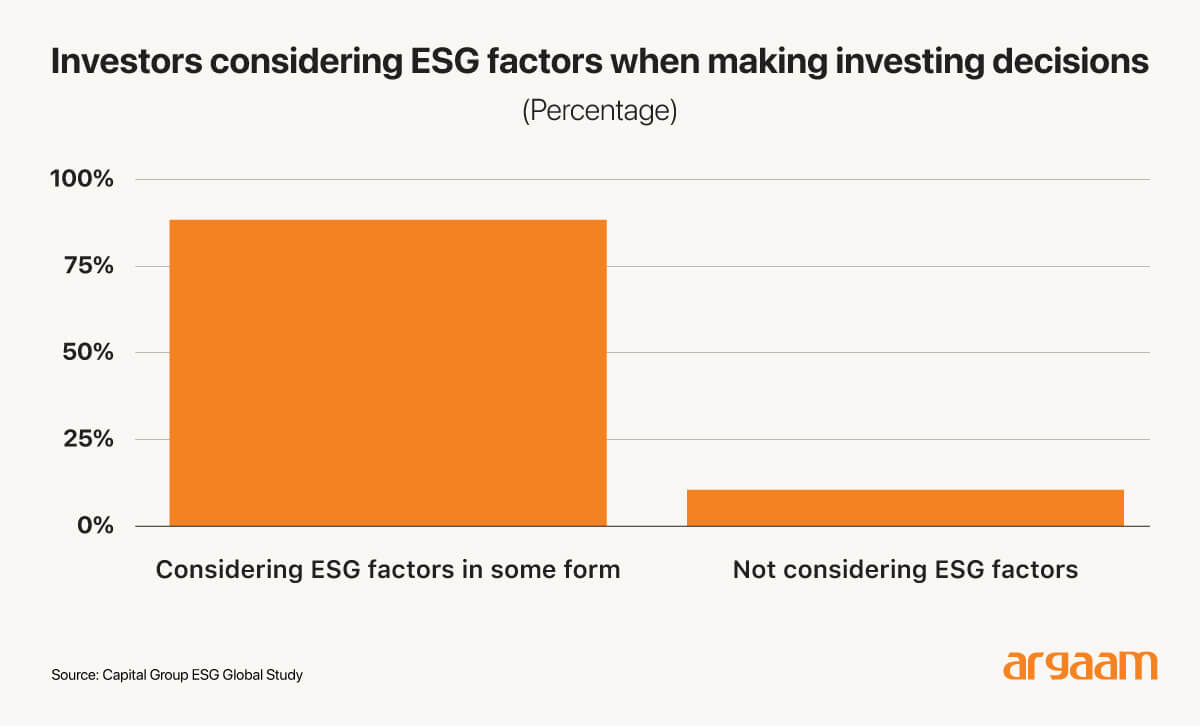 Future-Proofing Fossil Fuels in the Arabian Gulf Major energy companies in the Arabian Gulf have recognized the growing risks associated with stranded fossil fuel assets amid tightening global climate policies, particularly those emerging from stringent European regulations. (Click here to read our analysis on The Public Investment Fund and the European Union: Maintaining the pursuit of growth opportunities despite new regulations.) In response, these companies have embarked on new Environmental, Social, and Governance (ESG) strategies aimed at gradually aligning their operations with the transition to a low-carbon economy and increase their ESG assets. They seek to future-proof their asset portfolios, ensuring that reserves and infrastructure remain economically viable despite rising regulatory pressures. The concept of how to mitigate the risks of “stranded assets” in the energy sector has been thoroughly tackled by an essay titled “Integrating Environmental Risks into Asset Valuations: The potential for stranded assets and the implications for long-term investors.” The essay was written by the former CEO of HSBC Climate Change Centre of Excellence and was published by the International Institute for Sustainable Development. This strategic shift helps to mitigate the risk of premature asset write-offs and market devaluations by promoting cleaner technologies, diversifying energy sources, and improving transparency. These all are critical steps to sustain investor confidence and comply with evolving international standards amid increasing global ESG assets. Global ESG assets are projected to reach a total of $50 trillion by the end of 2025. They refer to the total value of investments that incorporate Environmental, Social, and Governance (ESG) criteria into their analysis and decision-making processes. These assets are managed by investors who consider sustainability factors alongside traditional financial metrics to promote responsible investing. 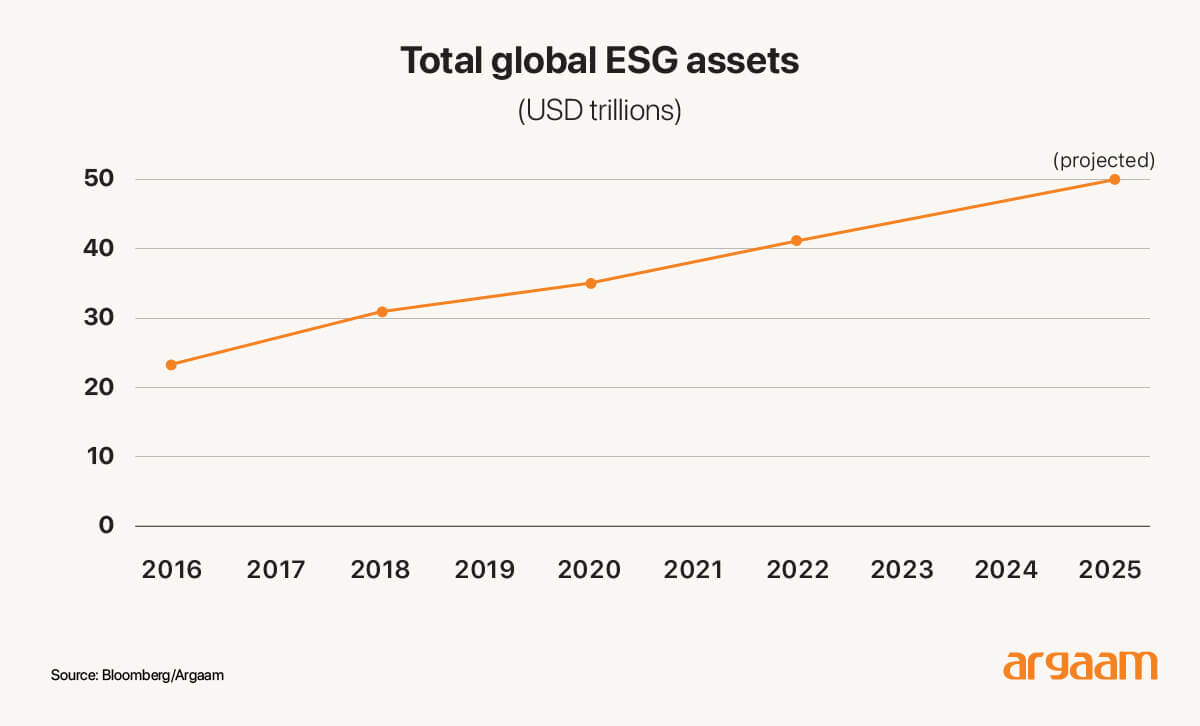 Why High Sustainability Firms Win Over Long-Term Investors Dedicated investors, characterized by lower portfolio turnover and a longer-term focus, tend to value firms that integrate environmental, social, and governance (ESG) considerations into their business models because these firms demonstrate greater resilience and potentially lower risk over time. This’s the conclusion of a Harvard Business School study titled “The Impact of Corporate Sustainability on Organizational Processes and Performance.”
PS : In the context of investment, "turnover" refers to the frequency with which an investor buys and sells securities within their portfolio over a given period. A high portfolio turnover means the investor frequently trades stocks, leading to short holding periods, while a low turnover indicates that the investor holds onto stocks for longer durations with less frequent trading. From an economic perspective, High Sustainability firms mitigate what is known as agency risk and reputational risk by embedding sustainability in their operations and governance structures.
PS : Agency risk arises when there is a conflict of interest between shareholders and agents managers, where managers may pursue personal goals at the expense of shareholders' wealth. This reduces the likelihood of value-destroying events, such as costly environmental disasters or social controversies, which are more prevalent in Low Sustainability firms. Consequently, dedicated investors are willing to bear the initial costs of sustainability efforts (such as investments in cleaner technologies or stakeholder engagement) because they anticipate these will generate higher long-term expected returns and lower systematic risk. Conversely, Low Sustainability firms often externalize environmental and social costs, treating them as negative externalities not priced into their operations. When environmental damage occurs, such as an oil spill or gas leak at an energy project, these firms face significant liability costs, remediation expenses, regulatory fines, and loss of social license to operate. These costs represent unanticipated negative shocks to firm value and increase idiosyncratic risk, adversely affecting investor confidence. This strategic approach can be conceptualized as an example of preventive investment, which, although costly upfront, reduces future expected losses and stability in cash flows. Dedicated investors recognize this and prefer to commit capital to such firms, anticipating stable, sustainable returns rather than volatile, risk-prone outcomes.
PS : Idiosyncratic risk, in the context of investment, refers to the risk that is unique to a specific company or asset, as opposed to market-wide or systematic risk that affects all investments. This risk arises from factors specific to the company such as management decisions, product recalls, regulatory changes impacting the firm. ● Example of idiosyncratic risk: A company faces a product recall due to a safety defect, impacting only its stock price. ● Example of systematic risk: A global economic recession causes a broad market downturn, affecting nearly all stocks.
Looking at performance over the longer term, sustainable funds have outperformed their traditional counterparts. A hypothetical investment of $100 in a sustainable fund in December 2018 would have grown to $136 by December 2024, compared to $131 for a traditional fund over the same period, according to an analysis by Morgan Stanley Institute for Sustainable Investing. Mergers and acquisitions have become the preferred route for climate tech exits, with 95% of transactions in 2024 taking this form. Corporates are increasingly acquiring clean energy, mobility, and waste-to-energy firms to accelerate their own sustainability transitions. Notably, major energy companies are reorienting towards low-carbon infrastructure, as demonstrated by ExxonMobil’s $4.9 billion acquisition of Denbury Inc., which gained them access to one of the largest CO₂ pipeline networks in the US. These pipelines are used primarily for carbon capture and storage (CCS) purposes. They capture CO₂ emissions from industrial sources and transporting them to underground storage sites to reduce greenhouse gas emissions. 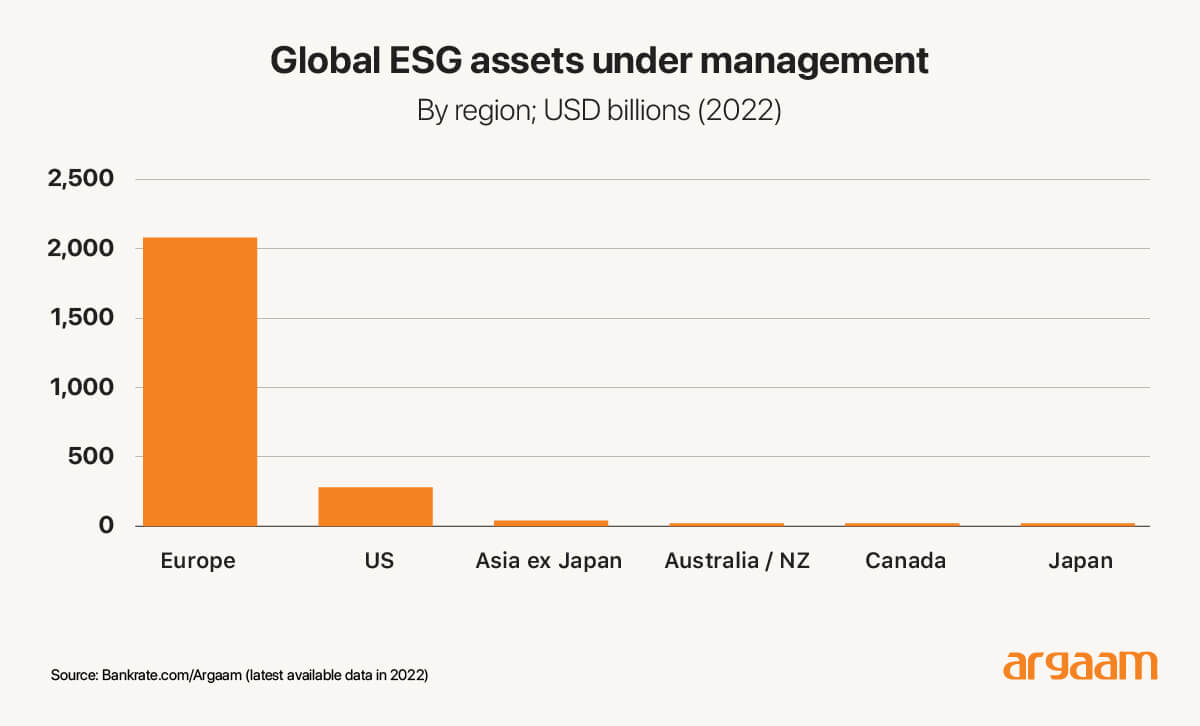
PS : Global ESG assets under management are a subset of total ESG assets, specifically reflecting professionally managed funds dedicated to ESG investing. But we believe the main takeaway and the impost important lesson from this analysis is that even despite efforts by firms to adapt to a low-carbon future, failure to manage and disclose environmental risks in a transparent way can result in valuation penalties and loss of investor trust when or if they are discovered. Empirical and extensive academic research proves that there’s a strong positive correlation between market value and ESG performance. It shows that firms with better ESG scores generally enjoy higher market valuations. Specifically, the environmental pillar shows the highest correlation, followed by social and governance pillars. This pattern suggests that investors in the energy sector place a greater premium on environmental sustainability than on social or governance factors. |
|
|

|

|


|


|