




|
Despite its explosive recent growth and skyrocketing public engagement, women’s football remains dramatically undervalued, presenting a compelling investment opportunity primed for first movers. Drawing upon robust economic and financial insights from recent empirical research, we see a blueprint for Saudi investors to strategically acquire clubs in the best women’s league in the world in terms of financial results; namely, the Women’s Super League (WSL). In this analysis, we argue that Saudi Arabia’s experience in scaling and commercializing football on the men’s side positions it well to enter and accelerate growth in women’s competitions domestically and in other top leagues globally. Starting investments at the top tier circumvents the long developmental timelines and financial uncertainty associated with lower levels, allowing for participation in a mature market with established fanbases, broadcast arrangements, and sponsorship partnerships, as we explain later in this analysis. Financial indicators point to a market inefficiency ripe for capital injection in the world’s top women football league, as the supply of facilities and club investments has historically lagged behind rising demand. By integrating women’s sport into its Vision 2030 objectives, Saudi Arabia not only addresses longstanding cultural barriers but also taps into the economic potential of a growing women’s sports market. Saudi Arabia’s sports sector market value is projected to hit $22.4 billion by 2030, up from $7.16 billion in 2023, driven by a surge in investments and a growing focus on the sector, according to data from the Saudi Investment Forum. 
The Saudi investment in football has already seen the country successfully bid for the 2034 FIFA World Cup. In 2027, the Kingdom is set to host the Asian Cup. While the promotion of gender equality and women’s empowerment in sport remains a vital social objective for Saudi Arabia, our focus here transcends mere gender advocacy. Investing in women’s football is fundamentally a fiscally sound business strategy underpinned by tangible market dynamics and scalable growth potential, as shown later in our analysis. 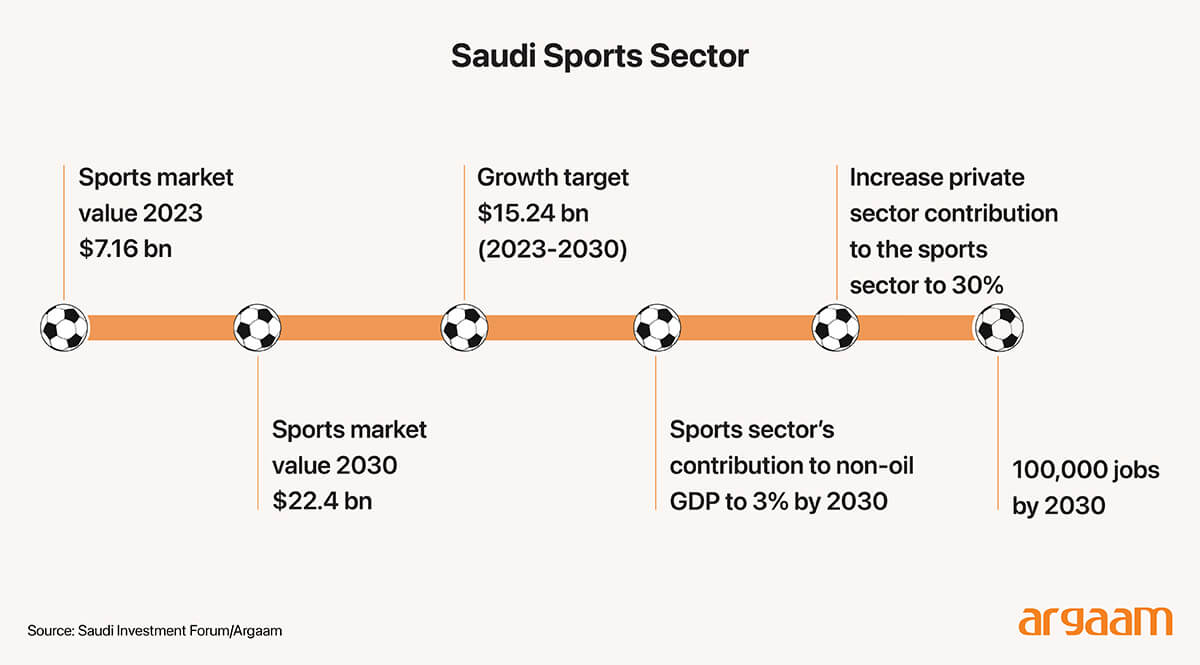
Solid financial benchmarks for Saudi investors Our financial case for investing in women’s football is grounded in the clear evidence of the recent international tournaments’ success, namely, the Women’s World Cup and UEFA Women’s Championship. We see the substantial growth in revenues, fan engagement, sponsorship, and broadcasting rights from these events as strong indicators of the sport’s commercial potential. The last FIFA Women’s World Cup Australia & New Zealand 2023 engaged audiences around the world with record-breaking numbers of 2 billion viewers across multiple platforms. The final between Spain vs England had a reach of 222.02 million viewers, according to FIFA data. FIFA’s revenue from the tournament amounted to around $1.2 billion, 23% of which came from television broadcasting rights, 39% from marketing rights, 15% from licensing rights, 7% from hospitality rights and tickets. The biggest source of income was the sale of marketing rights from commercial partnerships, which delivered %456 million, more than 101% compared to what the organisers had anticipated. Licensing rights generated revenue of USD 181 million, also exceeding the budget (USD 160 million). The average attendance rate across the tournament’s 64 matches was 87%, with two million tickets sold, the highest since the tournament began in 1970 in Italy. 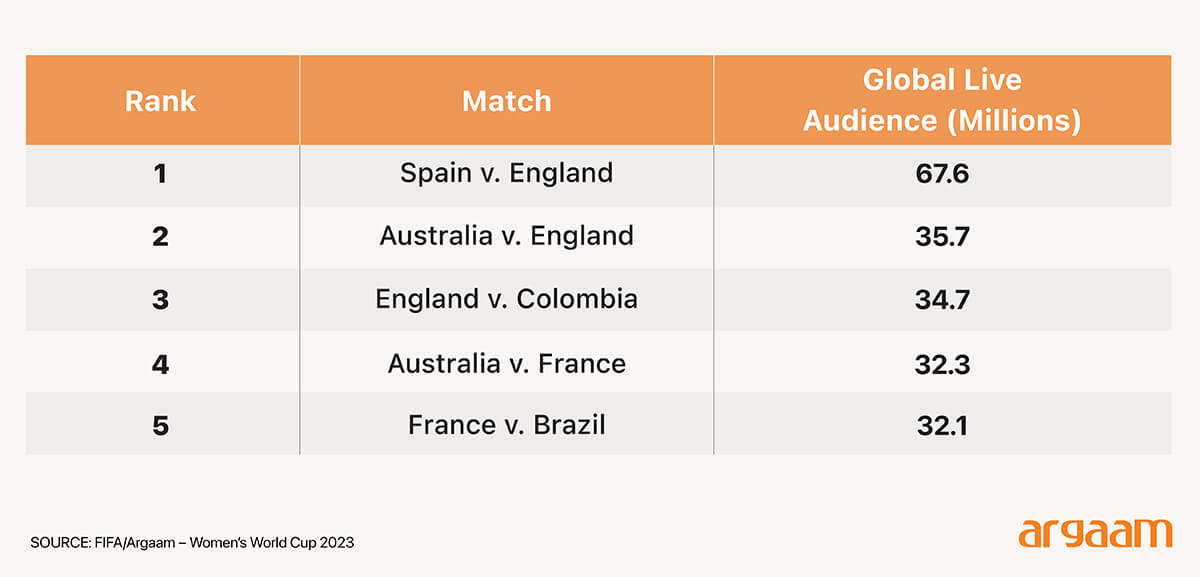
The 2025 UEFA Women's Championship proved to be an immense success, with a cumulative live audience of over 400 million. A global audience of over 45 million viewers watched the final, according to data from UEFA. In the UK alone, television audiences for the tournament shattered records, with a peak live audience of 12.2 million viewers tuning in to watch the final match, 20% of these were from 16-35’s, highlighting strong engagement from younger audiences, according to data from the BBC. 29 of the 31 matches reached full attendance in stadium in the host country Switzerland. Approximately 35% of tickets were acquired by international fans, underscoring the event’s global appeal. The total stadium attendance reached 657,291 at the conclusion of the tournament on Sunday, 27 July, making it the best-attended Women’s European Championship ever. The tournament generated $44 million in sponsorship revenue, marking a 144% increase from the 2022 tournament. The broadcast was estimated at $99.54 million, marking a significant 142% increase in value from Euro 2022, which stood at $41.03 million. This growing interest and investment demonstrate that women’s football is a promising and financially viable market. Based on this rationale, we argue that directing Saudi resources towards investing in international women’s football represents a strategic opportunity likely to yield sustainable returns and contribute to the long-term development of the sport. 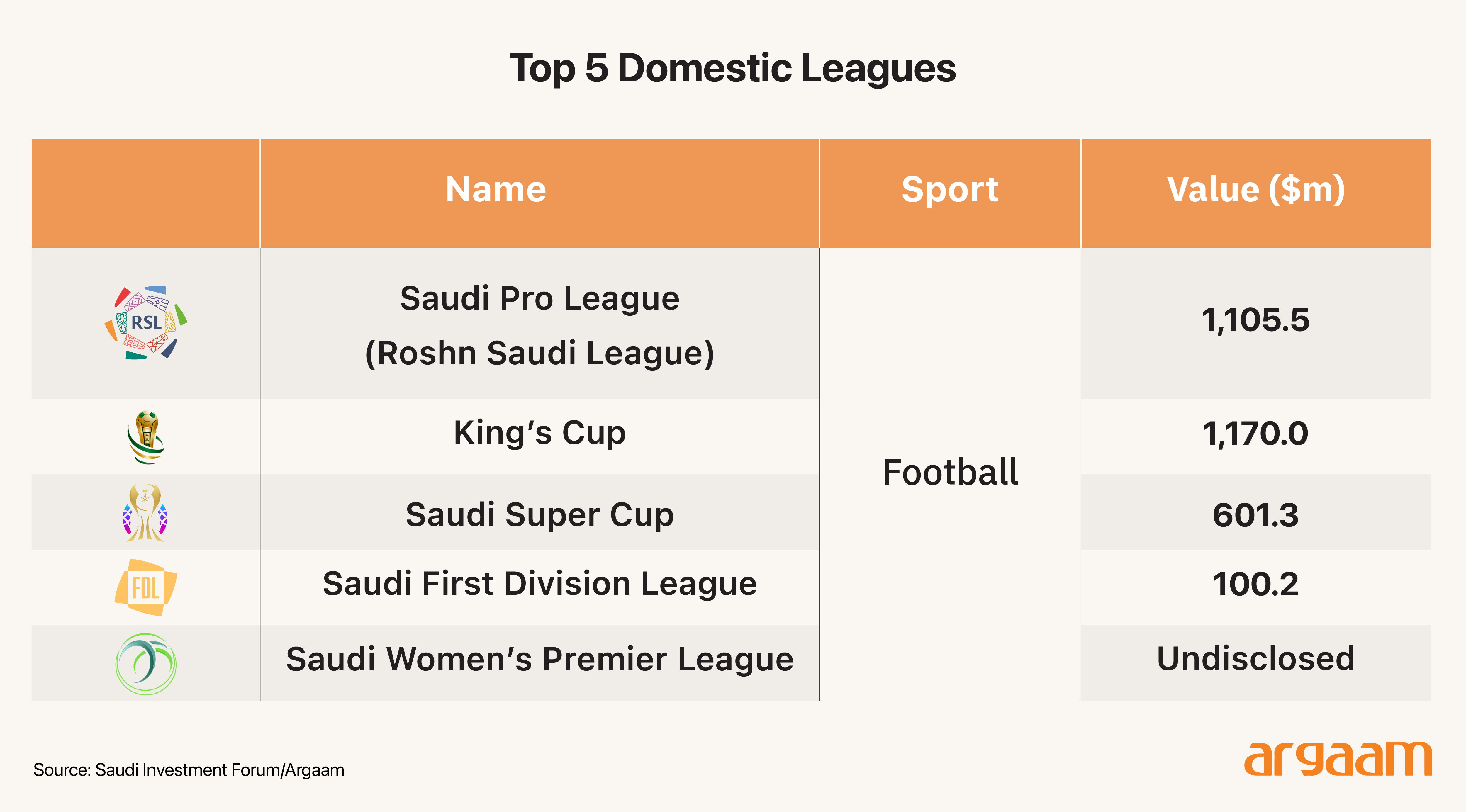 
Why the WSL is Saudi Investors’ Best Bet in Women’s Football? The Women’s Super League (WSL) presents a uniquely compelling financial opportunity for Saudi investors seeking to allocate resources within women’s football. It is considered the best women's football in the world in terms of financial results. In 2023/24, the WSL clubs generated aggregate revenue of £65m, a 34% increase on the prior season (£48m). The revenue is projected to reach £100m by 2025/26, according to latest data from Deloitte. Broadcast revenue increased by 40% to £10m, making up 16% of total revenue. Unlike lower divisions or developmental levels, the WSL operates as a fully professional, rapidly growing league with proven commercial appeal. While the Public Investment Fund (PIF) has taken a significant step by acquiring a majority stake in Newcastle United, whose women's team is not yet competing at the Super League level, this leaves a clear strategic opening. (click here for our detailed analysis on the PIF investment in Newcastle United). Saudi investors aiming to maximize financial returns would benefit from targeting leading clubs already competing in the WSL. 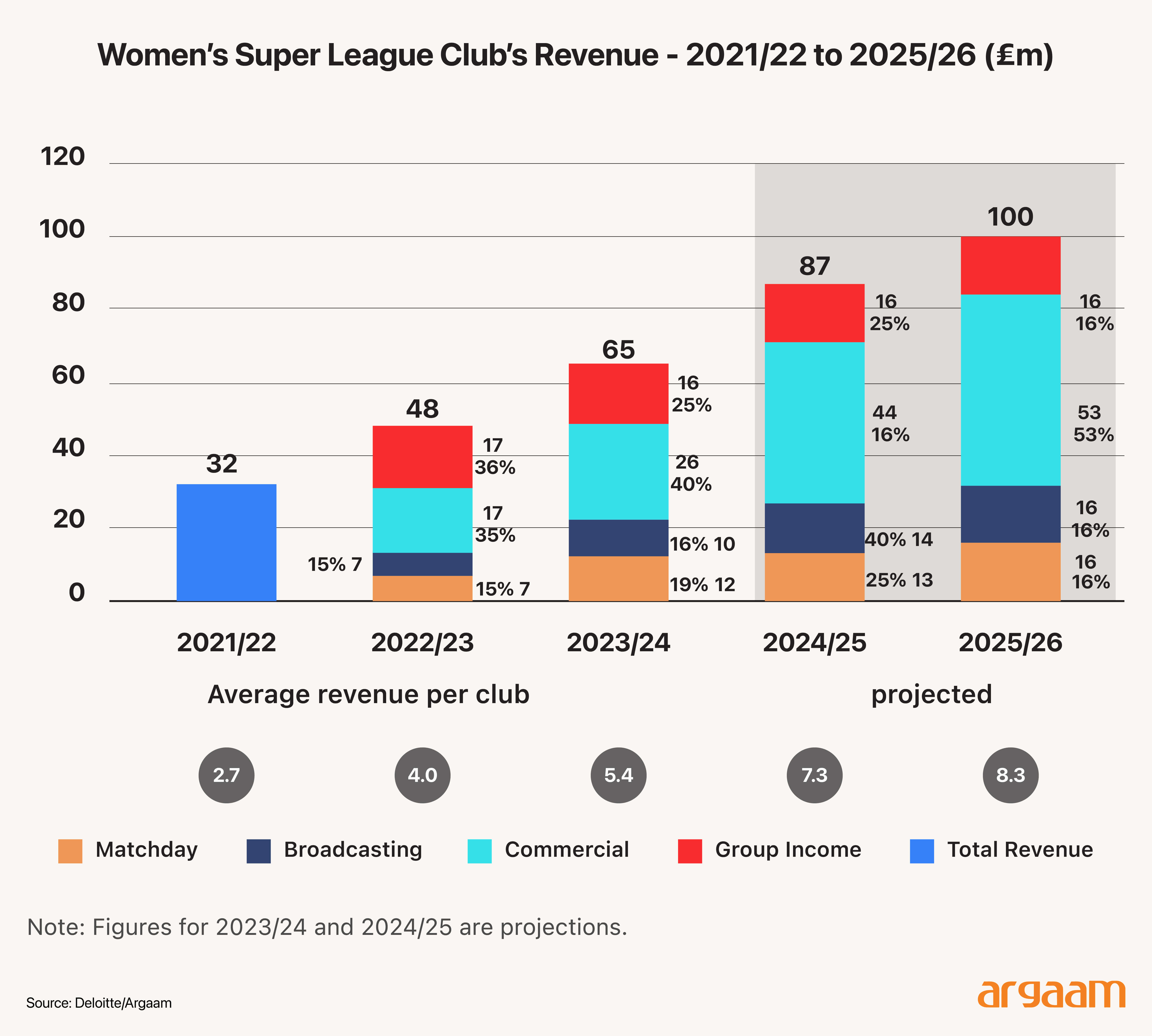
Each of the 12 WSL clubs reported over £1m in revenue for the first time. Matchday revenue increased by 73%, rising from £7m to £12m in 2023/24. Average attendance rose by 31% to 7,363, highlighting growing fan interest. Arsenal led matchday revenue with £4.4m, representing 36% of the total and a 62% increase over prior season. Other clubs with over £1m matchday revenue were Chelsea £2.7m, Manchester United £1.9m, and Manchester City £1m. Net debt in 2024 decreased slightly to £48m (2023: £51m).
Disclaimer: This analysis highlights investment opportunities in women's football but does not replace comprehensive due diligence. potential investors should carefully assess each club’s financial health (chiefly debt and tax liabilities), contractual obligations, and regulatory environment before making acquisition decisions. 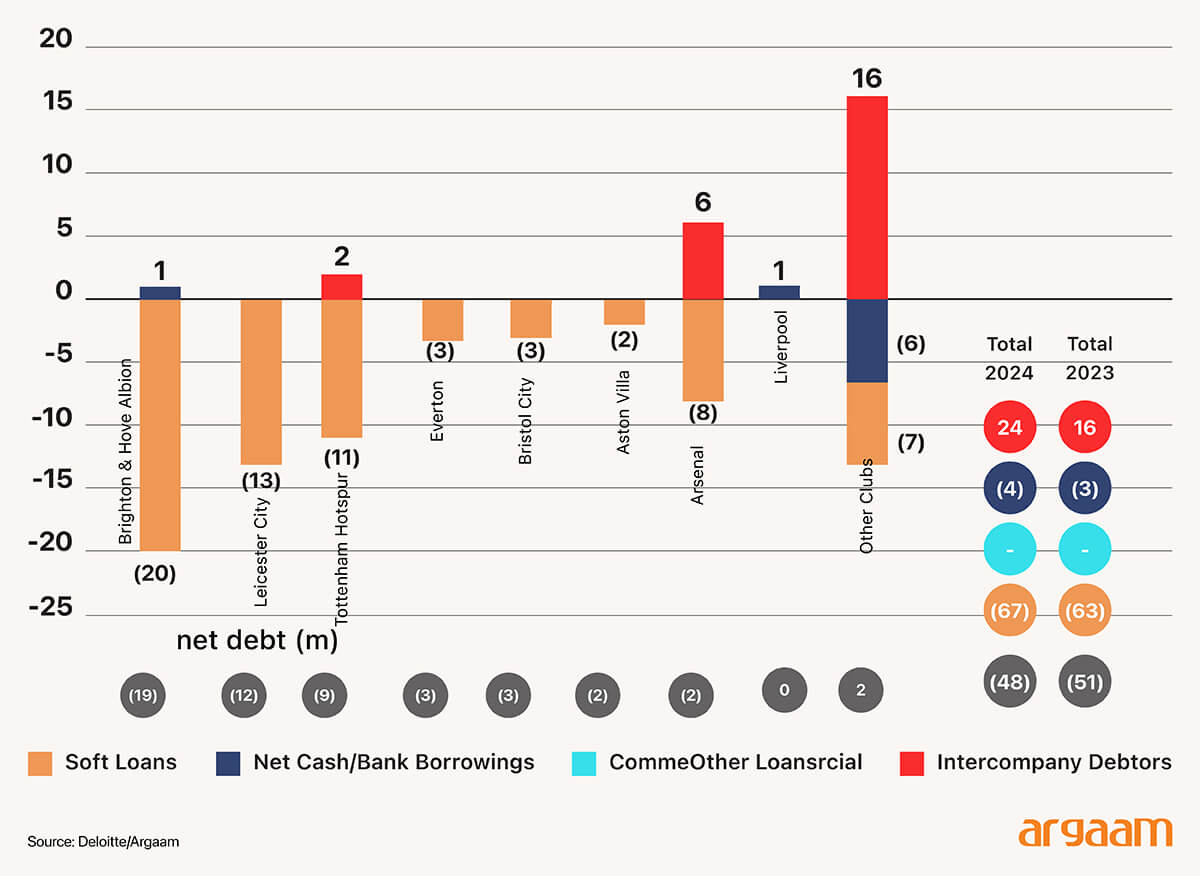
Saudi Arabia's substantial investment in men's football, exemplified by its $907 million net transfer spending in the 2023 summer window (second only to the English Premier League's $1.39 billion) and its commitment to become FIFA’s biggest sponsor with $100 million annually in preparation for the 2034 World Cup, underscores the Kingdom’s strategic intent and financial capacity within global football. This high level of engagement in men's football demonstrates Saudi Arabia’s ability to deploy significant resources to shape and influence the sport worldwide. It is clear that it is never too late for Saudi Arabia to invest in local and international women’s football, and the experience of England provides a compelling case in point. Despite football’s long history, women’s football in England only turned fully professional as recently as 2018. This demonstrates that with the right strategy, vision, and dedicated investment, rapid progress is possible. Investing in women’s football is not just good for gender equality. It makes solid financial sense too. |
|
|

|

|


|


|