




|
Saudi Arabia’s burgeoning biotech sector and substantial investments in pharmaceutical R&D position the kingdom as a potential powerhouse in the global generics market. 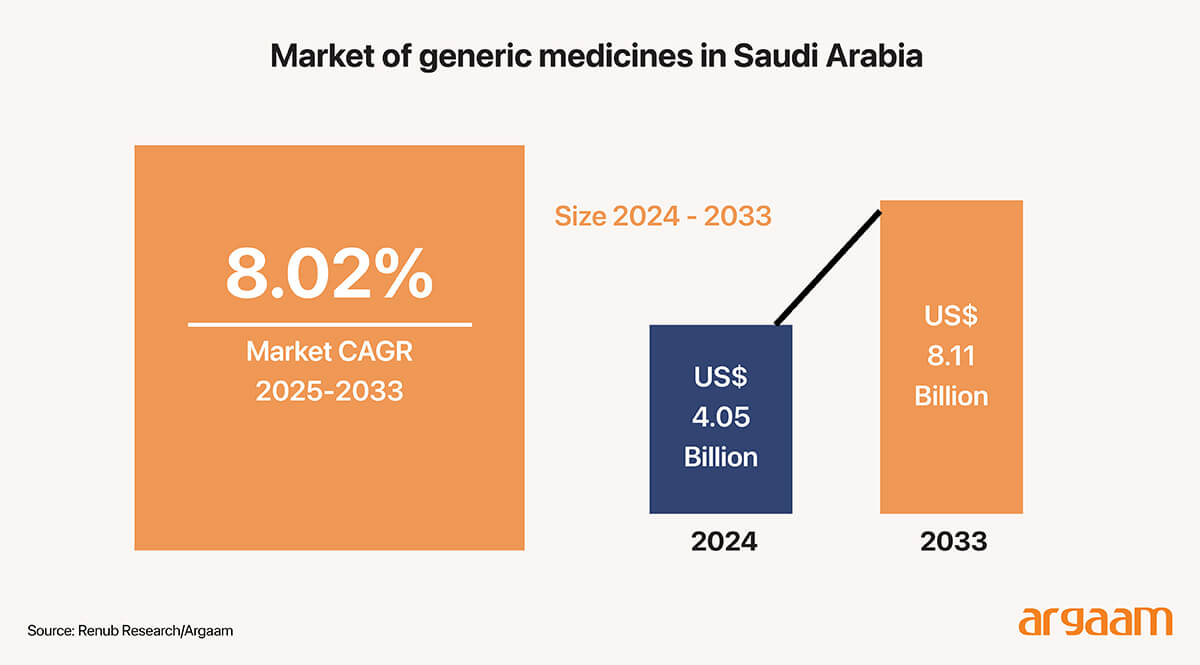 Generics Lead Saudi Pharma Growth The Saudi pharmaceutical market is the largest in the Middle East and Africa region. The market is valued at approximately $11.6 billion as of 2024. The generics market in particular is anticipated to grow to $8.11 billion by 2033 from $4.05 billion in 2024, growing at a CAGR of 8.02% during 2025 to 2033. Since the Council of Health Insurance’s bold policy in 2022 mandating generic substitutions, generic drug use has surged from a modest 40% to an impressive 73% in under a year. This new Saudi policy has helped counterbalance the monopolistic tendencies of big pharma’s patenting strategies, which often act as legal barriers protecting existing market leaders rather than incentivizing true innovation. The first registered generic medicines will be priced at least 35% lower than the price of original brand medicine. The second registered generic medicine will be priced 10% lower than the set price of the first registered generic medicine. Similarly, the third generic medicine will be priced at least 10% lower than the second registered generic medicine. This is also the case for the fourth generic medicine, where its price will be set at least 10% lower than the third registered generic medicine. 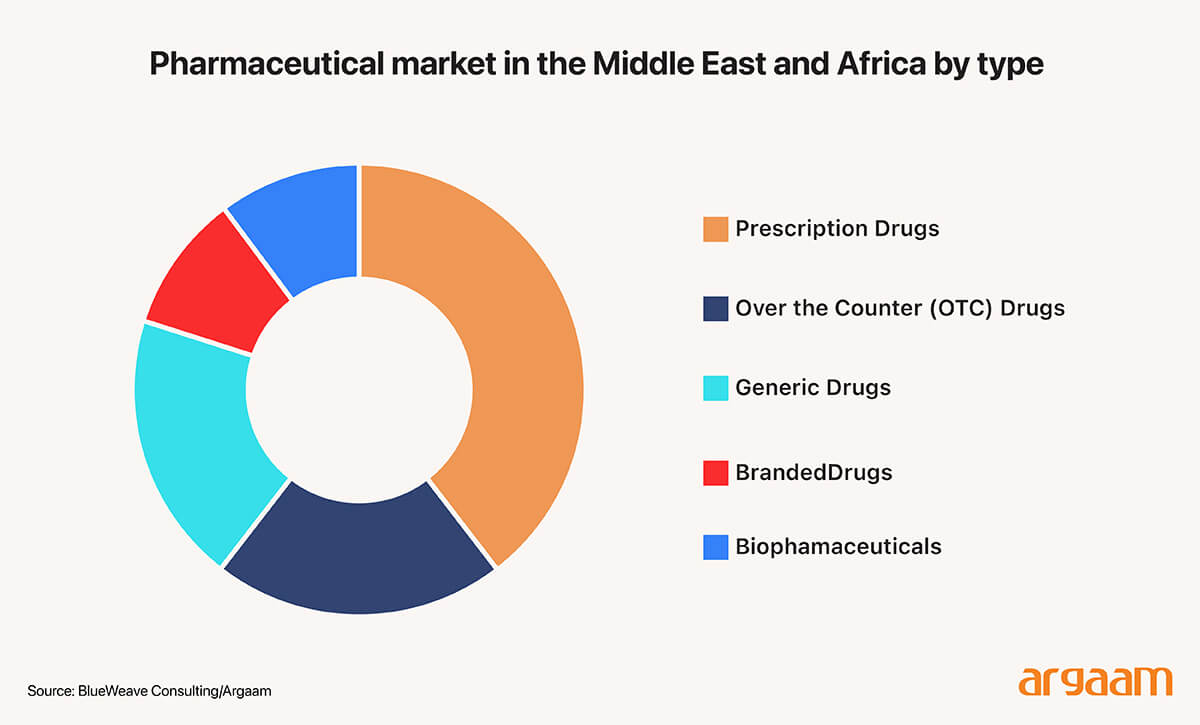
Chronic diseases such as diabetes, cardiovascular conditions, and respiratory illnesses are a common challenge worldwide, including in Saudi Arabia, which underscores the ongoing need for long-term, affordable medication by boosting the generics sector. According to the latest official data in the kingdom, 18.95% of adults (aged 15 and above) have at least one chronic disease. The most prominent chronic conditions were: diabetes (9.1%), high blood pressure (7.9%), cholesterol (3.6%), cardiovascular diseases (1.5%), and cancer (0.6%). A 2023 Saudi-led academic study titled “Current Generics Utilization and Associated Savings in Saudi Arabia: Insights From a Private Claims Database” found that the use of generic medications in Saudi Arabia instead of brand-name drugs resulted in savings of approximately 330 million SAR from September 2022 to June 2023, which is the period of the study itself. The study has further identified potential savings amounting to about 228 million SAR if all prescriptions for brand-name drugs that have generic equivalents were replaced by those generics. 
‘The World’s Pharmacy’ In our this analysis, India is taken as a case study to illuminate the dynamics of the use of reverse engineering in its pharmaceutical industry, drawing key insights from the study titled: “Antibiotic geographies and access to medicines: Tracing the role of India’s pharmaceutical industry in global trade.” Reverse-engineering has empowered Indian companies to produce high-quality medicines at a fraction of the cost of brand-name drugs, dramatically transforming global access to treatment, especially in low- and middle-income countries. A landmark example is the case of Cipla, an Indian pharmaceutical firm that produced generic antiretroviral drugs for HIV treatment in the early 2000s. By reverse-engineering patented antiretrovirals and offering them at prices as low as one-tenth to one-fifteenth of the cost of originator brands. India's export value of antibiotic ingredients and medicines grew tremendously from $268 million in 1996–1997 to $27.8 billion in 2024. Antibiotics constitute around 12% of India’s total pharmaceutical exports, showing their important role within the broader pharmaceutical export sector. Approximately 65% of all birth control pill prescriptions in the US last year were manufactured by just two India-based companies, Glenmark Pharmaceuticals Ltd. and Lupin Ltd. Treatments for hypertension and depression are second only to birth control medication, with more than 50% of US prescriptions serviced by Indian generic drugmakers. Some of India’s largest drugmakers get over a third of their revenue from the US, selling non-patented antibiotics as well as drugs treating everything from cancer to nervous system disorders. The US already has imposed a 50% tariff on goods from India as a penalty for buying Russian oil, although levies on semiconductors and pharmaceuticals are still pending till the writing of this analysis on September 24, 2025. But the threat by US President Donald Trump to impose tariffs as high as 250% on pharmaceutical imports from India could significantly disrupt the supply of affordable generic medicines from Indian drugmakers. For emerging markets like Saudi Arabia that currently face much lower tariffs on its imports including pharmaceuticals, this situation presents a good opportunity to expand its generic drug exports to the US market. Saudi Arabia is only subject to a 10% tariff on pharmaceutical imports, its generic drug manufacturers could leverage this tariff advantage to offer more competitively priced medicines relative to Indian producers, whose exports would become substantially more expensive due to the steep US tariffs. |
|
|
|
|


|


|