Saudi Arabia's Premium Residency program has attracted more than 40,000 applications between January 2024 and July 2025, according to news reports in the Saudi press. (Al Youm)
For us, this reflects a significant interest in permanent residency. That’s why we suggest to policy makers our unique idea of integrating this growing demographic in the kingdom by considering mandatory state pension contributions for those who become permanent residents.
We are inspired by the Singaporean pension scheme, which has become among the top four schemes in the world as we explain later in this analysis.
Introducing a mandatory contribution rate of 21.5% (9.75% employee, 11.75% employer) for a the permanent residents category in the kingdom will generate a substantial additional revenue stream for the General Organization for Social Insurance (GOSI).
The General Organization for Social Insurance (GOSI) manages Saudi Arabia's social security, collecting mandatory contributions from employers/employees to invest for the future pensions.
GOSI holds substantial assets, estimated around 32% of Saudi GDP, making it a key economic player in the kingdom. (Al Iqtsadiya).
The incoming contributions from permanent residents would significantly accelerate the growth of GOSI's accumulated assets in both the public and private funds managed by Saudi Arabia.
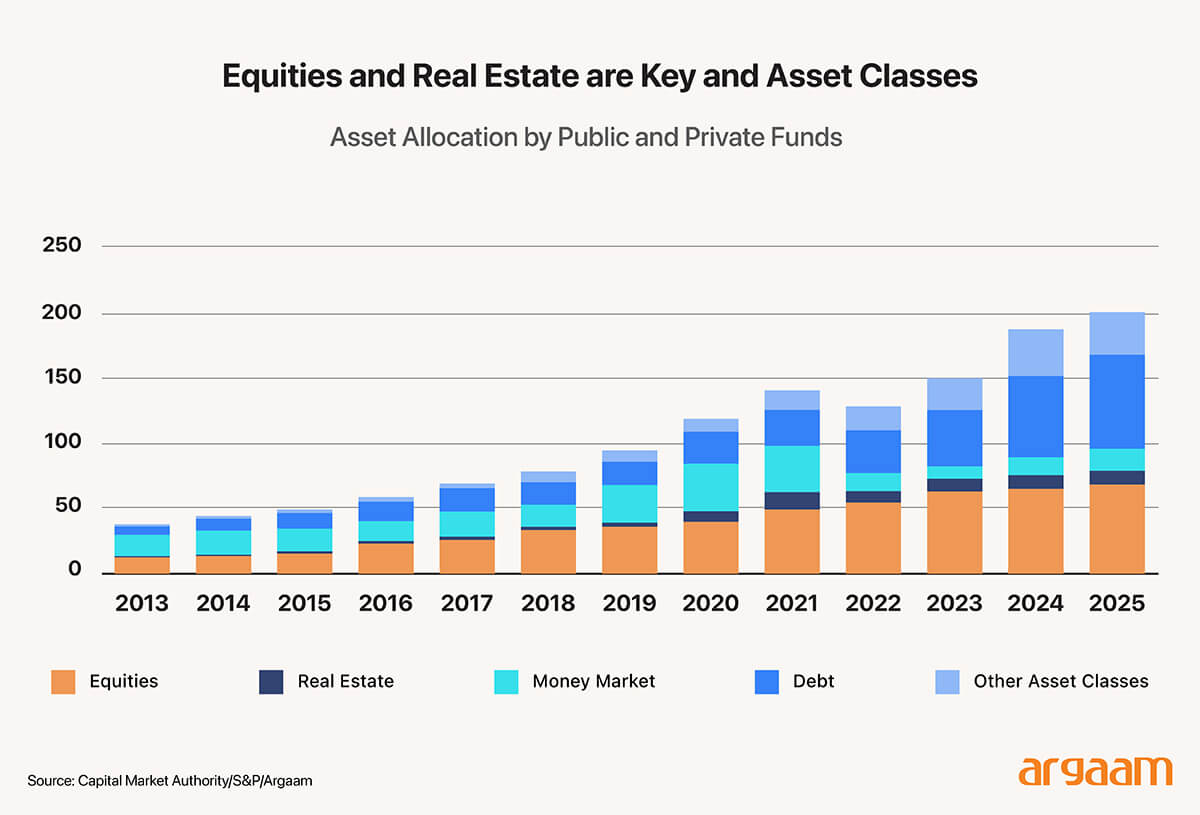
The Saudi-managed public and private funds allocate most of their Assets under Management to real estate as an asset class (36%), followed by equities (34%), and debt and money market instruments (13%), according to a breakdown by the Capital Market Authority.
A money market fund, as shown in the chart, is a kind of mutual fund that invests in highly liquid, near-term instruments. These instruments include:
● Cash ● Cash equivalent securities ● High-credit-rating, debt-based securities with a short-term maturity (such as United States Treasuries)
This increased pool of investments can then be channelled into productive investments within the Saudi economy.
For Saudi Arabia, this could mean more capital available for Vision 2030 projects, infrastructure development, and other strategic initiatives that require substantial long-term funding.
Beyond the macroeconomic impacts, integrating Premium Residency holders into a mandatory state pension system would profoundly benefit Saudi Arabia's capital market.
A 1% increase in pension fund assets can lead to a 0.15-0.23 % increase in the value of the capital market, and pension funding can cause a spike in stock and corporate bond markets, particularly in developing nations. (The International Journal of Research and Business Studies).
Turning Longer Lives into Sustainable Growth
The last economic benefit we see from the integration of permanent residents into Saudi Arabia's pension system lies in the increased life expectancy in Saudi Arabia from 74 years in 2016 to 79.7 years in 2025. (The Health Ministry)
This means that pensioners will have nearly 20 years to draw their benefits.
From an economic perspective, longer life expectancies generally put a strain on pension systems, as retirees draw benefits for an extended period, increasing the overall liability of the fund. (MDPI, Basel, Switzerland)
However, integrating permanent residents can significantly mitigate this challenge. It would expand the contributor base, bringing in new, often working-age individuals who would pay into the system.
This influx of contributions helps to bolster the financial solvency of the pension fund, offsetting some of the increased payout demands arising from a longer retirement period for all beneficiaries.
While permanent residents will eventually also draw pensions for a similar extended period, the immediate benefit of their contributions, particularly if they are younger and contribute for a significant portion of their working lives, would help to bridge the funding gap created by rising longevity across the entire population especially if we take into consideration the steadily rising general cost of healthcare out of the GDP, and particularly the healthcare provided to the elderly.
Singapore: A Blueprint for Saudi Arabia's Pension Ascent
In the last part of this analysis, we would like to highlight the small detail in one of the very advanced and most efficient pension systems in the world, which drew our attention in our extensive and in-depth research into how to make Saudi Arabia’s pension system compete with the top systems in the world.
Singapore's unique pension system is centered around the Central Provident Fund (CPF), a mandatory, fully funded, defined contribution social security savings scheme.
Unlike many traditional pension systems that focus primarily on post-retirement income, the CPF specifically covers an individual's needs for retirement, healthcare expenses, and even allows for home ownership.
This integration means that members' contributions are allocated across various accounts within the CPF, which can be used for these different purposes throughout their lives.
This multi-purpose, self-reliance model, while publicly managed, contrasts with typical pay-as-you-go social insurance schemes in other countries like France and Germany. (Note: the pay-as-you-go means current contributions from the working population are used to pay the pensions of current retirees.)
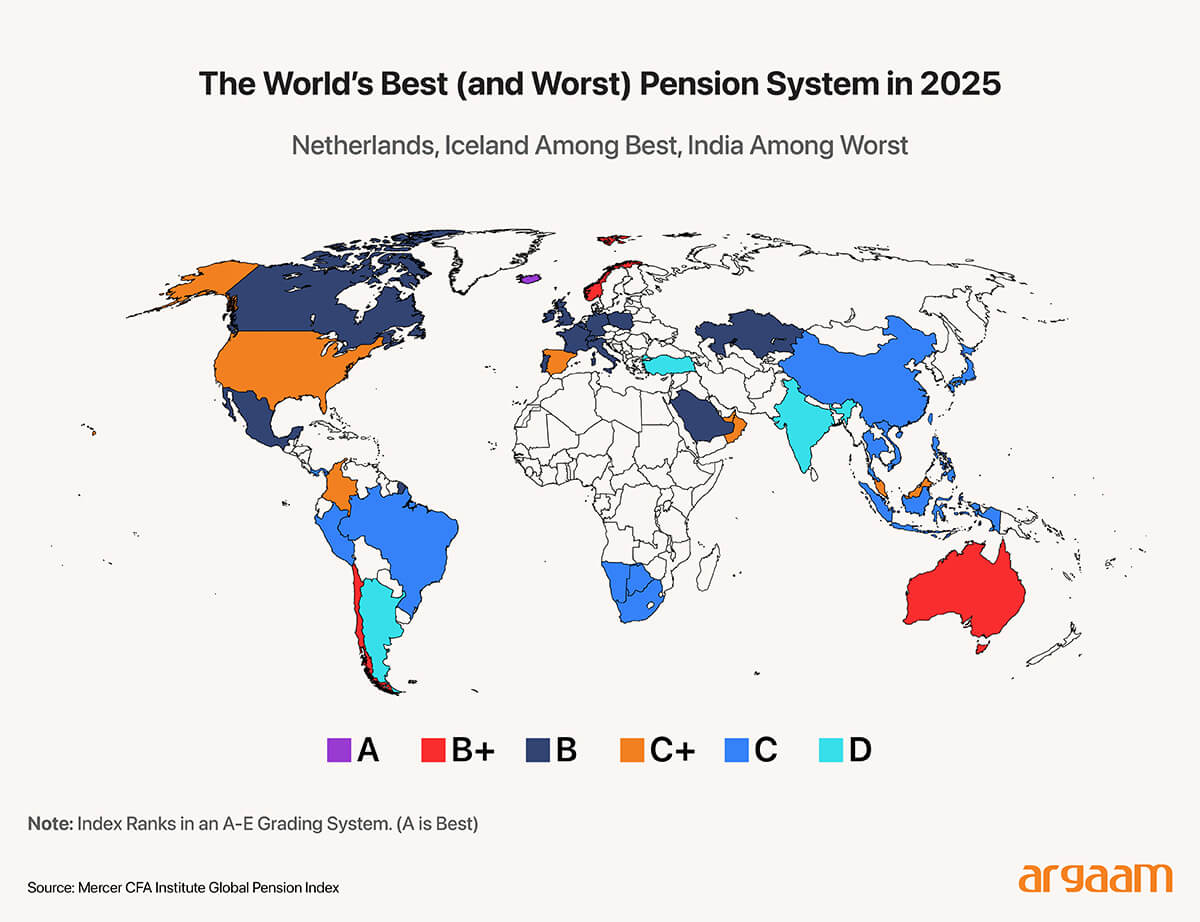
Singapore has broken into the top tier of an annual global pension index for the first time, while the Netherlands held on to the No. 1 ranking.
Both countries are followed by Iceland and Denmark to make up the rest of the top four countries that scored an A rating in this year’s Mercer CFA Institute Global Pension Index.The report evaluates 52 retirement systems based on grades for their adequacy, sustainability and integrity.
Saudi Arabia achieved in 2025 a score of 67.6, which corresponds to a "B" grade. A B-grade system is described as having "a sound structure, with many good features, but has some areas for improvement".
This ranking has outpaced the United Arab Emirates, which scored 64.9, but the Kingdom came after Kuwait in the Arab world, which scored 71.9.
Saudi Arabia's score improved from 60.5 in 2024, primarily due to providing clearer and more comprehensive data on its pension system.
More this Weekend
Saudi Banking Sector CAR: Basel III Requirements vs. Practical Performance
Saudi Arabia’s banking sector continued to demonstrate strong capitalization by the end of Q3 2025, with average total capital adequacy reaching 20.04%, well above the 8% minimum regulatory threshold under Basel III requirments. These levels were supported by higher operating profits, improved asset quality, and a decline in non-performing loans, in addition to the Saudi Central Bank’s conservative supervisory policies.
Rising Childcare Expenses: Implications for Family Budgets and Workforce Participation in the Arabian Gulf and Middle East
Across the Arabian Gulf and the broader Middle East, the cost of private nurseries and childcare has become a significant and growing financial burden for many families. This upward trend in expenses reflects anincreasing demand for quality care in key cities like Riyadh, Dubai and Cairo.
How Saudi Arabia rethinks its investment in defence industry
National security is no longer only about buying battleships and fighter jets, but also about lines of code, AI algorithms, and miniaturised satellites.
The battlefield is evolving, and with it, the very nature of how countries acquire their defence capabilities.