




|
|
Trying to shut down online sports piracy in the Middle East and around the world is like playing an endless game of whack-a-mole. Just when you think you've nailed one sneaky little mole, another pops up somewhere else, gleefully offering all the biggest sports events for a pittance. In August, Egypt’s crackdown resulted in the arrest of key figures behind one of the region’s biggest piracy networks, a commendable effort that temporarily pressed pause on the game. But even with these highly publicized and applauded operations, the digital pirates reappeared in new disguised servers and fresh URLs for illegal subscription of only LE 1300 ($27) for 13 months as a ‘limited’ offer in October. Such pirated services offer a one-stop-shop for content, including sports and movies packaged together and pirated from a range of legitimate subscription streaming services. 
The Saudi-owned MBC is the largest online entertainment on-demand content with its platform Shahid and new partnership with Netflix. It offers the Shaid+Netflix in one bill for a monthly subscription of nearly SAR 70 ($18.6) and billed annually. So, a subscriber should pay SAR 820 ($218.6). 
The Qatari-owned beIN Sports designs several packages and livestream methods depending on the geographical location. For example, in Egypt, the most populous country in the Middle East with around 117 million people, the PREMIUM package can be paid in quarterly installments of LE 1,335 ($28), while the ULTIMATE package costs LE 2,490 ($52.4) per quarter. Options in the US starts at $15 USD and a one-year pre-paid satellite subscription available in the UK for around £316.  The stark discrepancy in subscription prices between licensed providers and pirated services illustrates a significant market displacement effect, resulting in substantial revenue losses and market distortions. In other words, pirated services offer a “one-stop-shop” for diverse content, including sports, movies, and series, bundled together and available, for instance in Egypt, at LE 1300 ($27) for an entire year. And these illegal services offer, by the way, the same package to expats overseas including European countries like the UK. It’s part of a wider piracy network. According to an investigation published in September by The New York Times’s Athletics sports media platform, this global piracy network operates through 80 unlicensed domains around the world, and recorded a total of 1.6 billion visits over the past year. It provided free access to global sports matches, including major European football leagues and tournaments such as the English Premier League and the UEFA Champions League, as well as the National Football League (NFL), the National Basketball Association (NBA), and Major League Baseball (MLB). This subscription price offered by such piracy services is roughly one-eighth to one-tenth of what legitimate services charge, representing a massive price differential and creating a compelling value proposition for consumers seeking affordability over legality.
📽️
How does sports piracy work? ● Capturing a legitimate live stream and rebroadcasting it without permission. ● Using social media platforms (X, TikTok, YouTube) or dedicated websites to stream illicit content. ● Detection techniques effective for pre-recorded content (digital matching) are ineffective for live events. ● Legal takedown processes are slow and often occur after the live event has ended. ● When an illicit stream is shut down, pirates can quickly set up new streams, making enforcement difficult. 
24/7 Support and massive annual losses When Argaam Weekend performed a simple social media search, especially via X/Twitter and TikTok, about online sports piracy services, an abundance of pirated broadcasts were available with a few clicks. Ironically, some of the higher-quality illegal services even have their own 24/7 customer support operations through WhatsApp groups. The result is massive financial losses to legitimate broadcasters. According to a recent report from Synamedia (which sells anti-piracy tools) in partnership with Ampere Analysis (a London-based market-leading data and analytics firm specialising in the media, games and sports sectors), legitimate service providers and rights holders can unlock up to $28.3 billion in new revenue each year by reducing sports piracy. The report, Pricing piracy: the value of action, surveyed over 6,000 sports fans in 10 markets around the world. It found 57% of the people who took part in the survey already pay for legitimate services and 52% pay for pirate services. Up to 74% of sports fans surveyed are willing to switch from illegal streams if a legitimate if the illegal streams become unreliable. The study finds that the fans in the survey tend to be younger and are often families with young children. They are avid sports viewers with many watching 10 or more different sports.  How Piracy Threatens the Future of Sports Broadcasting From an industry perspective, an academic paper titled “An Assessment of the Current Legal Framework for the Sports Broadcasting Market: Looking into the Online Sports Broadcasting Play Law from the Perspectives of Competition Law and the Intellectual Property Rights" provides some useful insights to our analysis. The illegal streams operate as a competitive substitute, eroding the market share of authorized services. When consumers opt for cheaper illegal options, legitimate companies face a decline in subscriber base volume, leading to decreased subscription revenues. This decline hampers not only the immediate cash flow but also impacts long-term revenue projections, affecting profitability, investment capacity, and overall financial sustainability. When piracy erodes revenue, capital expenditure on original content decreases—a phenomenon often described as a creative market contraction. This leads to fewer exclusive sports and entertainment offerings, ultimately diminishing consumer choice. The proliferation of pirated streams, enabled by sophisticated disguising of servers, can result in lost tax revenues for governments, since illegal streams bypass official channels, the revenue that would have been taxed under legitimate licensing fees and subscriptions diminishes. It also leads to reduced advertising income for legitimate companies which rely on advertising as part of their revenue model, since consumers shift from licensed services to illegal streams, accordingly legitimate broadcasters and streaming platforms see a decline in viewership. 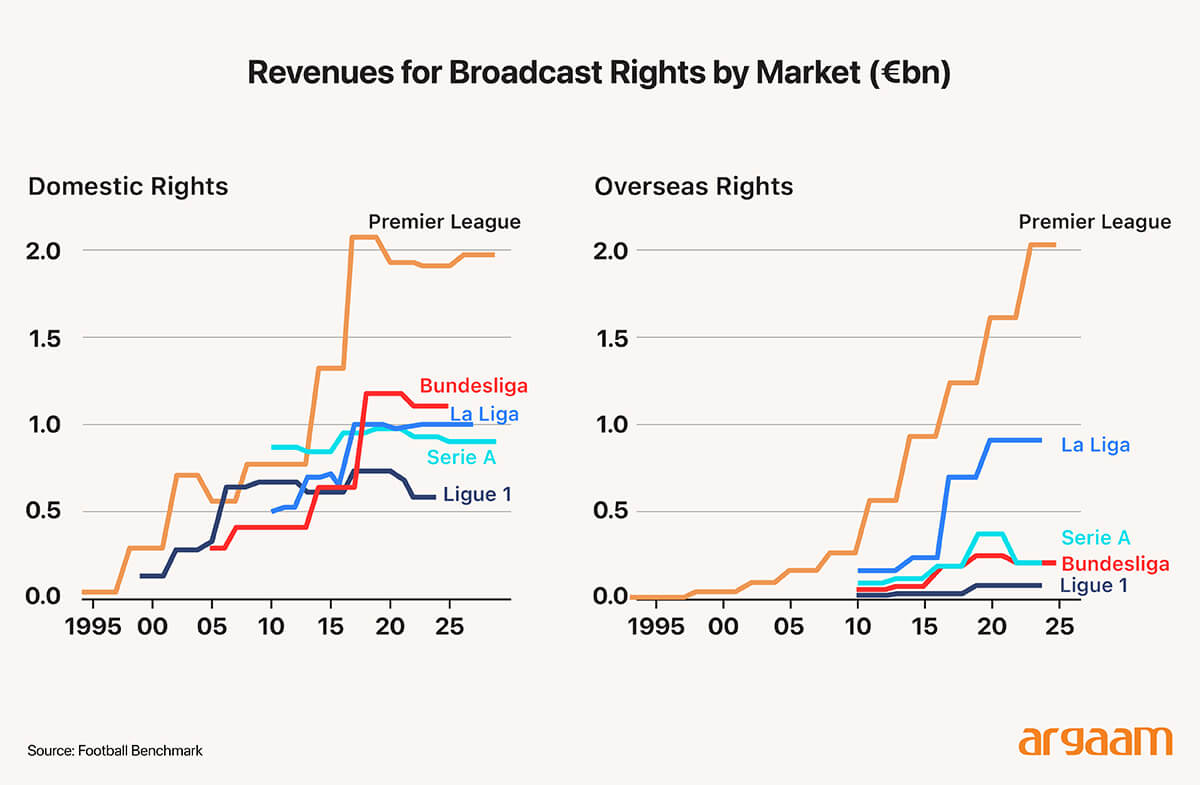
With the difficulty of implementing legal enforcement measures such as tracking and shutting down unauthorized streams to protect media rights, the sports leagues in the West have added another finanical complexity to the balance sheets of the live stream platforms. Some of these sports leagues have started already capturing granular data on viewer engagement such as viewer count, geographic distribution, and demographic information. This comprehensive insight enables them to accurately quantify the size and composition of their audiences. With richer viewership data, leagues gain a stronger bargaining position in negotiations with broadcasters, streaming platforms, and sponsors. By presenting concrete metrics on audience reach and engagement, they can justify higher licensing fees and advertising rates. |
|
|

|

|


|

|