The announcement by Saudi Arabia in 2023 to construct the world’s largest single-site solar-power plant with a capacity of 2,060 MW exemplifies the rapidly expanding reliance on renewable energy sources to meet global power demands.
While this development marks significant progress toward decarbonization and energy diversification, it also highlights a critical challenge: managing the delicate balance between excess supply and demand in renewable energy systems.
Insights from China through a recently published academic paper titled ‘Determinants of overcapacity in China’s renewable energy industry: Evidence from wind, photovoltaic, and biomass energy enterprises.’ provide valuable lessons on this "double-edged sword" of renewable energy investment and deployment.
One of the primary concerns associated with large-scale renewable installations is the potential for overcapacity leading to grid instability.
As it already happened in China, overinvestment driven by governmental subsidies and policy led eventually to significant overcapacity, which jeopardizes the operational efficiency of the grid.
The grid needs to be finely balanced at all times. An excess of supply can fry the network, while too much demand can lead to blackouts.
The overcapacity can result in what’s called "renewable energy curtailment", where surplus power is wasted or forced offline, thereby reducing economic efficiency.
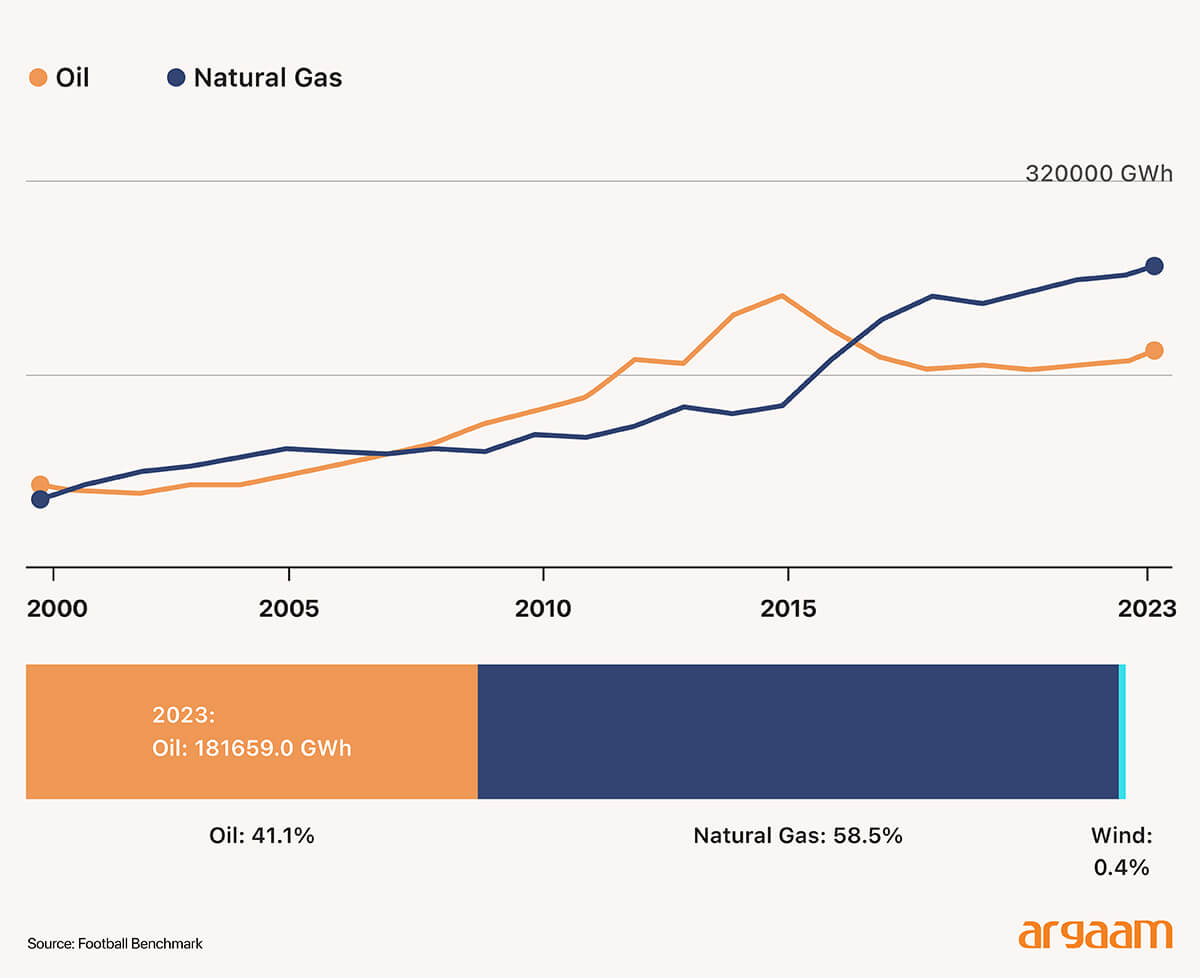
Till the most available data in 2023, electricity production tends to closely match demand in Saudi Arabia with the overwhelming majority of it produced from fossil fuel (oil and gas) as shown in the next chart.
Saudi Arabia has demonstrated a cautious yet strategic approach to its renewable energy development, recognizing both the potential benefits and the inherent risks associated with relying heavily on renewables to generate electricity.
By ostensibly giving renewables the benefit of the doubt, Saudi Arabia, however, has continued to promote large-scale solar projects as part of its broader vision for sustainable growth and environmental responsibility.
Given that Saudi Arabia's total electricity production in 2023 reached 441,499 GWh, with consumption at 327,000 GWh, indicating a surplus supply, the kingdom already faced overcapacity, especially as the supply from fossil fuels already exceeded demand.
Solar- and wind-dominated grids are not inherently problematic; in fact, they can provide clean, renewable, and cost-effective energy sources.
But these grids tend to be more fragile compared to traditional fossil fuel-based systems primarily due to their inherent variability and intermittency.
More Than Just Installing Solar and Wind
Saudi Arabia aims to get 50% of its power from renewable energy sources by 2030. This is a key goal of the nation's Vision 2030 plan, which seeks to diversify the energy mix alongside its ongoing efforts to reduce carbon emissions and achieve net-zero emissions by 2060.
The UAE's "Energy Strategy 2050" aims to increase the contribution of clean energy to 50% of the total energy mix by 2050.
By 2030, the European Union aims to get 45% of its power from renewables, Australia wants to get to 82% renewables and the UK’s Clean Power Mission is to reach 95% carbon-free power.
China aims for non-fossil fuels to account for 80% of its total energy mix by 2060.
But it’s noticeable that nearly all these countries, including the most developed in green transition, have been pursuing aggressive renewable energy targets, while they have not fully developed or implemented comprehensive backup and grid stability plans.
Its mainly because many countries are still in the earlier phases of integrating high levels of variable renewables.
Developing advanced grid flexibility measures—such as grid balancing, real-time monitoring, and energy storage—requires substantial technological investments and planning.
Last April, a power surge from solar stations that caused a widespread blackout in Spain and Portugal was the "most severe" in Europe in the last 20 years.
The outage caused significant disruption for nearly a day when it plunged areas into darkness, cutting internet and telephone connections and halting transport links.
A series of "cascading overvoltages" - an increase in the electrical supply voltage above the established norm - was behind the outage.
This consequence is due to huge spending on new wind and solar capacity, but not enough on grids.
The 27 members of the European Union and the UK invest on average $ 0.7 in grids for every dollar spent on renewables, while Spain ranks the lowest, with only $ 0.3 spent for every dollar, according to a financial analysis conducted in August by Bloomberg.
The Secret to Reliable Solar Power
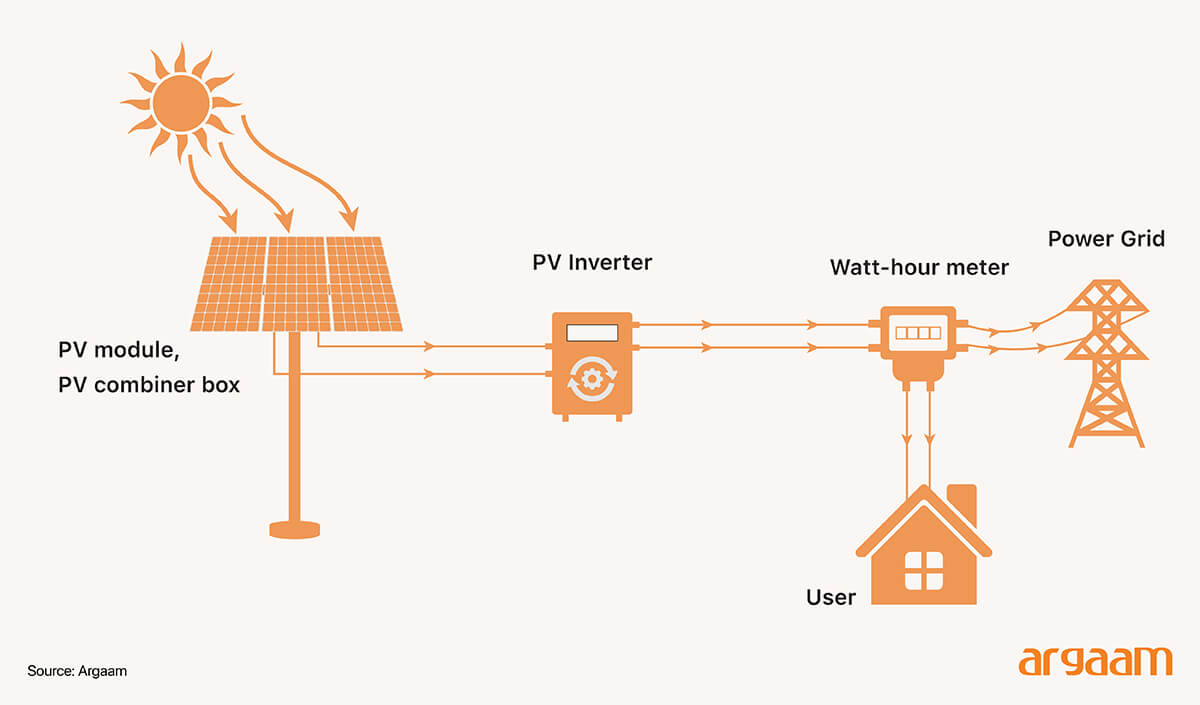
To ensure a resilient and stable power grid as Saudi Arabia expands its solar capacity as we mentioned in the beginning of this analysis, the kingdom has already embarked on a sophisticated contingency planning by contracting leading international companies to install what’s known as synchronous compensators, which metaphorically help ‘stablise’ the sun.
A synchronous compensator is a large, spinning machine used in electrical power systems to help keep the electricity supply stable and balanced.
Think of it as a kind of energy "shock absorber" that adjusts the flow of electricity to prevent power outages or fluctuations. It can quickly increase or decrease the amount of electricity it sends in.
The United Kingdom's successful implementation of these devices in 2023 is an emphatic case in point.
These high-tech devices, which turn at 1,500 times per minute, serve as a prime example of how such technology can prevent blackouts by maintaining the grid’s frequency and voltage at optimal levels after generating too much electricity from the sun.
Their deployment helps mitigate issues caused by fluctuations in power supply, thereby avoiding the kind of large-scale outages experienced in other parts of Europe, such as Spain’s power outage in April, which lacked sufficient grid stabilizing infrastructure.
This proactive approach aligns with the best practices demonstrated by developed nations and underscores Saudi Arabia’s commitment to grid reliability as it transitions to a cleaner energy future.