




|
Saudi Arabia-based lenders should consider seizing the opportunity to establish their first ever financial services and channel significant investment into Argentina’s emerging market, despite the current political and economic turbulence. This early entry into a promising can provide a distinct competitive advantage in corporate lending in particular, which’s the focus of our analysis. By acting swiftly with thorough and rigorous risk assessments, Saudi banks can position themselves as pioneers in Argentina’s financial landscape benefiting from the soaring interest rate in the Latin American country, currently standing at between %50 and %58 in private banks, while the benchmark interest rate in government banks stand at %29. We have identified high-quality, profitable local corporations in different sectors and market cap categories from high-tech to food and communications such as MercadoLibre Inc (tech and e-commerce, market cap $102 bn – big-cap category) and Telcom Argentina (market cap $2.9 billion – small-cap category). Early market penetration by Saudi lenders not only facilitates stronger relationship-building with such vital local firms but also enables the banks to shape their reputation and operational strategies in a way that long-term competitors may find difficult to replicate. The substantial Muslim population in Argentina, estimated at around one million out of a total population of around 45 million and primarily of Arab descent from Syria and Lebanon, also presents significant opportunities for Saudi lenders to start financial Shariah-compliant options as well. This demographic dynamic creates a natural demand for halal-centric financial products in the small and medium-sized enterprises (SMEs) that cater to the community's cultural and religious preferences.  A Volatile Yet Promising Land of Global Demand
Argentina is an emerging economy with large industries like food and minerals, which offer stable income sources.The country has around 45 million population, providing a significant market size. Despite its current economic turmoil due to high inflation, the economic environment has improved but remains volatile. Inflation has already fallen from a rampant 300% in 2023 to %32 in 2025. The country is full of opportunities, especially in critical sectors with global demand, that the world’s richest man Elon Musk is considering to invest in it. The rebound in Argentine assets is noticeable following months of turmoil. The peso soared last month (September) 10%, stocks have jumped 7% and the government’s foreign bonds have posted gains of 22%. Most of the improvement is orchestrated by a financial rescue package by the US Treasury, as the Trump administration is seen having political interests in shoring up the political regime of Argentine President Javier Milei, who’s a great supporter of US President Donald Trump and his ideology, by pledging a financial lifeline to help the government defend the peso, guarantee debt payments and keep its free-market reform agenda on track. 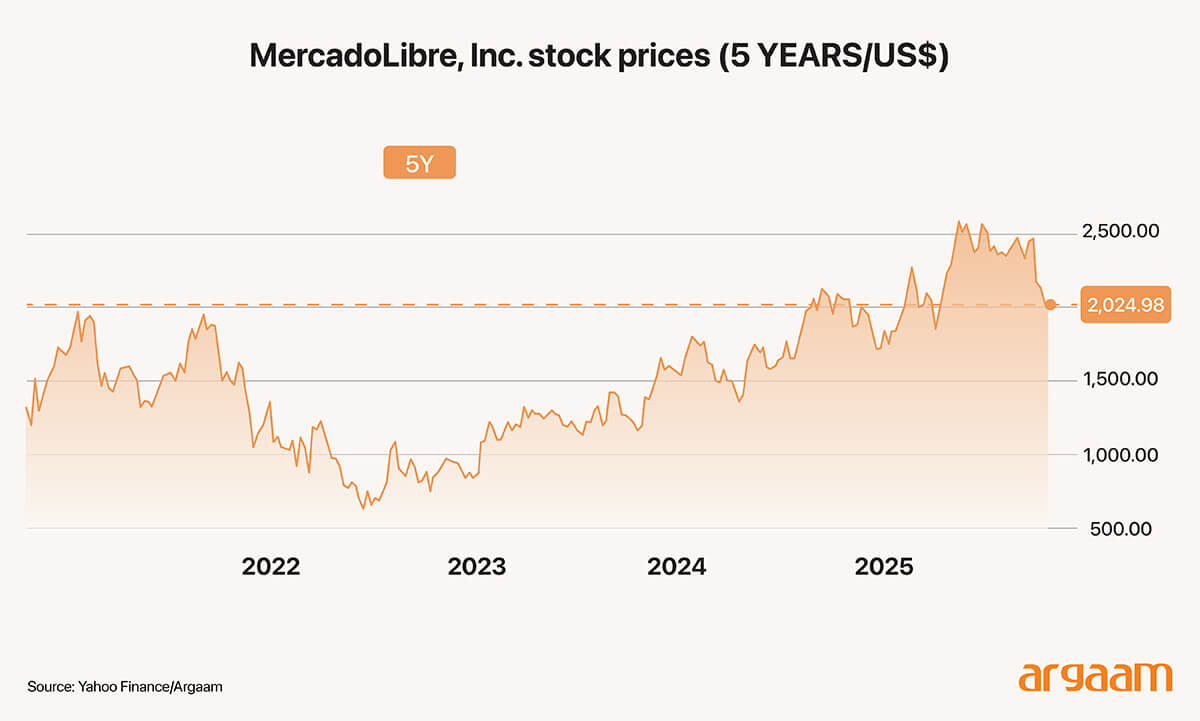 
Top Firms Are Prime Borrowers for Saudi Banks
In this analysis, we cite MercadoLibre (MELI), the leading and highly profitable firm in Argentina's e-commerce and fintech sectors, to explore the role of the potential Saudi debt financing in the Argentine market. Zooming in on the company’s latest declared financial results, we find that he company's strategic debt management is encouraging. The debt-to-equity ratio was around 1.57 as of June 2025, a level considered manageable given the company's strong earnings and cash flow. The interest coverage ratio was 47.8, indicating the company's earnings before interest and taxes are more than sufficient to cover its interest expenses. The company’s forward P/E ratio is around 39.84X, which is significantly higher than the fintech industry average of 24.67X. Its CAGR is predicted to reach 21% over the next three years. Last year, S&P Global Ratings revised its outlook on the company to positive, while affirming its 'BB+' issuer and issue-level credit ratings. 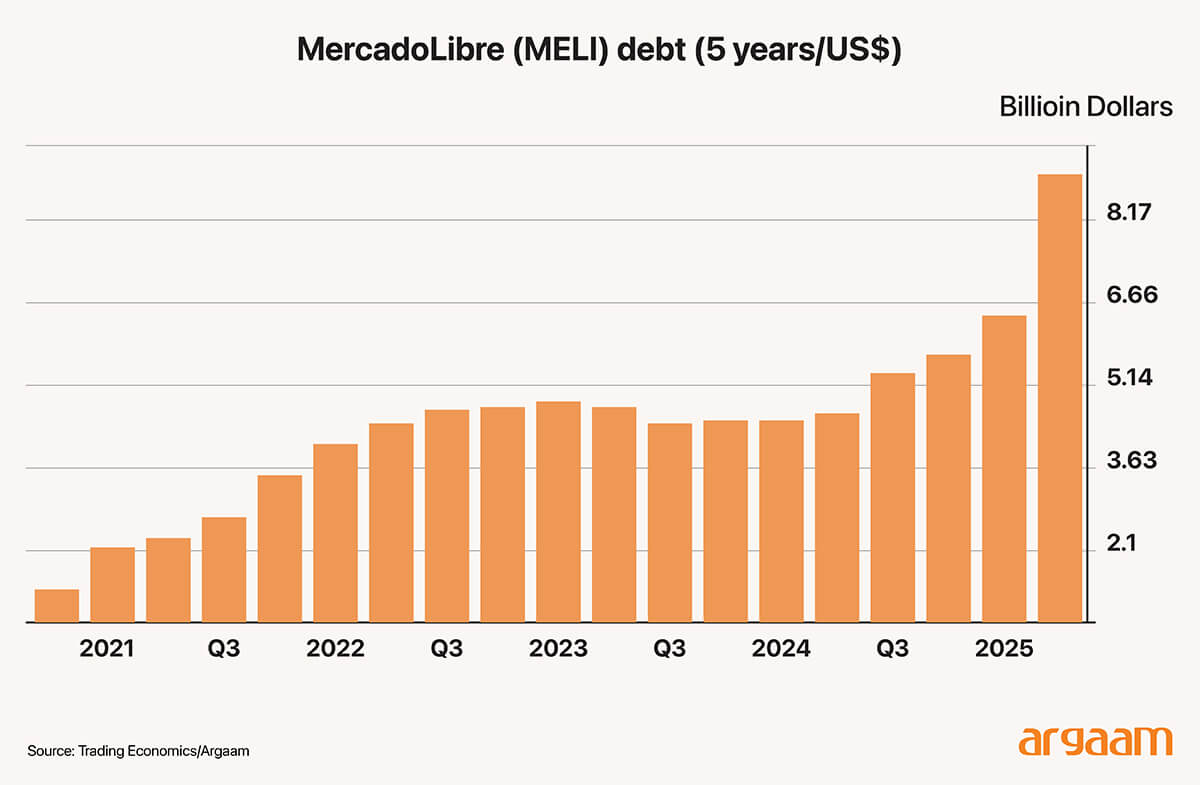 So our point is the current high interest rate environment in Argentina can translate into higher margins for the potential Sadi lenders who can charge premium interest, especially when lending to financially sound firms like MercadoLibre. This scenario enables Saudi banks to earn substantial returns on their loans, effectively turning the high local interest rate into a profit opportunity. Mercado Libre does not earn its money exclusively in US dollars; its revenue is generated in the local currencies of the 18 Latin American countries where it operates, but it reports its financial results in US dollars for external reporting and analysis. This means revenue from local currencies is converted to USD, and the company is subject to foreign exchange rate fluctuations. From the exchange rate perspective, 1 Argentine Peso currently equals approximately 0.0026 Saudi Riyals. While this indicates a significantly weaker peso, it also presents a strategic advantage for Saudi banks. But even if a Saudi bank whose assets are mainly in SAR lends other big-cap or even several small-cap Argentinian firms, the bank will convert their Riyals into pesos at the current very low rate, allowing the Saudi bank to fund large volume of loans at relatively low cost in local currency at extremely high interest rates. The key to profitability lies in the significant interest rate differential: the banks can lend in a high-interest local currency, earning substantial returns on these loans, while their cost of funding remains relatively low, as they are financing these loans through their assets in SAR. If the peso appreciates against the US dollar in the coming months, Saudi banks that have converted Riyals into pesos and lent in Argentine pesos will benefit in several ways. Firstly, the increase in peso value means that when the banks convert their pesos back into US dollars or Riyals, they will receive a larger amount of foreign currency, boosting their returns. Additionally, if the loans are denominated in pesos, peso appreciation reduces the risk of currency mismatches and enhances the real value of repayments. 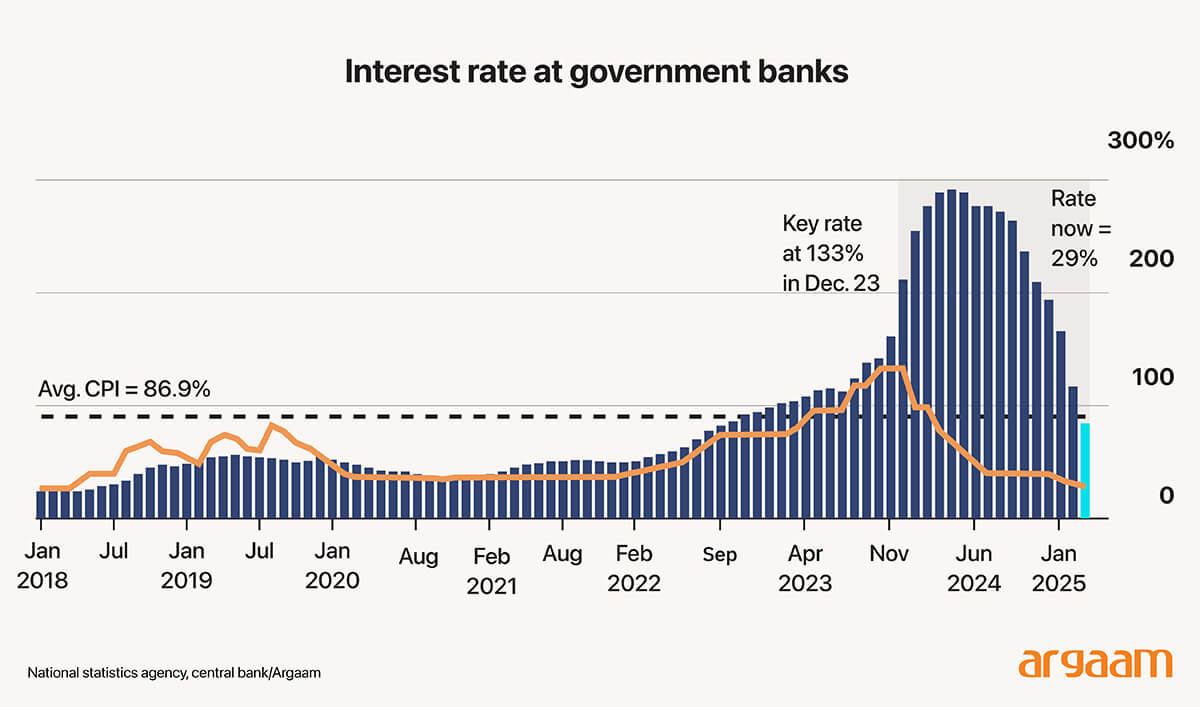 
Currency Risk Premiums
Lastly, the reduced foreign reserve level in Argentina signals another opportunity for Saudi lenders. Last month, Argentina’s reserves dropped by $4 billion to $39 billion, following aggressive interventions by the central bank to maintain the stability of its domestic currency's value relative to the US dollar as part of an arrangement with the International Monetary Fund (IMF). In just three years in September,the government had to sell over $1 billion to stablise the peso. Firms requiring USD may face limited access to foreign currency from the local banking system or official channels. As a result, these firms might be willing to pay higher interest premiums to secure USD loans directly from foreign lenders like Saudi banks, reflecting their urgency and the scarcity of foreign currency. Given Argentina's ongoing reserve depletion and intervention measures, the currency risks are elevated. Saudi lenders can then incorporate risk premiums into the contracted interest rates, potentially increasing their returns. Furthermore, the need for foreign currency amid currency controls could allow lenders to negotiate contractual clauses that adjust interest rates depending on exchange rate movements or regulatory risks, further enhancing profits. Saudi banks should exercise thorough due diligence and conduct a rigorous risk assessment before making any decision to establish branches in Argentina. While the analysis highlights compelling opportunities associated with Argentina's high-interest environment, it is essential to approach such prospects with caution. Many ideas that seem plausible at first glance may carry significant underlying risks or challenges that require careful evaluation. |
|
|

|

|


|

|