You step into your 300-square-metre villa in Riyadh, where the scorching sun in the summer blazes overhead and your air conditioners is nearly always on 24/7 to cool down the 4-bedroom house.
Now, picture eliminating those rising electricity bills once and for all. How? With a powerful, sleek solar system designed specifically for your home.
But here’s the question: Is simply adding panels enough to truly free you from the energy costs and add to your disposable income? Or is there more to our story?
Right, this’s another real time scenario.
A foreign company operating in the Saudi capital is advertising online for what it describes a good opportunity: “For just SAR 3000 per monocrystalline panel, we can install a state-of-the-art solar setup tailored to your needs. We’re talking about approximately 80 panels to generate around 80 kWh daily, which’s needed for an entire home of only 300 square metres, including air conditioning, and even charge your electric vehicle effortlessly if you have one.”
The offer further highlights how this “investment” not only slashes your energy bills but also makes your villa a shining example of sustainability in Riyadh.
Additionally, by exporting the excess electricity generated by your solar system back to the power grid, you can earn money through feed-in tariffs or resale agreements.
This means your villa can not only save on energy costs but can also generate income, turning your solar investment into a smart financial move.
But sorry to disappoint you my dear reader after this energetic start that the promise of harnessing endless solar energy seems almost too good to be true if not the solar system in your house handled properly.
Your sunny investment might turn into a financial drain. The key lies in choosing the right amount and type of solar panels for your specific needs.
Oversizing your solar system is exactly our underreported angle in this analysis.
One often underestimated factor in household solar investments is oversizing the system beyond what is actually necessary.
While it may seem like a good way to maximize energy production and future-proof your setup, oversizing can stealthily inflate costs.
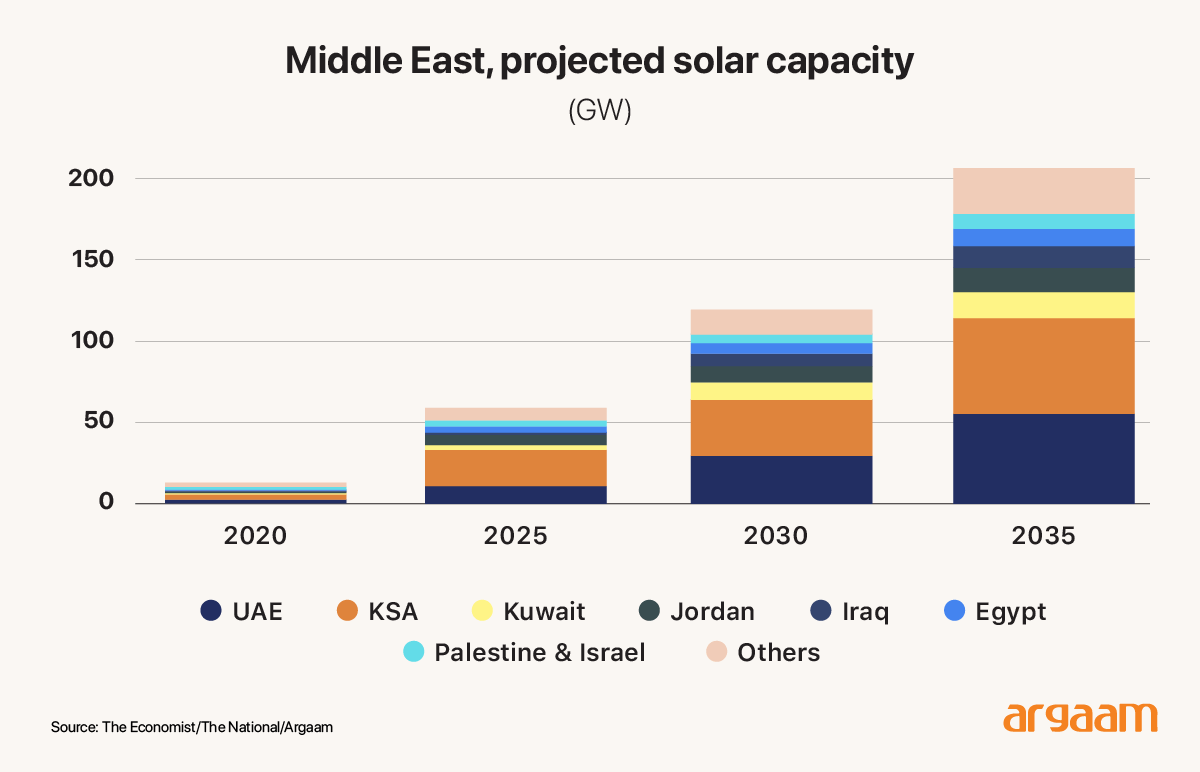
Saudi Arabia solar energy market size reached USD 6 Billion in 2024. Looking forward, there are independent projections that the market to reach USD 125.2 Billion by 2033, exhibiting a growth rate (CAGR) of 39.36% during 2025-2033.
Undermining Your ROI
Let's perform a quick ROI analysis to determine whether oversizing your solar system will be financially beneficial or counterproductive.
Since polycrystalline panels are approximately 20% cheaper than the one advertised by the company in our example above, the cost per panel would be about SAR 2,400, making the total cost around SAR 192,000 for 80 panels compared to SAR 240,000 if you unnecessarily used the expensive one.
However, if you only need only 20 panels to meet your energy needs since you oversized by accepting the 80-panel offer, and this’s based on subject matter experts advice, the initial capital expenditure drops significantly, down to about SAR 60,000 for monocrystalline or SAR 48,000 for polycrystalline panels.
This reduction in upfront investment could dramatically improve your ROI, with payback periods shrinking and internal rates of return (IRR) increasing. (PS: The IRR is like the interest rate that makes the total money you earn from an investment equal to the money you spent on it.)

Your sunny investment is hit by a headwind
But here's the catch: oversizing beyond the necessary capacity can lead to future fees such as grid connection charges or surplus energy tariffs that actually penalize excess capacity.
For a time, this surplus translated indeed into tangible earnings, let’s say for explaining purpose roughly SAR 2,000 annually, creating a sense of additional income and contributing to the country’s renewable energy goals.
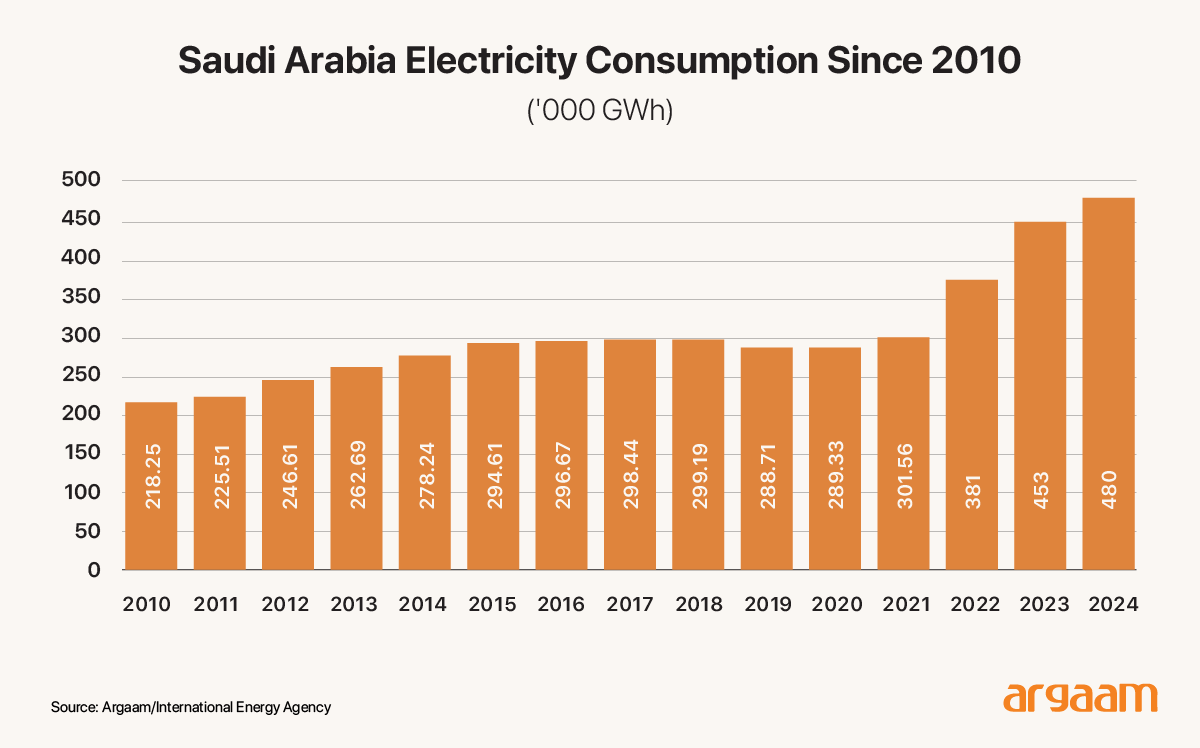
But as more and more households are expected to install oversized systems due to the habit of overconsumption, the grid began to experience instability.
The high fluctuations in the exported energy, especially during peak sunlight hours, posed challenges to grid management.
This instability risks power outages, equipment damage, and complicates grid balancing, threatening overall system reliability.
In response, the government introduced a new regulation aimed at stabilizing the system to deter citizens and residents against oversizing. A charge of SAR 600 per year was imposed on each households then.
Previously, a household would earn SAR 2,000 each year from the excess solar power.
Now, after the imposed charge due to the expected boom in installing solar panels in the future, the net profit shrank by %30 to SAR 1,400.

The size does matters
In an academic paper titled “Is switching to solar energy a feasible investment? A techno-economic analysis of domestic consumers in Spain”, we find out that installing the optimal amount of solar panels, neither undersized nor oversized, ensures the best balance between investment costs and financial returns.
The study covered 11 Spanish cities and five different profiles of households representing various demand patterns.
As far as the profitability of a household from installing solar panels at the right size, it used three key financial metrics for evalution:
➤ Net Present Value (NPV): This tells us how much money the project is expected to make over its lifetime, after accounting for the time value of money.
➤ Internal Rate of Return (IRR): This is the percentage return the project would generate annually.
➤ Self-Sufficiency: This measures the proportion of the household's energy needs met directly by the installed solar system, indicating how independent the household becomes from the utility grid in case it opts to have an off-grid solar system based on its own batteries.
But the paper also highlighted a dilemma for the Spanish government, which encourages sustainability practices, from the noticeable growing decrease in electricity consumption from utilities.
The phenomenon has led to lower sales volumes. Consequently, utilities experience diminished revenue from the sale of electricity, which is often their primary income source.
Over time, this decreased revenue can challenge the financial viability of utility companies, particularly in regions heavily adopting household solar.
Utility revenue often relies on both volumetric (kWh-based) charges and fixed fees (connection or infrastructure charges).
Reduced consumption due to household solar can disproportionately affect volumetric charges, which are directly tied to energy sales.
To compensate for lost revenue, utilities may increase fixed charges per customer, but potentially leading to higher costs for all consumers, including those without solar panels.
More importantly to the government, as households generate more of their own electricity, utilities see a drop in sales volume and total revenue, which translates into lower gross and net profits, and accordingly energy providers will pay less tax as they are only taxed on their net profit, thereby decreasing government revenue derived from these taxes. It’s indeed a financial dilemma.