




|
Small and medium-sized enterprises (SMEs) in our region and several countries around the world face a hidden yet significant challenge that quietly drains their time and resources: chasing late payments. On average, these businesses spend between 3 to 5 hours each week trying to secure overdue invoices. Over the course of a year, this amounts to an astonishing 150 to 250 hours, which’s equivalent to several full working weeks, but in this case dedicated to a task that generates no revenue. This considerable investment of time not only strains already limited resources but also pulls focus away from activities that drive growth and sustainability, highlighting the urgent need for more efficient payment processes and supportive financial regulations. Actually, the crisis of overdue invoices remains significantly underreported in the media across the Middle East. While cash flow challenges are a known issue globally, the specific problem of delayed payments often flies under the radar in local coverage, overshadowed by broader economic discussions. This lack of media focus obscures the financial strain and operational hurdles that SMEs face daily, limiting awareness and dialogue around the urgent need for regulatory reforms and support mechanisms. In our analysis, we are taking the UAE as a case in point based on a recent report by Atradius, a global company specializing in credit insurance and debt collections. Founded in the Netherlands in 1923, It offers a comprehensive range of solutions to protect businesses against payment defaults and manage credit risks. Unlike larger firms, these enterprises often operate with limited staff and cash flow, making any delay in payments highly disruptive. When payments are delayed, companies often face disruptions in liquidity, which can directly reduce available working capital to cover essential expenses such as staff salaries. 
Payment Practices in Focus Making up over 94% of all businesses, their economic contributions to the non-oil GDP and entrepreneurial spirit are key to the nation’s ongoing transformation and economic diversification. The Atradius Payment Practices Barometer found out that overdue invoices are affecting 58% of B2B sales in the United Arab Emirates. The Barometer is an annual survey that examines business-to-business (B2B) payment practices across global markets. This survey was carried out in the second half of the second quarter of 2025 to provide timely insights into current B2B payment practices and related challenges in the UAE market. Companies operating in the UAE were selected across different sectors. The survey specifically sought relevant contacts responsible for accounts receivable management within these companies, ensuring that responses came from personnel knowledgeable about payment processes. A total of 240 interviews were conducted through Computer Assisted Web Interviews, each lasting approximately 15 minutes. 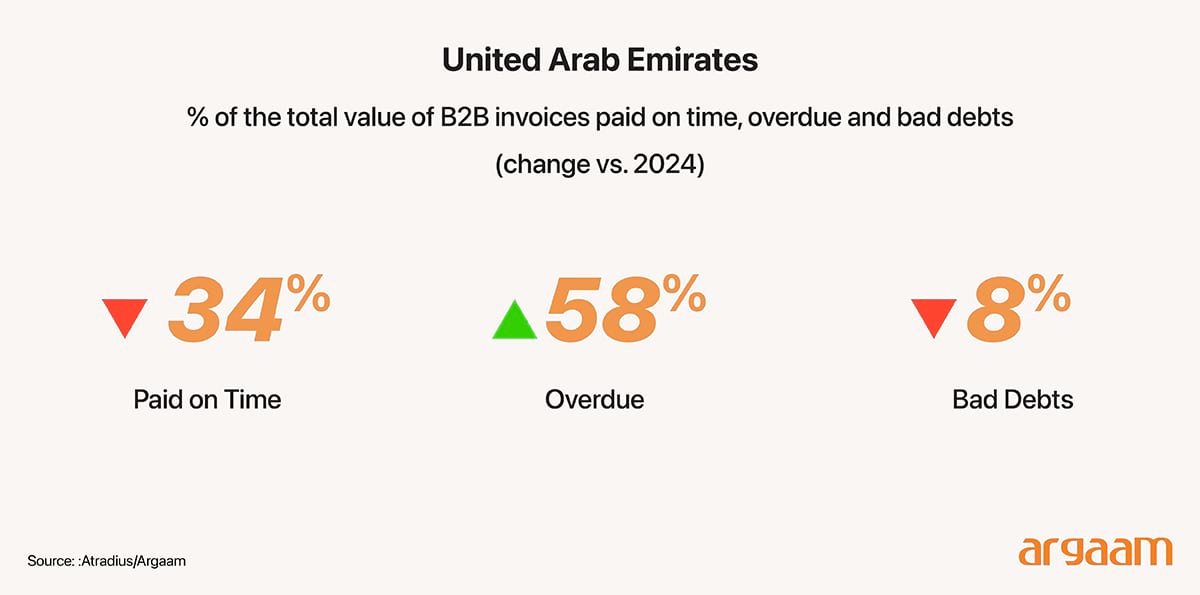 The key invisible barrier within the system This widespread fragmentation in payment behaviour is largely attributed to administrative inefficiencies in customer payment processes. This means that internal delays or shortcomings within a buyer's organization that hinder timely payment of invoices. These administrative bottlenecks are the main invisible barrier behind overdue invoices in the UAE, with 41% of respondents identifying delays in the customer's payment process as the primary cause of late payments, according to the Atradius report. These administrative inefficiencies create cash flow strain even when the customer is not experiencing financial difficulties. Late payments affect more than half of B2B invoices, with 56% of Fast-Moving Consumer Goods companies ((Examples include packaged foods, beverages, toiletries, and over-the-counter drugs) and 55% of Steel and Metals firms reporting overdue invoices. Similarly, around 60% of pharma invoices are overdue. On average, companies lose about 8% of their sales because customers don’t pay their bills. Half of the companies lose 5% or less. Customers often take longer than the usual time to pay their bills—sometimes up to a month or almost two months late depending on the industry. These unpaid amounts make it harder for companies to have cash and reduce their profit. Despite payment delays, about 50-60% of B2B sales are transacted on credit (buy now, pay later), with average terms around 40-50 days to repay the debt depending on the sector. 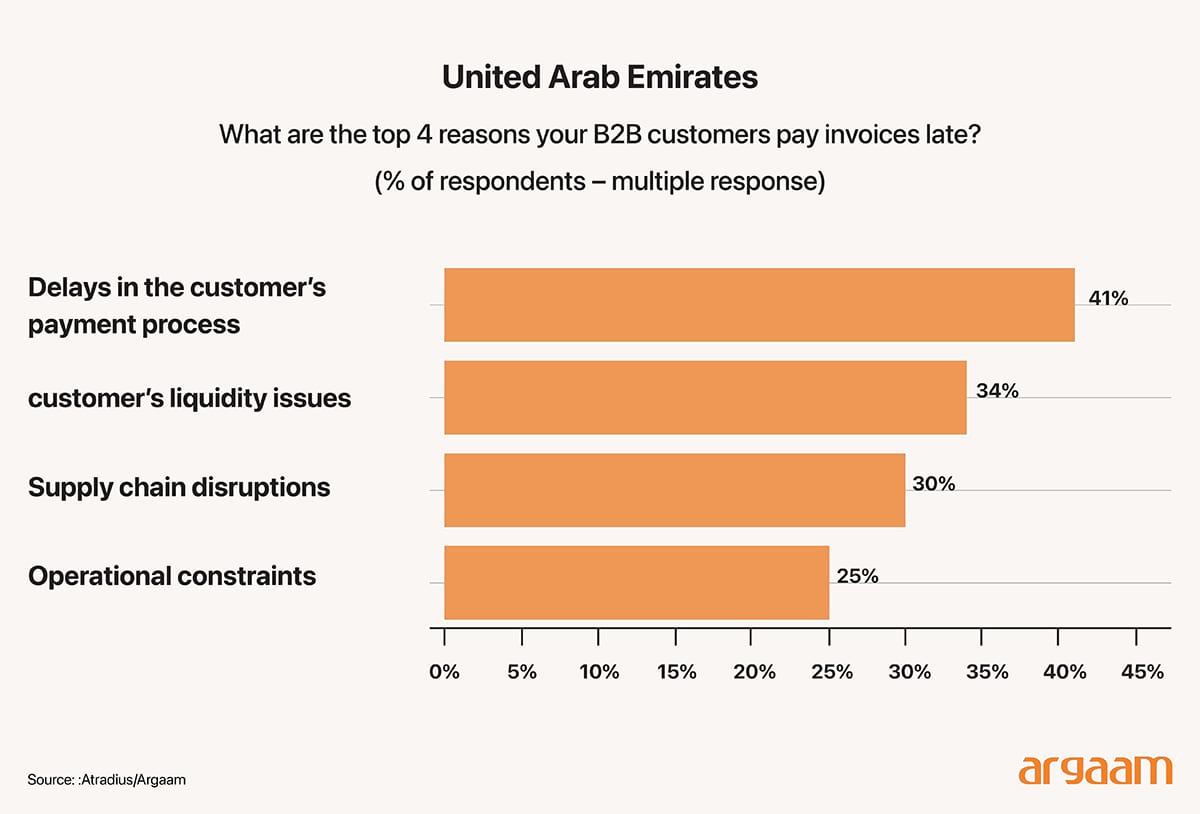 What the UAE Can Learn from the UK’s Regulatory Success In the UAE, the established sequence of actions (according to the official Hasad Debt Collection), which include sending payment reminders, proposing flexible payment plans, engaging debt collection agencies, and ultimately initiating legal proceedings, constitutes a widely accepted framework for managing late payments. But despite their prevalence and logical progression, these steps often fall short as effective deterrents against habitual late payers. For clients facing genuine financial constraints or opportunistically delaying payment to manage their own cash flow, these reminders may be easily disregarded or deprioritized. Moreover, repetitive reminders risk being perceived as procedural formalities rather than compelling prompts for immediate action. While installment arrangements demonstrate empathy and preserve customer relationships, they may unintentionally signal tolerance for delayed payments. Clients might perceive such flexibility as an opportunity to extend their financial liabilities without immediate repercussions. The cost of debt collection agencies may deter smaller businesses from utilizing them fully or promptly, reducing their preventative efficacy. Legal proceedings entail substantial financial costs, extended timeframes, and resource commitments that can outweigh the recovered amount, particularly for smaller claims. The United Kingdom is widely regarded as a leading model in implementing tough regulatory frameworks targeting late payment practices, particularly to support small and medium-sized enterprises (SMEs). 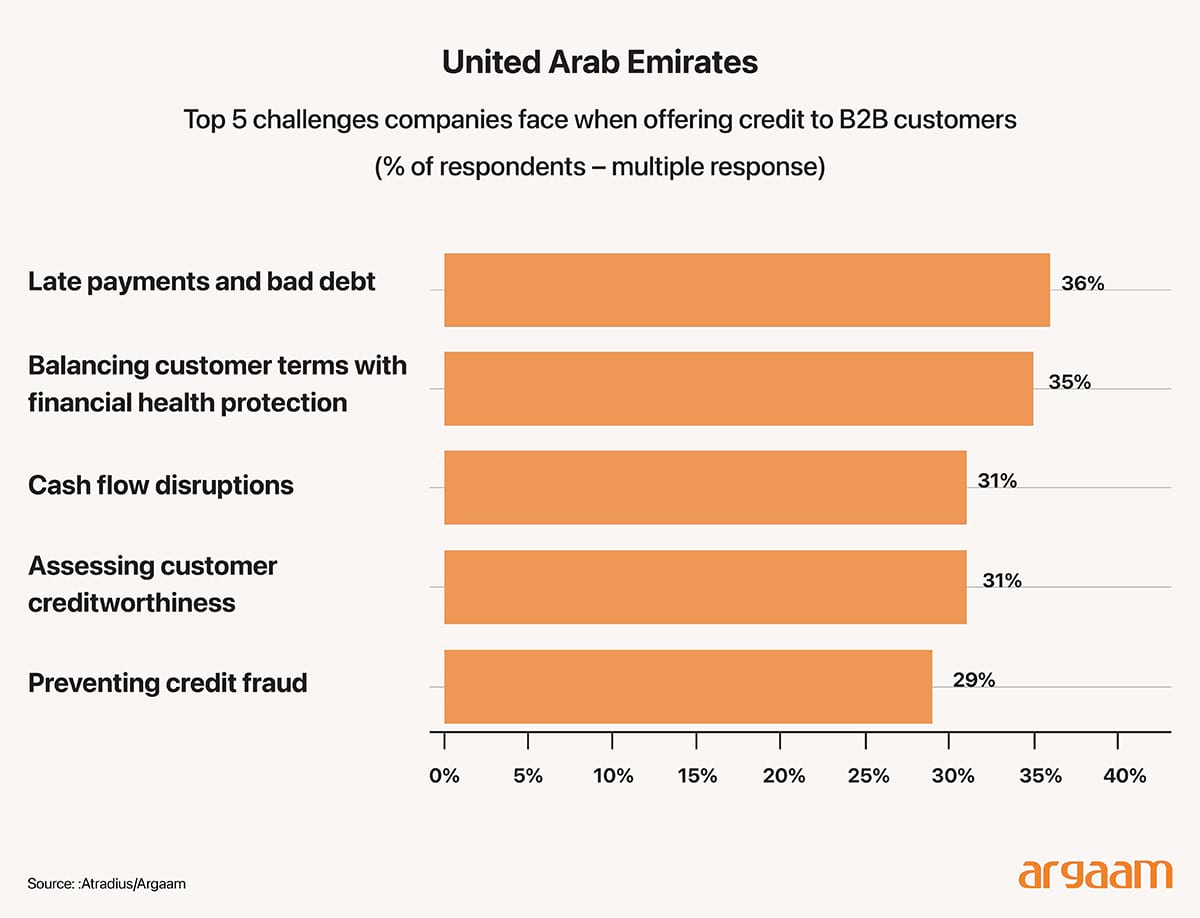
In late July, the UK government introduced a new late payment law, the toughest crackdown on overdue invoices in a generation. The impact of overdue invoices is huge: an estimated £11 billion lost to the UK economy each year because of poor payment practices. UK government enforces maximum payment terms for business-to-business (B2B) transactions, reducing the original 60 days to only 45 days. There’s a strict 30-day invoice verification deadline, during which businesses must confirm or dispute invoices within a month. Other new measures include unannounced inspections or audits carried out by regulatory authorities to monitor and ensure compliance with payment regulations, as well as multi-pound fines. The UK has implemented legislation such as the Late Payment of Commercial Debts (Interest) Act, which allows small businesses to charge interest and claim reasonable debt recovery costs on overdue invoices. The statutory interest rate is typically 8% plus the Bank of England base rate. Finally, UK regulators exercise the power to publish information regarding businesses with poor payment records, thereby leveraging reputational risk as a deterrent. The message is clear: it’s time to pay up. |
|
|

|

|


|


|