




|
Over the past few years, the technology landscape has been marked not only by rapid innovation in AI but also by strikingly different approaches to managing profit and talent in leading firms across the globe. On one hand, we have international digital giants such as Meta and Microsoft, which reported in the past three fiscal years record-breaking profits while simultaneously slashing thousands of jobs in a short span of time. On the other, key Middle Eastern telecommunications and tech companies like Saudi Arabia’s Solutions by STC and the United Arab Emirates’ &Etisalat are also posting strong profits but are carefully nurturing and developing their workforce, adhering to disciplined hiring strategies that reflect a long-term vision grounded in their unique social and regulatory contexts. The profit strategy adopted by leading international technology firms such as Meta, Microsoft, and Amazon, highlighted starkly by the immense profits earned per laid-off employee, raises critical questions about the role of corporations not merely as profit-maximizers but as responsible social actors. 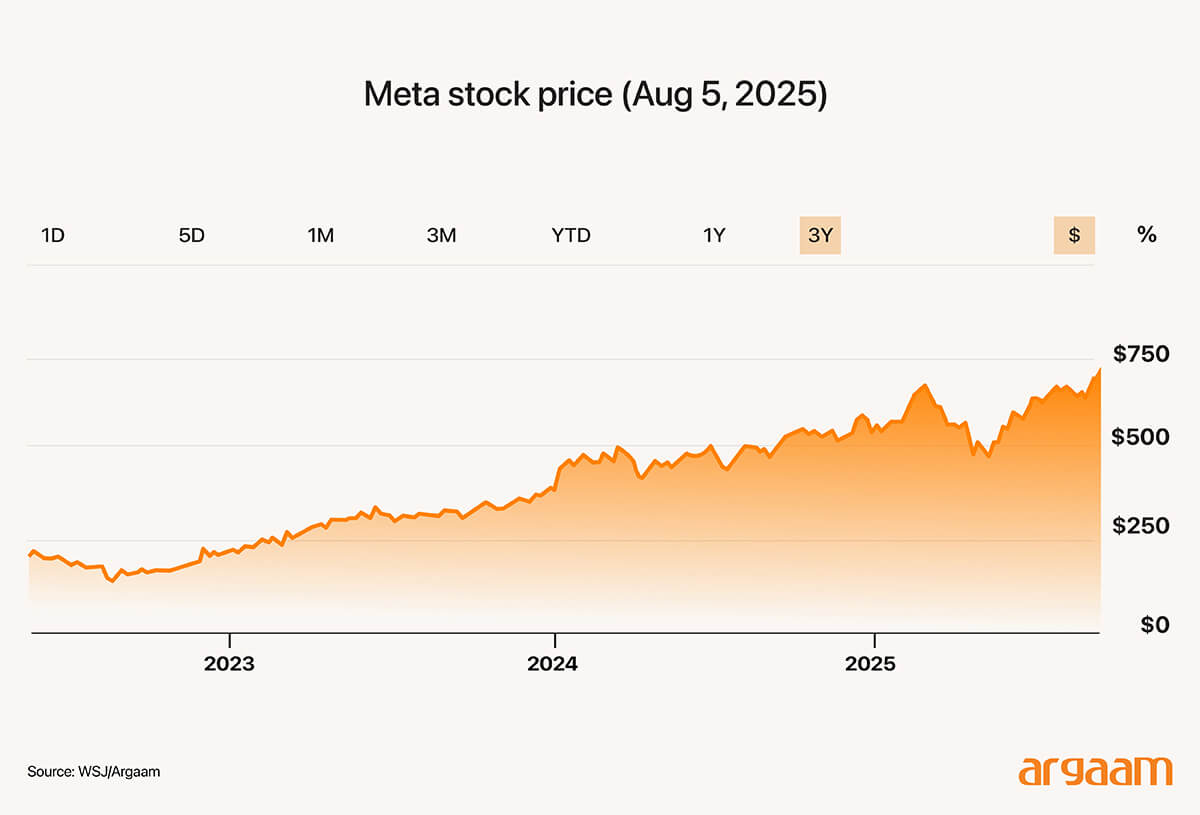
With Meta reportedly earning approximately $3.9 million, Microsoft $9.8 million in profit for every employee they let go, we cannot help but critically examine the values driving these decisions beyond mere financial calculus. The last big cuts at Meta came in 2023, when the company cut about 10,000 positions. It cut about 11,000 roles in 2022. This means that Meta made $81.9 billion in two years out of its job cuts strategy. At first glance, these figures underscore the extraordinary profitability and capital efficiency of these firms. Such staggering numbers suggest that even after extensive layoffs, these companies remain significantly profitable, indicating that their decisions to downsize are less about financial survival and more about maximizing shareholder value and market expectations. This strategic prioritization aligns closely with investor pressures in public markets, where quarterly earnings and growth trajectories often dictate corporate behavior. The magnitude of profits per laid-off employee suggests that these decisions are disproportionately influenced by short-term financial optics rather than genuine business necessity. This interpretation aligns with concerns documented in academic and regulatory analyses -- including a recent research paper titled Do digital technology firms earn excess profits? -- that digital giants often prioritize investor appeasement and market dominance over broader social responsibilities. Let’s have a quick look at the key highlights of Metas’ balance sheet in FY 2024, according to the company’s website. 
Revenue was $164.50 billion, representing increases of 22% year-over-year for the full year 2024, while total costs and expenses were $95.12. The difference between revenue and total costs and expenses represents Meta's operating profit, which includes the excess profit beyond covering operating expenses such as staff salaries, cost of goods sold, marketing, R&D, and other operating costs. This operating profit of $69.38 billion indicates that Meta not only covers all its operating expenses, including staff salaries, but also earns a substantial surplus. In 2024, Microsoft implemented significant layoffs, with a total of approximately 9,000 employees being laid off, representing about 4% of its global workforce. These layoffs occurred in multiple rounds, including a reduction of around 6,000 jobs in May last year alone. Microsoft annual revenue for FY 2024 was $245.122 billion, a 15.67% increase from 2023. The company’s total operating costs for the same year were $135.7 billion. The operating profit is then $109.4 billion. This aligns with our analysis that major international tech firms digital are highly profitable and generate returns well beyond their operating costs. 
The Hidden Wealth of Innovation
It’s important to note that the real profit of these major tech companies could be much higher than what their traditional balance sheets show, as we draw insights from a research paper titled Explaining the recent failure of value investing. Because tech companies spend a lot of money on things like research and development (R&D), software, or building digital products. Accounting rules often treat these as regular expenses right away instead of as investments that will pay off in the future. This means the profits reported in the accounts can look smaller than the real economic value the company is creating. Let’s assume a tech company spends $100 million on R&D in Year 1 to develop a new software product. The accounting rules require that the entire $100 million is recorded as an expense in Year 1. Now, suppose the company earns $150 million in revenue from this product over 5 years (starting Year 2), so 30 million per year. Accounting Profit Calculation: ▶ Year 1: ● Revenue = $0 (product not yet launched) ● Expenses = $100 million (R&D expensed fully) ● Profit = 0−100 million = –$100 million (loss) ▶ Years 2 to 6: ● Revenue = $30 million each year ● Expenses = $0 (since R&D already expensed) ● Profit = $30 million each year ▶ Total accounting profit over 6 years: ● Year 1 loss = –$100 million ● Years 2–6 profit = 5 × 30 million= $150 million ● Net = –100 million+150 million = $50 million That’s why their true economic profitability is often higher than what you see in standard accounting reports. Expensing all R&D immediately makes Year 1 look like a big loss and profits later look higher. 
The ethics of profits in the Arabian Gulf In contrast, tech companies and telecom giants in regions like the Arabian Gulf, which emphasize sustainable employment and disciplined hiring alongside profitability, illustrate an alternate paradigm where social commitments and business success coexist. This suggests it is possible to balance innovation-driven profits with ethical stewardship of human capital, challenging the notion that workforce reductions must be the default response to shifting corporate priorities. In the latest Vision 2030 report, progress in the labour market has been driven by job localization initiatives, targeted upskilling, and reforms that support greater inclusion. One of the kingdom’s priorities is to ensure that it builds both the infrastructure and the local workforce that operate the fast-developing digital transformation. In 2024, Solutions by STC had a workforce of 1,464 employees, according to their annual report. This’s compared to 1,719 employees in 2021. This very slight reduction in workforce reflects a strategic streamlining effort rather than a drive for immediate profit maximization. 
This modest decrease indicates a careful optimization of resources to improve operational efficiency, likely through enhancing processes, adopting new technologies, or restructuring roles. This disciplined and highly selective hiring process contrasts sharply with the easy hire-and-fire culture often seen in large tech companies that undergo mass layoffs. The careful approach ensures that each new employee is a strong fit for the company’s strategic goals and culture, promoting stability and continuity in the workforce. By prioritizing quality over quantity in talent acquisition, Solutions by STC avoids the pitfalls of rapid workforce expansion followed by large-scale layoffs, which can disrupt morale and hamper long-term growth. A quick look at the main highlights of the company’s financial results last year reveals that revenues for the year 2024 reached SAR 75,893 million ($20.2 billion), marking an increase of 5.7% compared to 2023. Gross profit for the year 2024 reached SAR 37,300 million ($10 billion), reflecting an increase of 7.4% from 2023. Net profit for the year 2024 reached SAR 24,689 million ($6.6 billion), with a remarkable increase of 85.7% compared to 2023. In 2024, solutions by stc saw a decrease in operating expenses by 7.3% compared to the previous year, according to the company's annual report. This improvement in cost efficiency was largely due to a 18.9% reduction in the costs of marketing to sell, and deliver its products or services to customers. In 2024, Etisalat, now known as e&, reported a consolidated revenue of AED 59.2 billion, with operating expenses remaining relatively stable at 35% of revenue. Like STC’s focus on job localisation, Etisalat actively prioritized the development of national talent, achieving a 54.3% Emiratisation rate in their UAE operations in 2024. This represents a 3.43% increase year-over-year. In conclusion, the cost of layoffs, lost jobs, income, and human potential, is hard to justify when companies report record profits and pay huge shareholder rewards. A corporation isn’t just a profit machine; it’s a social institution that people rely on for their livelihoods. Treating workers as expendable, especially after they helped generate strong profits, shows a clear failure in corporate responsibility. |
|
|

|

|


|


|