




|
Aramco, one the world oil heavyweights famous for fueling the world’s economies with fossil fuels, is now charting a distinctly different course; not beneath the earth, but deep within the realms of data and language. Aramco’s $1.5 billion commitment to expanding data center capacity and developing an Arabic AI model has flown largely under the radar, overshadowed by the usual headlines focused on oil prices and production volumes. Yet, there is far more to this move than meets the eye. Our analysis draw our readers’ attention to an interesting strategy that this investment is emblematic of a broader, subtle shift among oil majors as they cautiously hedge against the uncertain future of fossil fuels. Rather than dramatic pivots, these energy giants are quietly reallocating capital toward advanced technologies and digital infrastructure—areas where they can leverage existing strengths while preparing for an energy transition that demands agility and innovation. This positions Aramco to capture growth opportunities in sectors where innovation and technological advancements will drive future economic value. 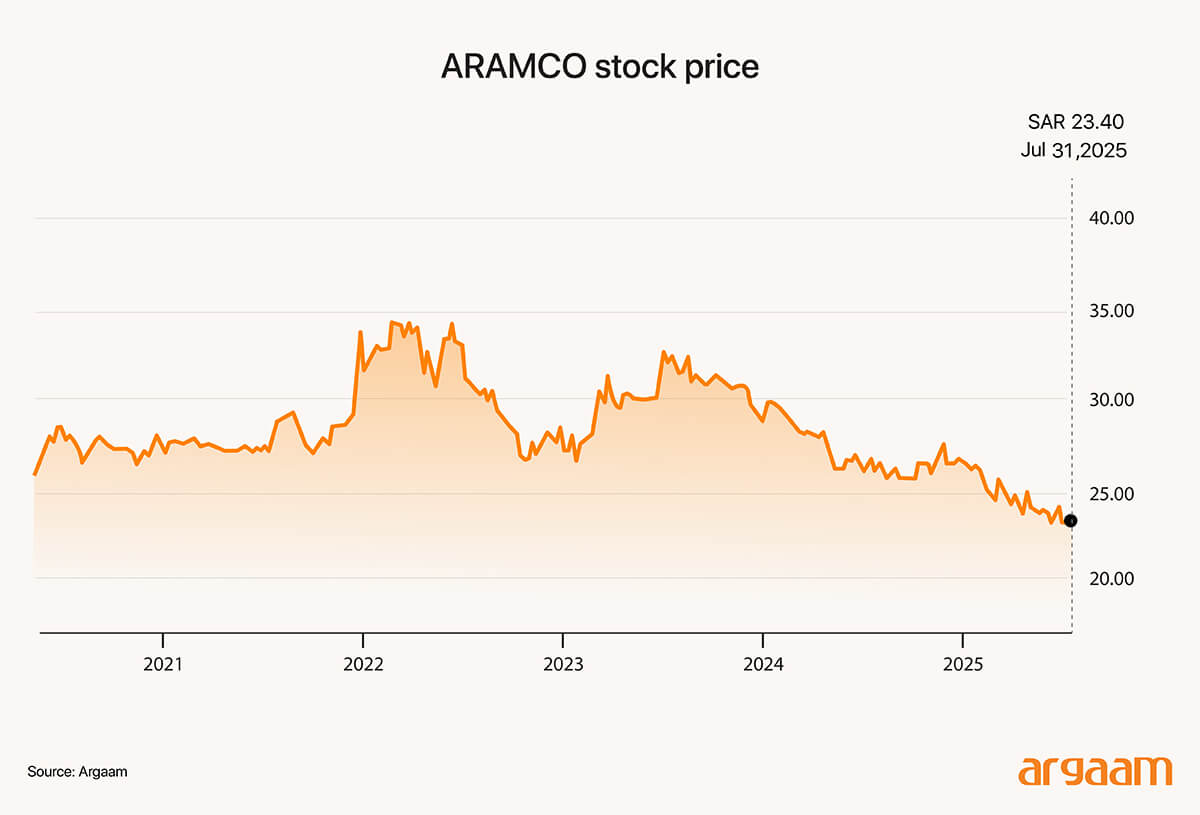
For example, Aramco Digital Company’s collaboration with Groq, a U.S.-based chip startup specializing in AI inference, is about building the world’s largest AI inferencing data center in Saudi Arabia. And just last month in July 2025, Wa’ed Ventures, Aramco’s venture capital arm, led a $30 million Series B funding round for Lucidya, a Saudi-based AI startup. By backing startups specializing in AI, space technologies, robotics, and fintech, Aramco is proactively building a portfolio that extends well beyond its legacy oil-centric fixed assets. Abu Dhabi National Oil Company (Adnoc) is also joining the growing trend. In June, it unveiled that it would dramatically increase its investment in AI and data centers in the US from $70 billion to $440 billion over the next decade, mirroring Aramco’s strategic pivot toward technology-driven growth rather than relying solely on traditional hydrocarbons. 
Decarbonization Yet Focus on Traditional Hydrocarbon Development Both oil heavyweights have also reallocated some capital resources from traditional oil and gas operations toward low-carbon energy projects, underscoring a strategic pivot to gradually decarbonize some of their projects to capture emerging market opportunities in the energy transition. In December, Aramco formalized a strategic partnership with industrial gas company Linde and oilfield services provider SLB to establish a carbon capture and storage (CCS) facility in Saudi Arabia. Supporting Saudi Arabia’s ambition to generate 50% of its electricity from renewable sources by 2030, Aramco is also committing equity to develop 15 gigawatts of solar and wind capacity (enough electricity to power up to 15 million homes), diversifying its asset base into clean energy infrastructure. ADNOC has further expanded its green investment portfolio by acquiring a 10% share in the British CCS specialist Storegga Geotechnologies and taking a significant 35% ownership position in a low-carbon hydrogen and ammonia production facility in Texas, a joint venture with ExxonMobil. But it’s important to note for the sake of objectivity in this analysis that although Aramco and ADNOC have begun investing in non-oil areas such as natural gas projects, these moves remain closely aligned with their core energy businesses. The most recent deals, ADNOC’s $5 billion Rich Gas Development and Aramco’s $10 billion contracts for the Jafurah shale-gas field, represent sizable commitments within the hydrocarbon sector. This indicates that while there is some diversification, the majority of their investments continue to focus on fossil fuel-related energy resources. 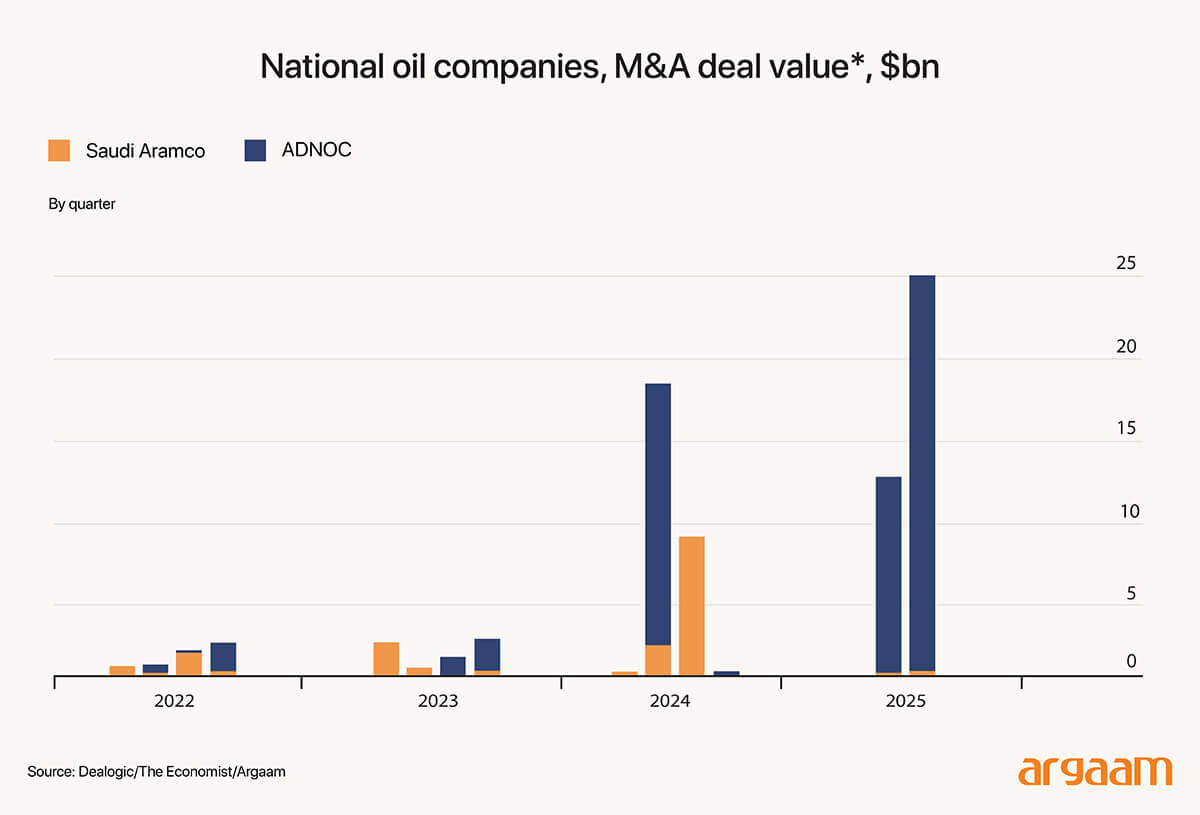 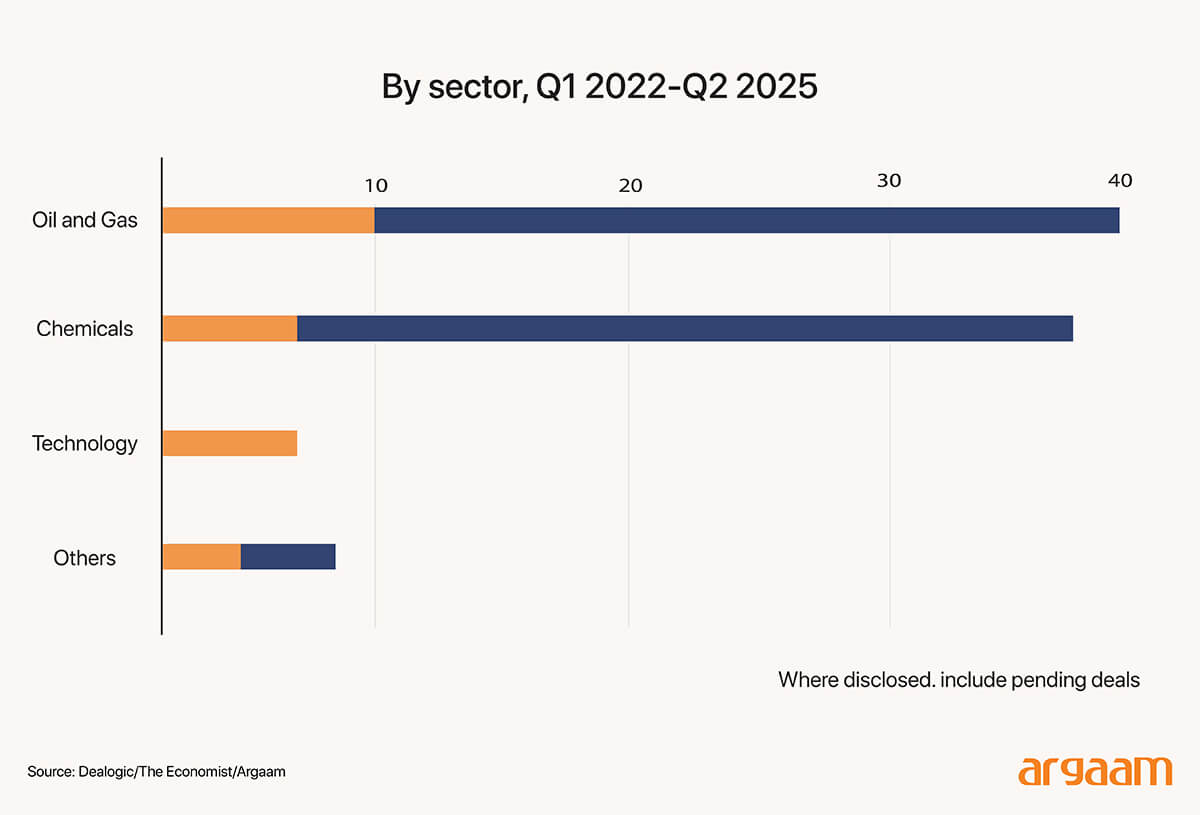
At the international level of the oil industry, we explore in the final part of this analysis the contrasting perspectives within international energy companies like British Petroleum, Shell, and Exxon Mobil regarding the adoption of renewable energy. We draw these insights from a recent research paper published in the journal Energy Research & Social Science. The research was funded by the UK-based Natural Environment Research Council (NERC) and the Engineering and Physical Sciences Research Council (EPSRC) are UK-based research funding agencies. According to interviewees from these companies, who contributed to the research conducted in 2023, there is a clear split between employees and management advocating for rapid change and those favoring a slower, more cautious “wait and see” approach. One interviewee highlighted that some companies are having a fixed ‘DNA’ that makes it almost impossible to change. This cultural inertia is another factor slowing adaptation to renewables and alternative energy businesses. Numerous participants expressed concerns about the ability of companies to pivot their strategies rapidly enough to meet the demands of the energy transition. The companies need to upskill current employees and pivot existing skill sets, which is not trivial given the scale and historic focus on fossil fuels. One interviewee remarked on the difficulty incumbent oil companies face competing against firms focused entirely on renewables that have already secured top talent in the field. Another group of interviewees believes that the current and continuing profitability of major oil companies in the near future is vital for supporting the transition.
However, in reality, there is little evidence this is happening effectively. For example, in early 2022, despite high oil prices boosting profits, major European oil companies invested only a small portion (2.5–6.3%) of their profits into low-carbon energy projects. This limited reinvestment highlights a disconnect between the rhetoric of using fossil fuel earnings to finance the energy transition and the actual financial commitment shown by these companies. Furthermore, this raises questions about the genuine scale and speed of transition efforts, as a large portion of profits remains invested in traditional hydrocarbon activities rather than scaling up renewable energy or other low-carbon solutions. In summary, our analysis reveals a noticeable trend among the Middle East leading oil companies Aramco and ADNOC to diversify their investments into non-energy sectors, particularly artificial intelligence (AI). This strategic move reflects an awareness of the need to adapt to future economic landscapes. However, despite this diversification drive, these companies continue to allocate the majority of their capital resources to their core hydrocarbon industry. This dual approach suggest that while there is some progress towards diversification, the fundamental shift needed to achieve a timely energy transition remains limited. This perhaps underscores the cautious approach of GCC oil majors as they consider the transition toward fully embracing sustainable energy futures in alignment with global climate goals. |
|
|

|

|


|


|