




|
When Saudi Arabian mining firms face a strategic investment decision in exploring and developing mineral resources, especially given a long horizon of around 10 years from exploration to delivery, they carefully weigh the upstream versus downstream focus in their value chain investment. Upstream activities like mining focus on extracting raw minerals with lower profit margins but are essential. Downstream activities add more value by refining and manufacturing, potentially increasing profits. Since both require large investments and have different risks and returns, firms must decide which part of the value chain best matches their strengths and market conditions to maximize long-term profits. Saudi Arabian Mining Co., known as Maaden, plans to explore 48,500 square kilometers within the kingdom as part of its mining strategy focused on extracting valuable minerals such as copper. This initiative aligns with the country's commitment to supporting the global energy transition, recognizing copper's critical role in technologies like renewable energy systems and electric vehicles. Focusing upstream in exploration and development in partnership with major investors and multinational companies to secure abundant local mineral resources, which aligns with Vision 2030’s aim to enhance local mining production and reduce net imports. A major milestone in the kingdom’s mining strategy was the introduction of a new mining investment law, reducing the tax rate from 45% to 20% to enhance investor confidence and align regulations with global standards.
🔎
Aligning Upstream Focus with Market Realities
The massive area under exploration in the kingdom (larger than some countries) suggests extensive exploration costs, operational expenses, and capital expenditures. When a mining company focuses on extracting and concentrating minerals like copper, their profit margin is about 10% to 15%. This means that for every dollar they earn from selling the raw copper concentrate, they make about 10 to 15 cents in profit. This percentage is a typical range derived from historical performance and financial analysis of mining companies operating in competitive global markets, according to an academic study titled Upstream or downstream in the value chain? However, the price of copper can change a lot over time. For example, the price per ton of copper has gone as low as around $4,800 and as high as around $9,300 per metric ton in the past ten years. |
Because the company is expected to also sell raw copper at these market prices, their total income can go up or down a lot depending on the price. If copper prices fall near the lower end, their profits shrink, and it might be harder to cover their costs or make a good return on the money they invested. If prices rise, they earn more profit and recover their investment faster. So, the company’s financial success depends a lot on unpredictable copper prices, which makes upstream investments riskier. Although the strategic goal is to support the energy transition, the immediate economic reality is that falling copper prices compress profit margins, making it difficult to cover operational costs and achieve a return on investments. 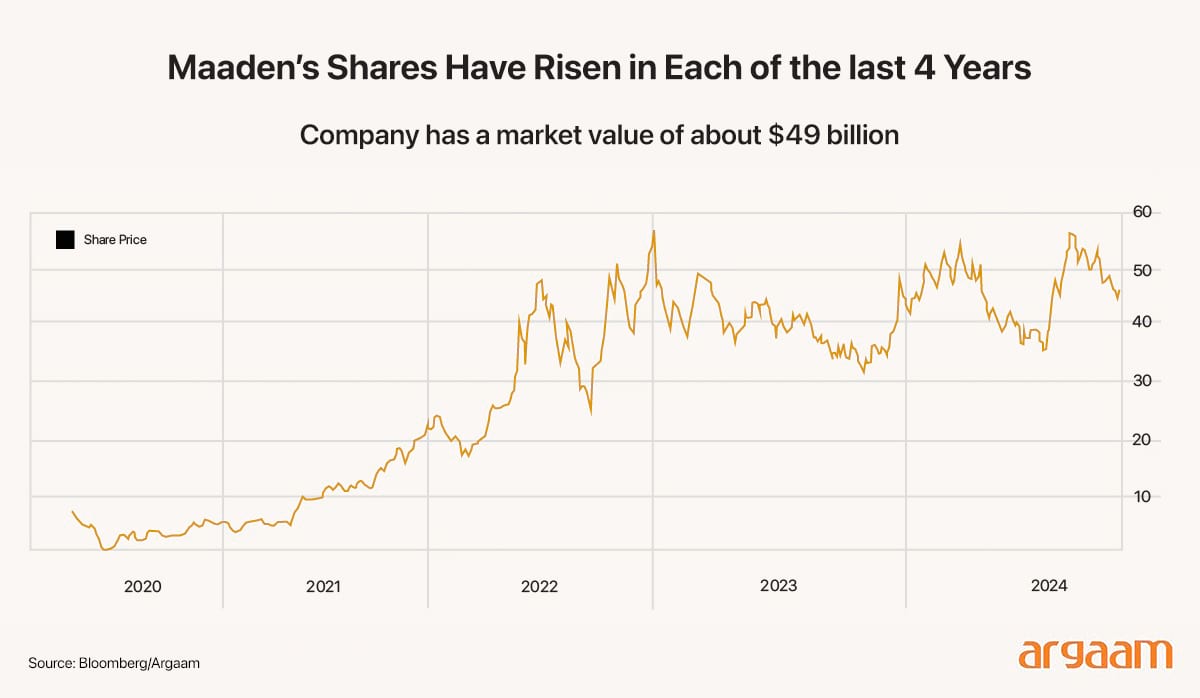 Even if the mining company is state-backed, the firm’s primary goal remains maximizing efficiency and profitability, as per the neoclassical theory of the firm, which assumes firms operate as price takers in competitive markets Relying solely on external financing without striving for operational and financial efficiency could risk future funding or lead to suboptimal use of capital. This aligns with the neoclassical theory of the firm in economics. This theory assumes that firms are price takers, meaning they cannot influence market prices and must accept prevailing prices in competitive markets. Firms aim to maximize profit by optimizing production efficiency and cost minimization. |
Suppose a mining company extracts 1,000 tons of copper ore with a copper content of 30%. The cost to extract and concentrate this ore is say $1,000 per ton, totaling $1 million. Refining converts the concentrated ore into pure copper cathodes, which have higher value. (However, refining plants require big investments and complex technology.) Now, imagine refining this concentrate to pure copper cathodes costs an additional $500 per ton and this refining adds value that refined copper sells at $4,000 per ton, while concentrated ore sells for $3,000 per ton. If the company sells the concentrate directly at $ 3,000 per ton (for1,000tons), revenue is $3 million. Costs for extraction and concentration are $1 million. Profit from upstream activities = Revenue - Cost = 3million−1 million = $2 million. If instead, the company refines upstream: ● Refining cost additional = 500perton×1,000=500,000. ● Sales revenue from refined copper = 4,000×1,000=4 million. ● Total cost = $1million (upstream) + $0.5 million (refining) = $1.5 million. ● Profit = $4 million−$1.5 million = $2.5 million. Why do many companies still avoid refining? Despite a potential profit increase (from $2M to $2.5M), uncertain market conditions or volatile copper prices as we outlined above make the return on refining investment uncertain. Owning and operating refining plants requires substantial capital investment, skilled labor, and operational risks. Shipping and logistics may favor exporting concentrated copper to countries with existing refining infrastructure. So, comparative advantage lies in the extraction and concentration phases, where it has resource abundance and cost advantages. By focusing capital and operational efforts upstream, companies avoid suboptimal use of capital (tying up resources in complex downstream processing that may not yield proportional returns or that others can perform more efficiently). Also, exporting intermediate products (concentrates) balances cash flow and risk and leverages global refining capacities. In conclusion, this analysis illustrates how companies prioritize upstream mining activities focusing on capital efficiency and known competitive advantages, while downstream activities (refining) may be outsourced to firms or countries better positioned to maximize value on this part of the value chain. |
|
|

|

|

|


|


|