




|
Sri Lanka’s investment landscape is characterized by a growing emphasis on attracting large-scale private capital investments in the new strategic economic zone Port City Colombo. Just four companies have collectively secured approval to invest about $1.4 billion in the new investment zone. This’s coupled with significant interest from over 100 additional investors awaiting approval, which underlines a clear focus on sizeable and high-impact ventures. This selectivity reflects broader trends in Sri Lanka’s entrepreneurial ecosystem, which increasingly favors large businesses and market-driven investments over smaller enterprises. Such an approach aims to position the Port City Colombo as a strategic maritime business hub, reinforcing the government's emphasis on attracting private sector development through curated and high-value partnerships. The under-construction economic zone on reclaimed land from the ocean offers a range of investment incentives including corporate tax exemption at 0% rate, duty-free import of capital goods and state-of-the-art digital infrastructure designed to create a business-friendly environment.
While the high selectivity and tax incentives may appear to present a golden opportunity for major Saudi investors and large firms in the kingdom, it is important to approach the investment scene in Sri Lanka with a healthy dose of scrutiny. Behind the impressive major coastal project lies a complex of regulatory complications due to political indecision, regional competition, geopolitical rivalry between two of the world’s giant economies, and climate change. These factors represent risks that Saudi investors should carefully consider, as they may impact the viability and long-term success of investments in the region. 
Influencing Regional Market Competitiveness
The potential reduction of the corporate tax exemption period in the new economic zone from 25 years to 12 years could have significant implications for attracting foreign direct investment (FDI). Lengthy tax holidays are often critical incentives for investors to offset initial setup costs and risks associated with entering emerging markets. Shortening this period may diminish the Port City’s appeal compared to competing regional and international hubs that continue to offer multi-faceted attractive fiscal incentives. For example, foreign firms registered in India’s economic zones enjoy a 100% exemption of corporate tax for profit in the first five years, a 50% exemption for the next half-decade, and another 50% exemption for profits reinvested for five years. This tiered system offers several advantages over a flat 12-year exemption that Sri Lanka’s Port City might offer due to pressure from the International Monetary Fund, which bailed out the heavily indebted country a few years ago. The IMF believes that such corporate exemptions for high-profile investors will be tantamount to lost revenues for the country’s economy and could be used to boost vital sectors like healthcare and education. 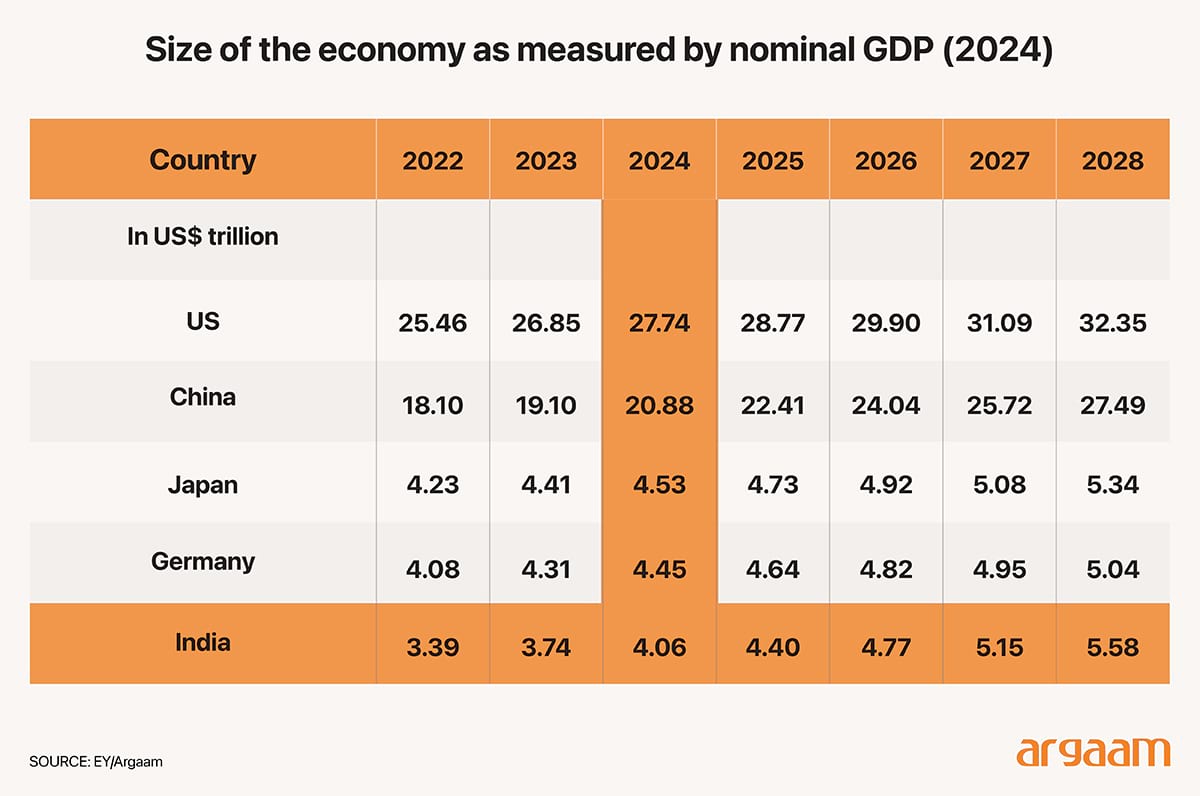
India’s tax exemptions extend effectively over 15 years with different phases, incentivizing continued investment and reinvestment. This phased approach rewards firms that grow and reinvest profits, creating ongoing financial advantages beyond a fixed-term exemption. The additional 50% exemption on reinvested profits encourages firms to expand operations within India rather than simply benefiting from an initial tax holiday and then exiting or slowing investment. But India’s great advantage point as a regional rival is its economy. India is predicted to become the third-largest economy by FY28, overtaking both Japan and Germany. India’s GDP, as shown in the table above, reached $4.06 trillion last year, compared to Sri Lanka’s $98.9 billion in the same year. India has a huge domestic market which provides scale advantages and demand potential that foreign firms typically want to access. This makes Indian economic zones attractive beyond just tax benefits. India's rupee is also attractive to foreign investors due to its large and growing consumer market (a massive population of around 1.4 billion against Sri Lanka’s only 23 million).  Sri Lanka’s recent economic progress, marked by a sharp decline in inflation from a peak of 50% during its 2022 financial crisis to negative inflation rates (-1.7% YoY in November), combined with GDP growth around 5% in 2024 (exceeding the World Bank’s estimate), demonstrates a strong macroeconomic stabilization. Sri Lanka suffered record inflation after its worst financial crisis in decades triggered by a record fall in dollar reserves pummelled the economy in 2022. In May 2022 it failed to make an interest payment on its foreign debt for the first time in its history. The country was then importing $3bn more than its exports every year and its foreign currencies plummeted from around $7.6 bn in 2019 to only $250 million. But attracting institutional investors often requires more than macroeconomic stability: it depends also on fiscal incentives (such as tax breaks, which might be sharply reduced if parliament enacted the new amendments to a tax bill), regulatory ease, and integration within broader regional value chains. Geopolitical rivalry between China and India Besides the potential backtrack on corporate tax exemptions for 25 years to 12 years for the new major foreign investors, there’s also an intense geopolitical rivalry over the returns of the new Port City between China and India, thanks to the island nation’s strategic location. The project is mainly funded by China under its Belt and Road Initiative to the tune of $1.4bn. Around 65 percent of the 178-hectare (440-acre) area of saleable reclaimed land will be held on a 99-year lease by China. India was also quick to sign a Build Operate Transfer agreement with the Sri Lanka Ports Authority to jointly develop the Colombo West International Container Terminal at the new port city. It’s clear then that the China-India competition over control of Sri Lanka’s Port City key assets highlights a strategic contest between two regional powers seeking influence over a critical maritime hub on one of the world's busiest shipping routes. If China and India—two of the world’s major economies—have long been vying for influence over the Port City and already control its key assets, the portion of returns available to other foreign countries will likely be limited. With these dominant powers securing the most valuable stakes, external investors such as Saudi Arabia may find that only marginal opportunities remain, reducing their potential economic benefits. The established control by China and India effectively narrows the scope for other countries to gain significant influence or profit from the city’s development, making the returns they can expect less attractive and possibly insufficient to justify large investments. 
Climate change vulnerability In the last part of our analysis, we draw the attention to the climate change risk and its potential impact on the Port City, which is scheduled for completion in 2041. Sri Lanka faces a high catastrophe risk from climate-induced hazards, ranking 89th out of 191 nations. The country faces a significant risk from rising sea levels due to climate change, with potential inundation of low-lying coastal areas, shoreline erosion, and saltwater intrusion. Sea level is estimated to rise by approximately 10 centimetres by 2030 and 21 centimetres by 2060, according to an academic study published in 2024 under the title ‘Evidence of Climate Change – Impacts in Sri Lanka.’ Inundation of land, saltwater intrusion into freshwater sources, and increasing frequency of storm surges are key risks that threaten dwellings, drinking water supplies, crop cultivation, livestock, fisheries, and tourism infrastructure. In conclusion, while Sri Lanka’s Port City presents attractive incentives and significant investment potential, especially for large-scale projects, Saudi investors should carefully consider key challenges we outlined in our analysis. The potential reductions in tax incentives in particular may diminish the country’s competitiveness. A well-informed approach is essential for investors seeking to capitalize on this strategic but complex opportunity. |
|
|

|

|


|


|