




|
Recognizing the increasingly interconnected challenges posed by both physical security and cyber threats in maritime operations, this analysis is presented to highlight the escalating risks associated with GPS jamming and spoofing targeting vessels navigating strategic waterways in the region. As these forms of deliberate interference grow more sophisticated and frequent, they pose a severe threat to the safe and efficient movement of maritime traffic within key shipping lanes that are essential to regional and global trade. The Kingdom of Saudi Arabia’s maritime strategy, characterized by the extensive integration of smart port technologies such as automation, the Internet of Things (IoT), and artificial intelligence (AI), represents a forward-looking approach to enhancing operational efficiency and competitive advantage in global shipping and logistics. However, this heavy reliance on advanced digital and satellite navigation systems – like any other advanced country in the industry -- inherently elevates vulnerability to jamming threats within key waterways like the Arabian Gulf, the Red Sea, the Strait of Hormuz, a vital waterway that handles about a fifth of the world’s oil supply. The jamming and spoofing of ships in recent weeks during the Iran-Israel war in June and the potential use of the piracy tactic by some militant groups in the region like the Houthis in Yemen could make it a priority for policymakers to develop robust measures to detect, prevent, and mitigate potential interference within the ships’ navigation systems. Nearly 1,000 ships experienced persistent and sometimes severe GPS signal jams every day during the 12-day war between Iran and Israel, according the Maritime Information, Cooperation and Awareness (MICA), a French naval monitoring firm. Even before the war between Israel and Iran, the International Maritime Organization, along with other United Nations agencies, issued a statement in March expressing concern over rising cases of interference in global navigation. 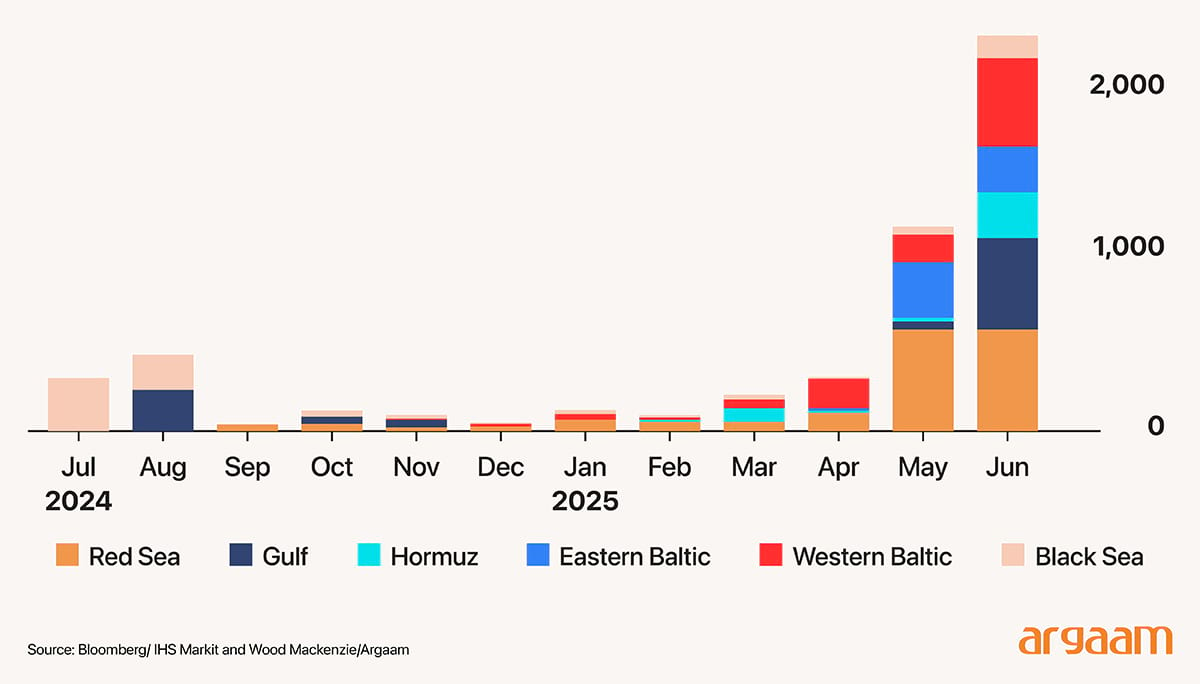 
Building a global shipyard in Saudi Arabia
Strategically situated at a vital nexus of global trade routes, the Kingdom is actively transforming itself into a premier international maritime logistics hub. This transformation is underpinned by significant investments exceeding SR25 billion (approximately $6.66 billion) in the past four years, according to the latest official data. Central to this effort is the expansion of shipbuilding capabilities. The establishment of the King Salman International Maritime Industries Complex (KSIC) in Ras Al-Khair exemplifies Saudi Arabia’s ambition to develop one of the world’s largest shipyards. Simultaneously, upgrades to pivotal ports such as Jeddah Islamic Port and King Abdulaziz Port reinforce the Kingdom’s capacity to manage increased trade flows effectively. These developments serve to alleviate global supply chain bottlenecks while solidifying Saudi Arabia’s role as a powerful maritime player. According to the most recent data available, Saudi Arabia's maritime logistics market is projected to reach USD 2.61 billion by 2033, which represents a compound annual growth rate (CAGR) of 4.30% during 2025-2033. In addition, the shipping container segment specifically is expected to grow at a higher rate of 6.76% CAGR during the same period, reaching USD 199.0 million by 2033. The KSIC alone is anticipated to contribute $17 billion to Saudi Arabia's GDP. Saudi Arabia is targeting a substantial increase in its maritime sector's contribution to national GDP, aiming for a 4% increase, from 6% to 10%, as part of its economic diversification efforts. On the international aspect of the jamming and spoofing of ships by warring parties or militant groups or tech-savvy sea pirates, over $2.8 trillion a year of all maritime trade passes through maritime chokepoints around the world. The maritime industry is responsible for delivering about 80% of global trade. 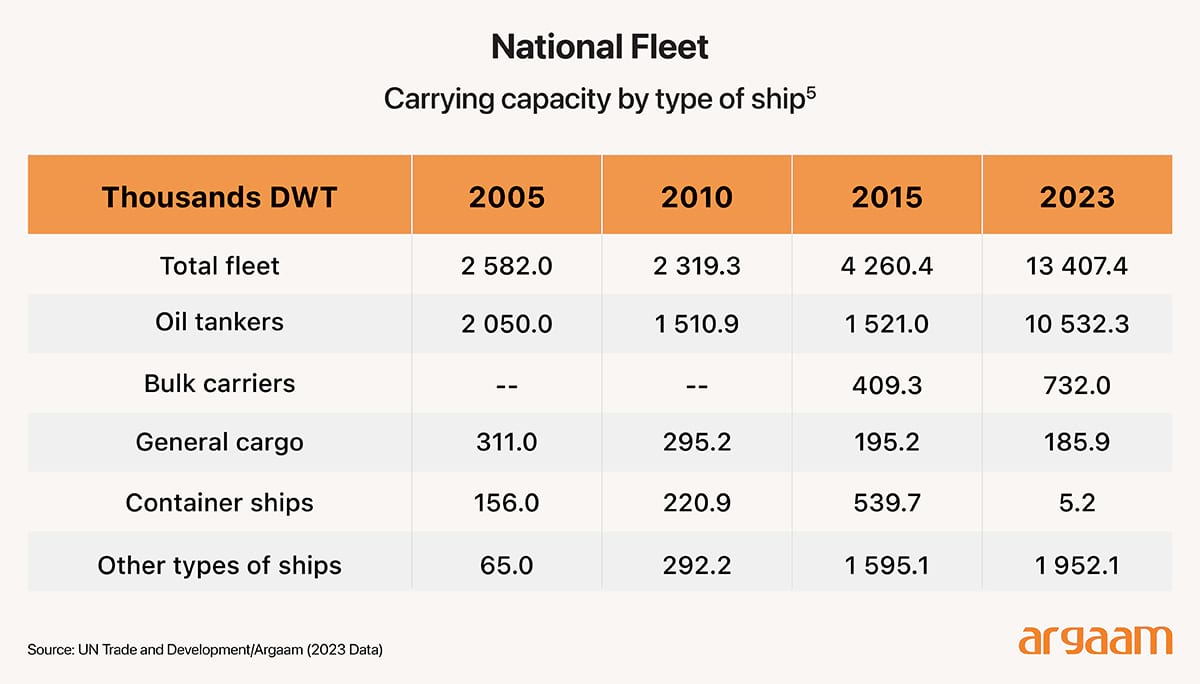 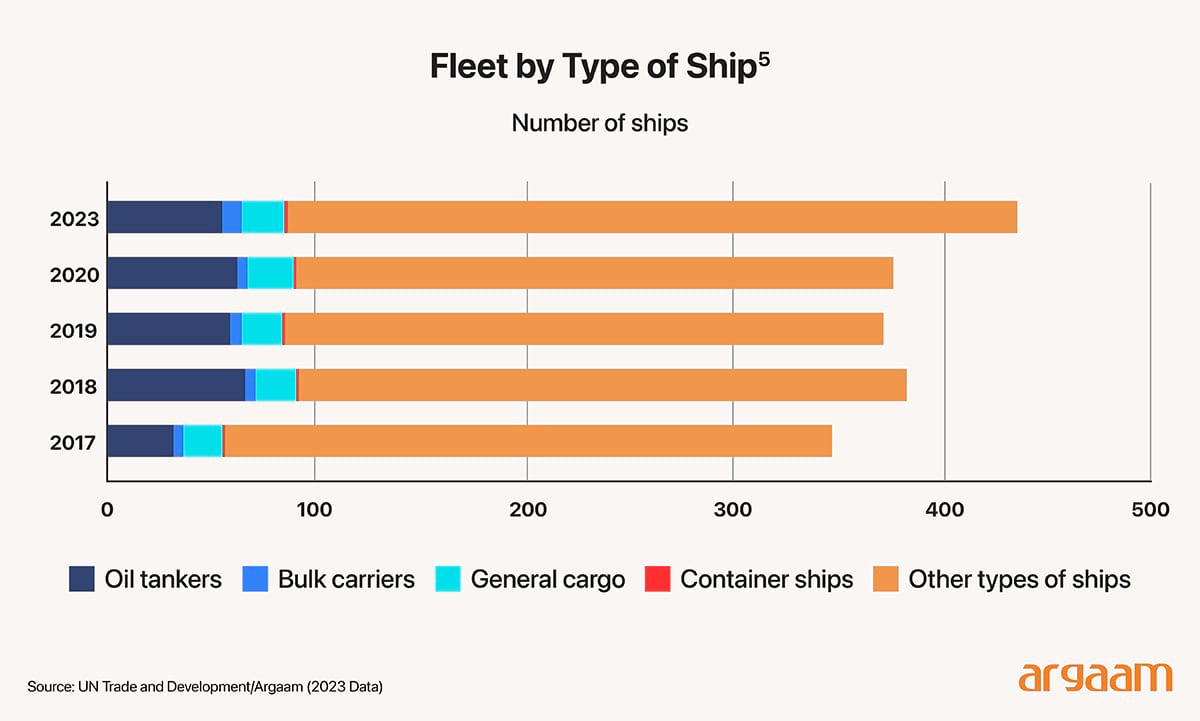
Imagine setting sail through the bustling Arabian Gulf, only to find that your trusty GPS thinks you’re farming sugar beets in Russia. Sounds like the start of a maritime comedy, right? Unfortunately, this isn’t a simple navigational mistake, it’s a real incident of jamming and spoofing of ships reported by Reuters on June 17. The Front Tyne oil tanker was sailing through the Arabian Gulf between Iran and the United Arab Emirates when just past 9:40 a.m. shiptracking data appeared to show the massive vessel in Russia, in fields better known for barley and sugar beets. In this case, the vessel’s AIS data showed positions that were geographically impossible (inland Russia), highlighting the vulnerability and inaccuracy of satellite navigation under interference conditions. Another jamming incident led to a collision involving tankers south of the Strait of Hormuz during the Iran-Israel war. One of the collided supertankers, which are normally around 300-metre in length, appeared to be onshore in Iran on June 15. Given the high volume of valuable cargo transiting the Gulf and Red Sea, accidents resulting from position errors could lead to significant damage, loss of cargo, environmental damage (e.g., oil spills), legal liabilities, and insurance claims, causing substantial direct and indirect economic losses. 
The Timeless Skill of Radar Navigation
The critical importance of training ship captains in manual and traditional navigation methods is underscored by the vulnerabilities of modern GPS-reliant systems to jamming and spoofing attacks. As detailed in a recent academic study titled "GPS Jamming and the Impact on Maritime Navigation," GPS signals are inherently weak and susceptible to both intentional interference and unintentional disruptions , making sole reliance on satellite navigation a significant operational risk. The study highlights concerns that many mariners today no longer regularly use traditional navigation methods, resulting in a loss of familiarity and skill that can hinder effective response during GPS service denial. Training ensures that ship captains maintain proficiency in these techniques, cultivating situational awareness and decision-making capabilities vital for safe navigation when electronic systems fail. Parallel indexing is one key skill for ship captains to master. It’s a way for ship captains to know where they are without using GPS. They use the ship’s radar to look at fixed objects nearby, like the shoreline or a buoy, that always stay in the same place. The captain imagines or draws a straight line on the radar screen that runs parallel (side-by-side) to the ship’s course but offset by a certain distance. As the ship moves, the captain steers so that this line stays directly over the fixed object on the radar screen. By doing this, the captain can make sure the ship stays on the right path and keeps a safe distance from hazards, even when GPS is not working. Other technologies, even advanced ones like enhanced satellite systems, do not replace the timeless skill of radar navigation, because such advanced technologies may not be universally available or integrated on all vessels. Ultimately, this in-depth examination underscores the critical need for proactive and integrated risk management strategies. It establishes a foundation for informed decision-making among policymakers, partners of the kingdom in the maritime industry, and security professionals. Building such maritime resilience will support Saudi Arabia’s ambitions for save naval navigation in the face of evolving GPS threats geopolitical tensions. |
|
|

|
|


|


|