




|
As Saudi Arabia advances its ambitions in critical minerals and clean technology supply chains particularly in the mining sector, understanding the US act Foreign Entity of Concern (FOEC) and its implications after its full articles came into effect this year is essential to safeguarding national interests. We then prepared this analysis for Saudi decision-makers and policy planners to address emerging risks associated with engagement of these foreign entities designated by the United States, which’s understandably working to strengthen its position in critical minerals and advanced technologies through policy initiatives, laws and strategic partnerships. China’s dominance in the industry of rare earth elements is mainly due to its very early start to invest in it, dating back to 1970's, when it began exploring the natural resources in its southern provinces. By the late 1980's, China had become a major producer, and by the 1990's, it enhanced refining and processing capabilities, allowing it to offer high-quality materials at low prices. In the past two decades, the country has entered into partnerships and agreements with countries rich in REE resources to diversify its supply sources beyond domestic reserves. This has paid off after the second comeback of Donald Trump, as this strategic thinking has reduced its vulnerability to supply disruptions and international political pressures. But as far as Saudi Arabia is concerned, this analysis can help minimize the implications of this trade war between the world’s two largest economies and the kingdom’s mining sector’s exposure to FEOC-related disruptions. While writing this analysis, U.S. President Donald Trump threatened to impose tariffs of up to 200% on China if it failed to supply rare earth magnets to the United States.
❝ PS: A big part of China's demand for rare earth materials comes from producing magnets, which are essential components in many technologies like electric vehicles, wind turbines, and electronics. The Foreign Entity of Concern is a term that frequently appears in many recently enacted laws in the United States. The main goal if this act is to try to counter the low-cost Chinese materials that dominate today’s supply chains in the mining sector in particular. Through this law, the US strategically discourages foreign allies, including Saudi Arabia and other partner nations, from conducting business with Chinese entities, particularly in the rare earth elements. This’s taking place by applying stringent restrictions on sourcing EV and AI components and critical minerals from these entities. Accordingly, the US effectively limits market access and financial incentives for Chinese-controlled firms. Other countries in the FEOC list are Russia, Iran and North Korea. The restrictions applied to EV battery components in 2024, then included suppliers of key battery raw materials, such as nickel and lithium, in 2025. In general, an entity designated as an FEOC and/or any products containing any components or materials produced or processed by an FEOC will be disqualified from being eligible for US financial incentives under these laws. With respect to the critical minerals, components, or materials of a given battery, the foreign entity is subject to the US law if it engages in the extraction, processing, or recycling of such critical minerals, the manufacturing or assembly of such components, or the processing of such materials, in the targeted countries with certain partnership percentage as we outline later in this analysis. 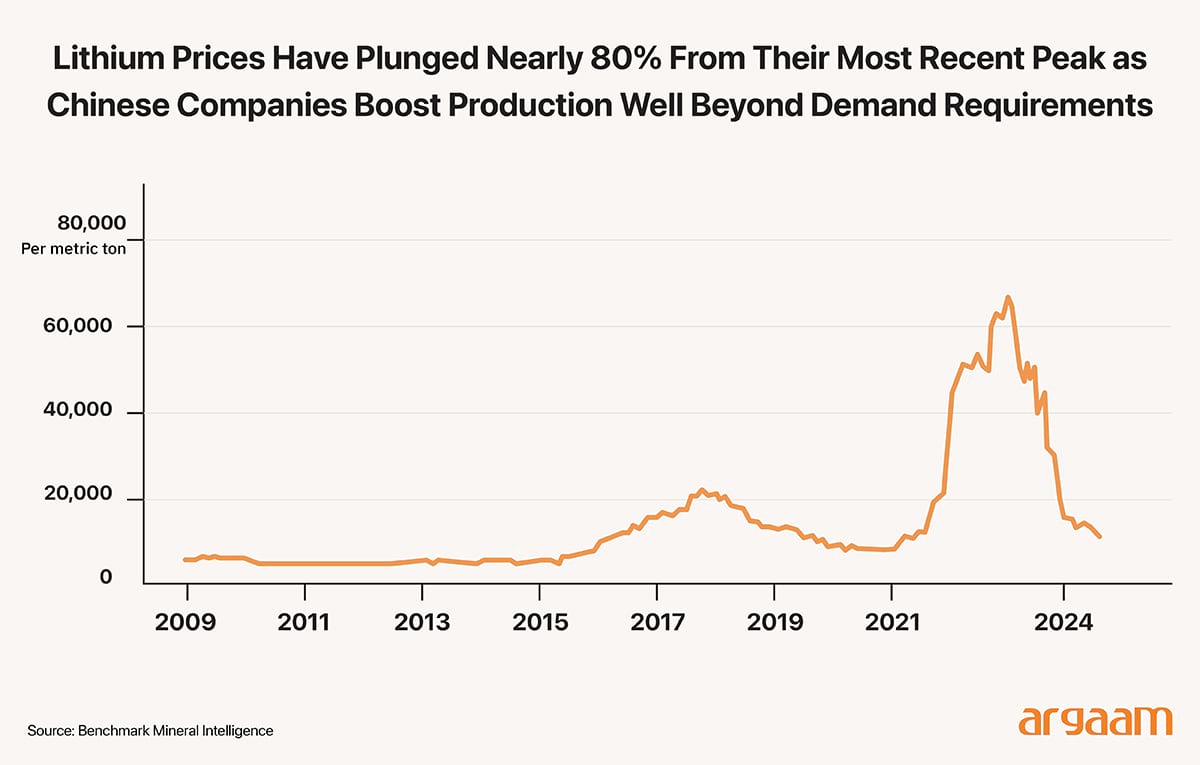 An entity is regarded owned by, controlled by, or subject to the direction of a targeted nation if: 1) 25% or more of the enterprise's board seats, voting rights, or equity interest are cumulatively held by that country, whether directly or indirectly via one or more intermediate entities 2) If the Parent company owns 25% or more equity or voting rights in a joint venture, the JV is likely to be deemed as an FEOC. 3) If the Parent owns less than 25% equity or voting rights in the JV, and ➤ if 25% or more of the board members of the JV are Chinese Communist Party members or current/former Senior Foreign Political Figures, the JV may be deemed as an FEOC. ➤ If, by multiplying the ownership percentages (by equity or by voting rights) at both the JV level and the Parent level, the resulting state ownership (by equity or by voting rights) in the JV is no less than 25%, the JV may be deemed as an FEOC. Tech licensing agreements in the mining sector and other sectors are permissible so long as the non-FEOC partner has operational control of a facility, though this will be evaluated on a case-by-case basis. 
Cautious approach in corporate structure Saudi Arabia’s significant increase in Chinese foreign direct investment (FDI) in 2024—with total Chinese FDI stock reaching SR31.1 billion ($8.2 billion), a 28.8 % rise from 2023 and investment inflows surging 164 % year-on-year, demonstrates a clear policy orientation toward deepening economic partnerships with China. Bilateral trade between the two nations exceeds $100 billion annually, making China Saudi Arabia’s largest trading partner. Late last year, Saudi Arabia has finalized nine investment agreements worth in total $9.32 billion in the metals and mining sector, including China’s Zijin Group. Zijin plans to invest between $1.3 billion to $1.6 billion in the Saudi expanding mining industry as announced on the website of the Saudi-Chinese Business Council. But It is not possible to definitively determine whether the new Saudi-Chinese investment in the Kingdom's mining sector would fall under the American FEOC designation, since there are no publicly available details regarding the structure, ownership, or operational control of the new Chinese investments. So any assessment would be speculative without clear information on whether the Chinese entities involved in these agreements are owned, controlled, or subject to direction by the Chinese government. Specifically, EVs must have batteries that are FEOC-compliant to qualify for the tax credit in the US market. 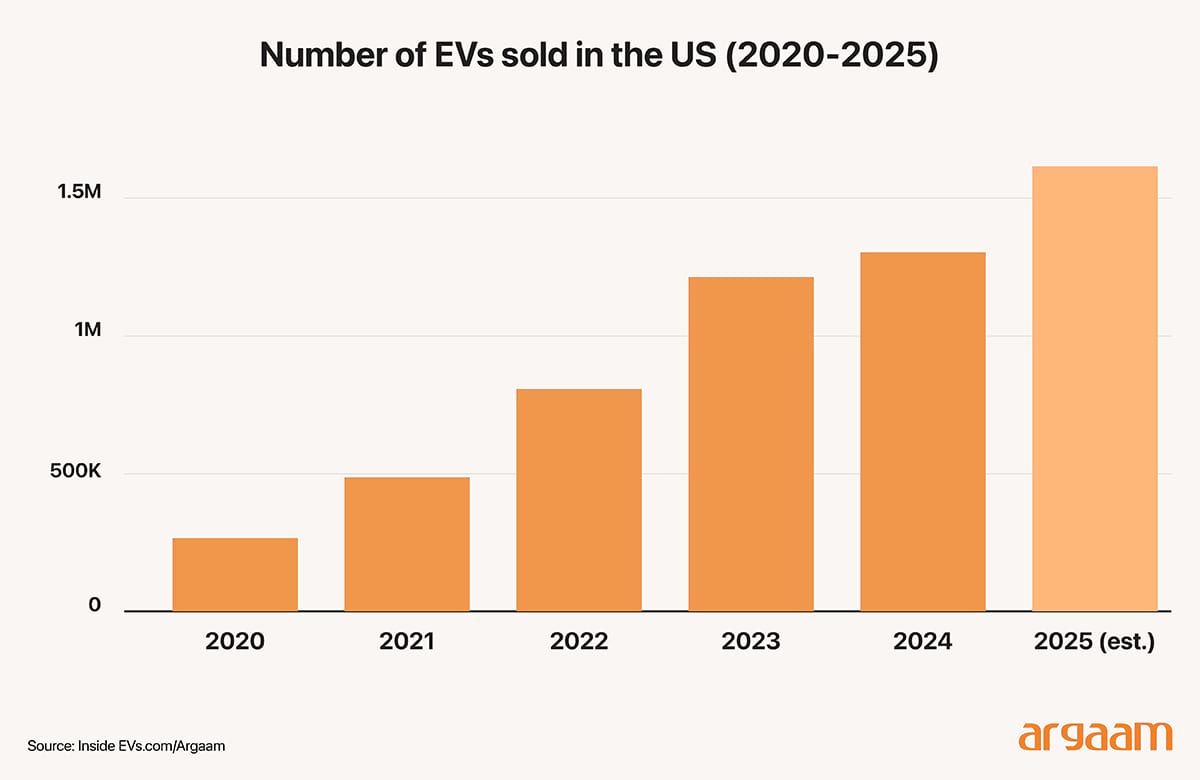
One might ask why should Saudi Arabia care about a tax credit policy for US consumers in the US market? A recent research paper titled A Look at Foreign Entities of Concern and the Section 30D Clean Vehicle Tax Credit provides some useful insights. The paper was published last year by Matthew Bender & Company, Inc., a well-known international legal publisher of analytical legal research information. It’s because the U.S. EV market is one of the largest automotive markets in the world. Its 2024 sales volume of over 1.3 million vehicles represent more than 10% of total new car sales that year. Projections estimate substantial market growth to reach $154.2 billion by 2029, with unit sales increasing to 2.29 million, indicating a large and expanding market compared to global competitors. Accordingly, manufacturers supplying to it depend heavily on eligibility for the Clean Vehicle Tax Credit to make their vehicles competitively priced. If rare earth minerals sourced from Saudi Arabia’s joint venture with China are classified as FEOC-controlled (because China is a covered nation under the American rules), then any battery components or vehicles containing those minerals may be disqualified from the U.S. tax credit, which currently stands at $7,500 per EV. This reduces the attractiveness of any Saudi-origin materials to U.S. automakers aiming to produce tax-credit-eligible vehicles to increase demand and remain competitive in the market. Without this tax credit, consumers face higher purchase costs, which can reduce demand. Even if the physical mining or processing occurs in Saudi Arabia, the control exercised by China in the joint venture can trigger classification of the Saudi entity or its outputs as under FEOC rules. In numeric explanation and based on latest data in the US EV market, if we multiply the $7,500 per EV by the overall number of EVs sold in the US market in 2004, the result is $9.7 billion. This incentive significantly lowers the effective purchase price for consumers, driving demand for electric vehicles. Without leveraging this credit, manufacturers risk losing market share to competitors whose vehicles qualify for the credit, making it essential to ensure compliance with related regulations such as FEOC rules. Consequently, manufacturers must closely manage supply chains and production processes to maximize eligibility for the credit and remain competitive in a rapidly evolving market. |
|
|

|

|


|


|