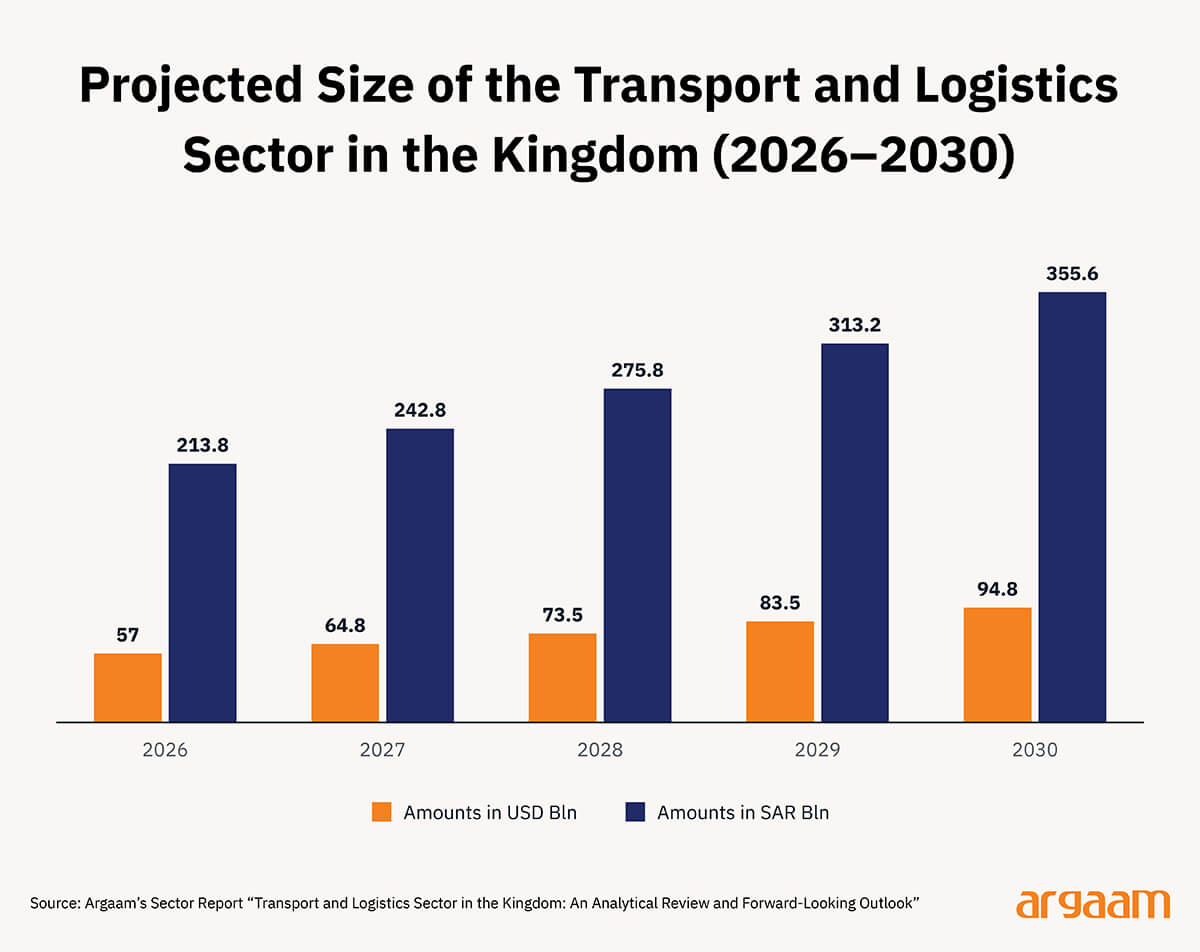
The Saudi Transport and Logistics Services Sector is projected to surge from an estimated SAR 188.3 billion in 2025 to SAR 355.6 billion by 2030, marking a substantial growth of nearly 89% over five years, according to Argaam’s Sector Report “Transport and Logistics Sector in the Kingdom” issued this week.
Yet, this massive expansion raises a crucial investment question that goes far beyond the headline market size: Where will the value actually be generated, and who will capture the returns of this growth?
The market encompasses a diverse range of activities, from passenger and freight transport via land, sea, and air, to warehousing, ancillary services, and last-mile delivery. These segments vary widely in capital requirements, competitive dynamics, and pricing power.
Owning a vessel or operating a port terminal, for instance, does not abide by the same economic rules that govern a warehouse or a supply chain management firm.
The Report forecasts a Compound Annual Growth Rate (CAGR) of 13.6% to 2030, a sharp leap from the 4.8% actual growth in 2024 and an estimated 5.7% expansion in 2025.
While this trajectory signals a remarkable acceleration in expected market expansion, demand shifts, capital investments, and geopolitical disruptions throughout 2026 remain critical wildcards that could shape these projections.
Ultimately, the winning investment bet relies on more than just the market hitting its target size; rather, it hinges on each activity's ability to convert surging demand into profitable revenues and sustainable cash flows, all while navigating stiff competition, capital costs, and operational risks.
Freight Volume Is Not Value
Freight traffic reveals one of the most significant distinctions in the economics of the Sector’s activities. In 2025, maritime transport estimates volumes reached approximately 336.7 million tons, accounting for 88.3% of the tonnage covered by the Report’s comparison of major transport modes.
This compares with 7.2% for land transport, 4.2% for rail transport, and just 0.3% for air transport.
Despite these substantial differences in volume, such figures should not be interpreted as comprehensive market shares across transport segments. The land freight data cover only external trade flows and exclude domestic transport movements, while maritime transport includes cargo transported between Saudi ports.
The comparison is therefore useful for illustrating differences in operational characteristics, rather than measuring the relative economic importance of each transport segment.
The picture becomes even clearer when shifting focus from assessing cargo by value rather than weight. In 2025, air-imported goods were valued at SAR 283 billion, accounting for some 30% of total imports. Meanwhile, the value of non-oil exports transported by air, including re-exports, increased from SAR 22 billion in 2021 to SAR 96 billion in 2025.
These figures do not represent the revenues of freight companies, nor can the growth in air exports be attributed entirely to a structural shift in transport demand.
The Report points out that disruptions at certain land border crossings played a role in increasing reliance on air freight, as more than half of the SAR 74 billion increase recorded between 2021 and 2025 was realized in 2025 alone, when the value rose by SAR 44 billion.
Nevertheless, the figures highlight an important economic divergence: Some transport activities compete primarily on their ability to move greater volumes at lower unit costs, while other activities derive their competitive appeal from delivery speed, cargo characteristics, shipment value, and time sensitivity.
These competitive advantages translate into real financial returns when operators can capture a price that exceeds the additional costs of providing that speed or reliability. This is precisely where the true importance of an operational model begins, far beyond cargo volume alone.

Ports: Is Capacity Enough to Generate Returns?
Ports offer a compelling case study in how infrastructure expansion can outpace immediate operational activity. Freight handled across Saudi ports rose from 339 million tons in 2021 to 359 million tons in 2022, before declining to 335 million tons in 2024.
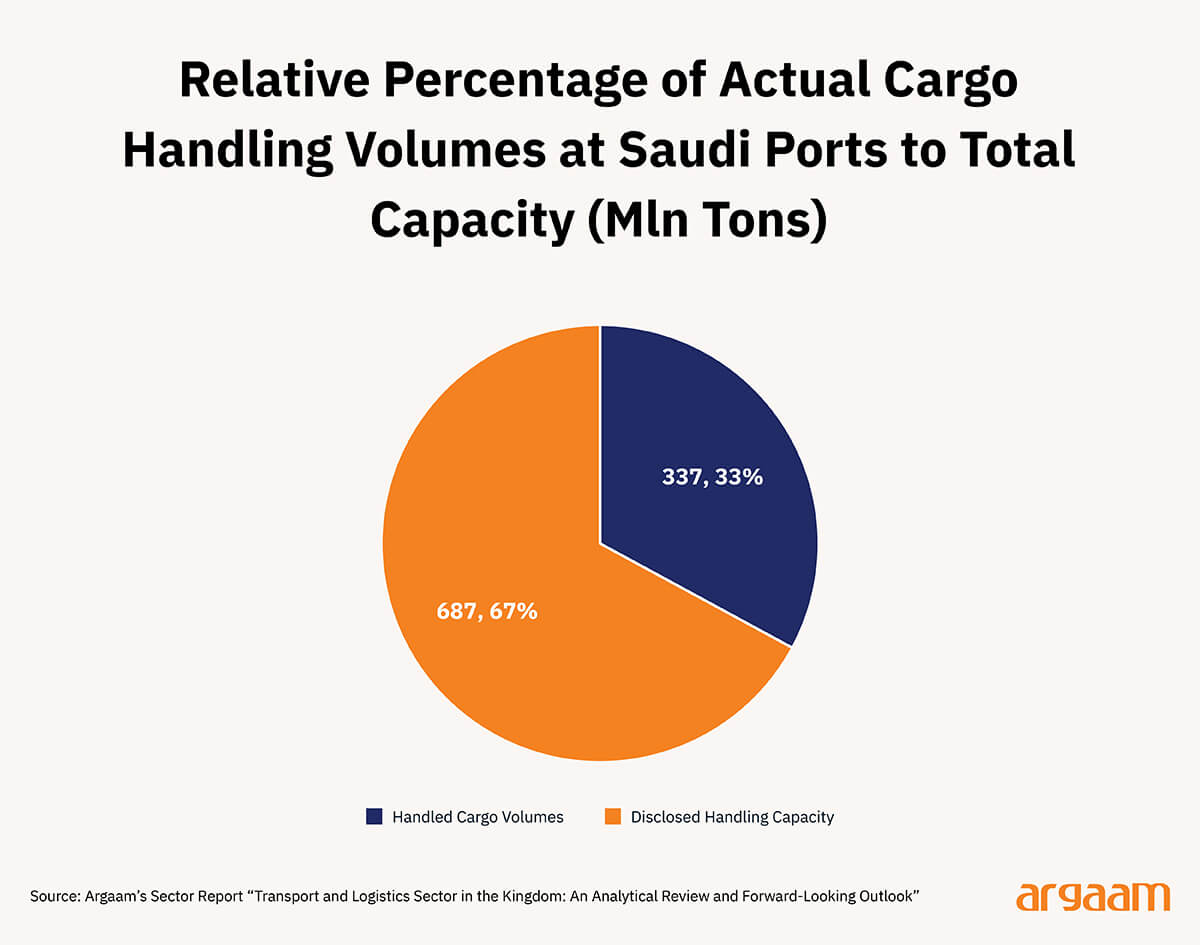
Volumes are estimated to have experienced a modest rebound to 337 million tons in 2025. Consequently, cargo handling volumes recorded virtually no growth over the period, despite continued investment in the Sector’s infrastructure.
Meanwhile, the total annual handling capacity of the 11 Saudi ports covered by the Report stood at about 687 million tons in 2024, compared to actual throughput of 335 million tons in the same year.
This means cargo handled amounted to roughly 48.8% of aggregate disclosed capacity. However, the percentage does not necessarily reflect the actual utilization rate of every port or terminal, given variations in cargo types, infrastructure, and operational capabilities.
These figures fundamentally shift the investment calculus. Where substantial handling capacity already exists, the operator’s primary challenge may be less about adding new berths or equipment and more about attracting shipping lines, improving terminal productivity, optimizing equipment and labor efficiency, and developing services that elevate a port’s competitive position.
Port investment is bound to another factor just as vital as underlying demand: The terms of privatization and concession agreements.
In June 2025, concession agreements were signed for multi-purpose cargo terminals across eight ports, with investments exceeding SAR 2.2 billion. In such deals, investment returns are influenced by contract duration, Capital Expenditure (CapEx) commitments, tariff structures, revenue-sharing mechanisms, and the allocation of demand risk between the asset owner and the operator.
While large infrastructure assets may create barriers to entry that shield operators from direct competition, they simultaneously impose heavy capital and operating obligations that may put pressure on returns when cargo volumes decline or costs rise.
Ultimately, when evaluating a port operator, the critical metric is not merely the total capacity under management, but rather their ability to win cargo volume and convert every unit of available capacity into compelling cash flows within the framework of their concession terms.
Land Transport: The Growth That Invites Competition
If ports demonstrate why possessing capacity is insufficient, land transport presents a different challenge: Market expansion inherently attracts more competitors, making it far harder for operators without clear competitive advantages to capture the benefits of growth.
As compiled by Argaam’s Report, the number of new licenses issued to land transport and logistics service providers increased from 2,322 in 2021 to 9,025 in 2025, representing a CAGR of almost 40%. Licenses for heavy- and light-duty road freight transport accounted for around 77% of all new licenses issued in 2025.
These numbers do not imply that the count of independent companies expanded at the same pace, or that every license resulted in additional operating capacity; they do point to an intense activity in freight-related businesses. This naturally raises questions regarding competitive intensity and operators’ ability to maintain pricing.
Investment economics can diverge sharply between two models: A company operating trucks competing in a relatively standardized market with uniform pricing and service offerings, and an operator backed by an extensive distribution network, stable contracts with major customers, or the ability to minimize empty runs and optimize fleet utilization.
As vehicle utilization rates rise and round-trip load efficiency improves, fixed costs, which include assets, drivers, and fuel, are amortized across a much larger operational volume. Conversely, scaling a fleet without improving these core operational metrics might boost top-line revenue, but it simultaneously consumes capital with diminished returns.
Consequently, network density and operational efficiency prove to be far more sustainable drivers of long-term value than simply expanding the number of trucks on the road.

Warehousing: When Does Space Become a Competitive Edge?
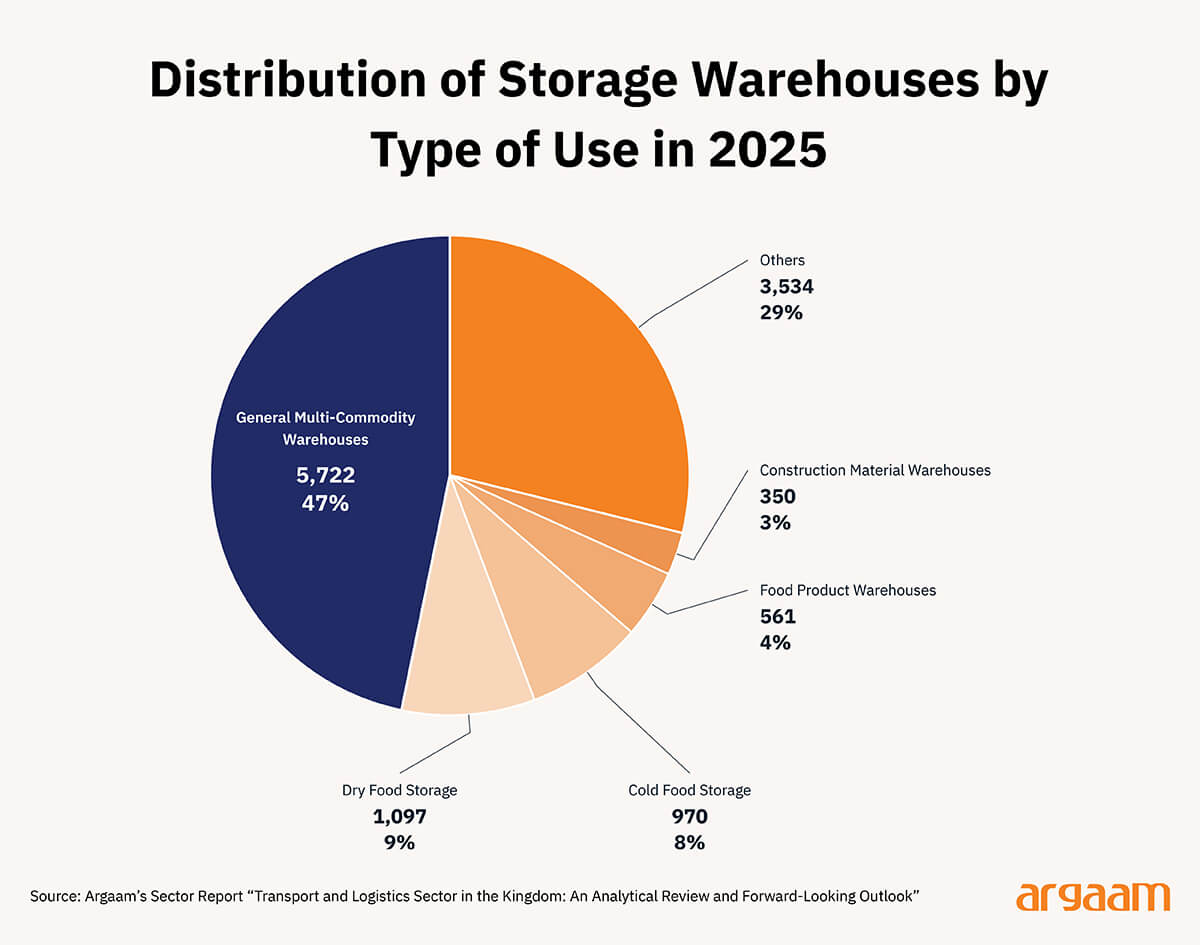
The same underlying logic applies to warehousing, albeit in a distinct way. According to data for 2025, the total number of the Kingdom’s warehouses reached 12,234. General multi-commodity warehouses accounted for 47% of the total, compared with 9% for dry food storage and 8% for cold food storage.
This breakdown underscores that warehousing is not a single, homogeneous market. General multi-commodity warehouses may compete more directly on location, available space, and cost, while cold food and specialized storage facilities require different equipment, operating standards, and technical capabilities.
Specialization can create barriers to entry, but it also comes with higher costs and greater exposure to demand within a particular service category.
Geography introduces another dimension. Riyadh accounts for approximately 48.8% of the Kingdom’s total warehousing footprint, while Makkah accounts for 58.8% of the total area of logistics centers.
Although warehouses and logistics centers represent different facility categories, their geographic distribution illustrates how the economic function of a logistics asset can vary depending on its proximity to consumption centers, ports, and industrial zones.
Facilities situated near consumption markets may derive their value primarily from shorter delivery times and lower distribution costs.
Other facilities may benefit from the ability to serve import and export flows. In both cases, investment viability depends on the relationship between location, development and operating expenses, as well as occupancy levels.
This relationship becomes even more pronounced against the Kingdom’s plans to expand logistics centers from 24 completed centers spanning an area of 34.6 million sqm at the end of 2025 to 59 logistics centers with a combined area exceeding 100 million sqm by 2033.
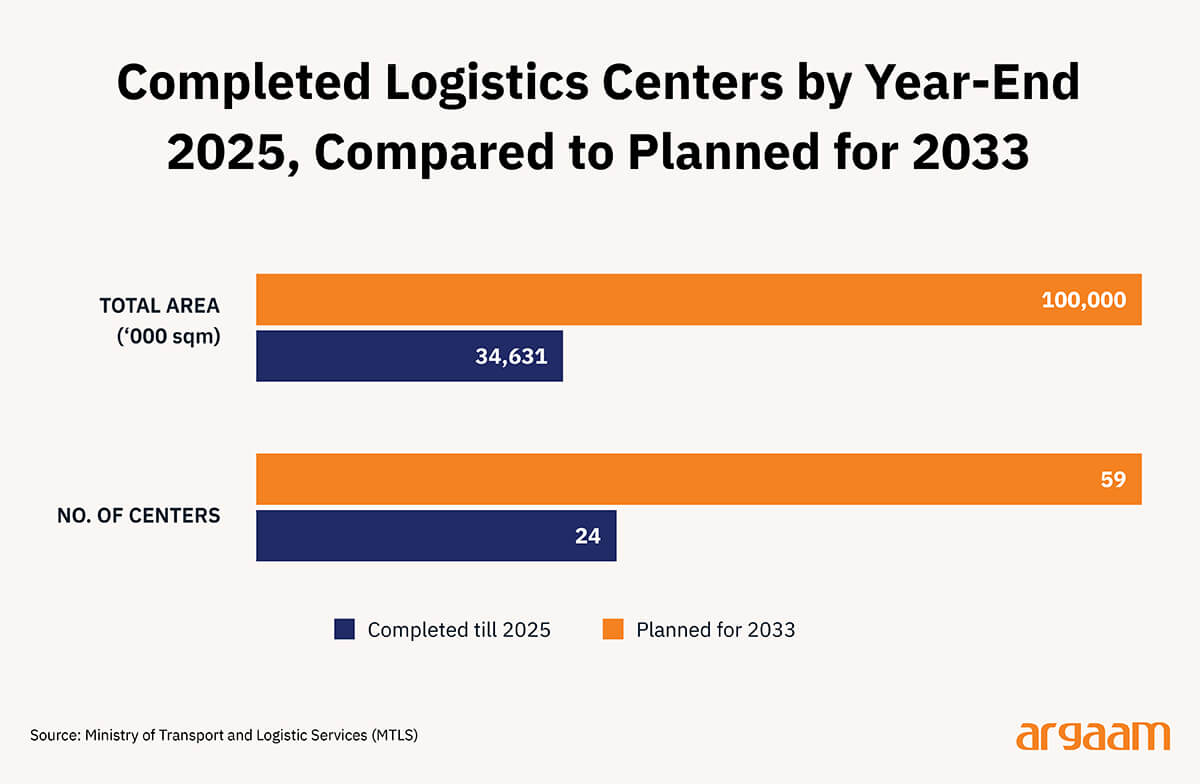
While this expansion represents a massive leap in targeted logistics infrastructure, it raises questions about the rollout timeline of new inventory, the nature of demand it will serve, and operators’ ability to secure profitable occupancy rates.
Ultimately, the true investment value in warehousing may be governed by specialization, prime location, sustained occupancy, and contract quality, far more than by the sheer volume of square meters added to the market.
Integrated Logistics: Is Network Management More Valuable than Asset Ownership?
The different economics of transport and warehousing point toward an alternative business model, one centered upon orchestrating the touchpoints between these activities rather than providing each service in isolation.
A company capable of seamlessly coordinating freight, warehousing, distribution, and customs clearance, as well as tracking shipments, may deliver a fundamentally different value proposition from a provider selling a single freight journey or warehouse space.
This value translates into shorter delivery times, minimized buffer inventory, optimized planning, and a reduced number of service providers a customer must manage.
As e-commerce, manufacturing, and distribution networks scale, the ability to manage these operations could emerge as a powerful competitive differentiator.
However, this model requires more than combining multiple services under a single corporate identity to generate superior investment returns. The real test lies in an operator’s ability to unlock measurable cost savings, secure stable customer contracts, and provide a service that customers would find costly or disruptive to replace.
Meanwhile, if the company incurs the high costs of sophisticated systems and complex operating networks without capturing higher prices or longer contracts, integration may become an additional expense rather than a source of profitability.
The power of an integrated model is defined neither by being asset-light nor asset-heavy, but by its capacity to manage the transportation and storage network with economic efficiency that far outweighs the cost of running it.
2026 Disruptions: Can Resilience Become a Source of Value?
Geopolitical disruptions during 2026 have provided a real-world stress test of how different business models withstand unforeseeable shocks. Since late February, maritime traffic through the Strait of Hormuz has faced severe disruption, prompting some shipping companies to reroute their vessels amid rising freight rates and insurance premiums.
Regional air traffic and air freight operations have also been impacted by disruptions to airspace and operating networks. Data from the International Air Transport Association (IATA) illustrate both the scale of the shock and its uneven recovery over time.
Air freight demand among Middle Eastern carriers fell by 54.3% year-on-year (Y-o-Y) in March 2026 before returning to modest growth of 1% in August.
Nevertheless, freight traffic along the Europe-Middle East and Middle East-Asia corridors continued to contract in August, declining by 12.1% and 11%, respectively.
These indicators do not specifically measure the performance of Saudi freight operators but rather demonstrate the continuing pressure on regional transport networks despite a partial recovery.
For Saudi Arabia, access to ports on both the Arabian Gulf and the Red Sea provides options for rerouting certain trade flows.
The practical importance of operational flexibility became evident in March 2026, when the Saudi Ports Authority (Mawani) announced the addition of five maritime shipping services in cooperation with international shipping lines, with a combined capacity of approximately 63,600 twenty-foot equivalent units (TEUs).
The initiative was intended to strengthen maritime connectivity and maintain supply chain continuity amid disruptions in the Strait of Hormuz.
Furthermore, Mawani launched an initiative extending the free storage period for imported empty containers at King Abdulaziz Port in Dammam and Jubail Commercial Port from 10 to 20 days, encouraging container repositioning and improving their availability for export operations.
Such measures demonstrate that safeguarding trade flows can require rerouting shipments, expanding connectivity options, and introducing operational incentives.
However, their impact on individual operators’ profitability depends on implementation costs and how the associated burdens and benefits are distributed across the supply chain stakeholders.
The investment outcomes of such disruptions vary widely by activity. Freight rates may spike due to capacity constraints, but higher prices can coincide with rising fuel and insurance premiums along with declining cargo volumes.
Similarly, demand for buffer inventories and alternative route planning may increase, while operators incur additional costs to provide these services.
This brings another benchmark to light when assessing business models: What is the operational cost to maintain service continuity during crisis, and what premium is the client willing to pay for that reliability?
A company that can reroute cargo, provide alternative storage capacity, or maintain reliable deliveries may bolster its competitive moat.
However, the value of such resilience depends entirely on whether it is an operational capability that can be monetized, rather than simply an additional cost absorbed by the operator.

Where Should Investors Focus Through 2030?
Expansion plans across the Transport and Logistics Sector are unlocking multiple avenues for private-sector participation. According to the Report, investment opportunities worth SAR 240 billion have been, or are expected to be, offered through Public-Private Partnership (PPP) models.
The broader strategy also aims for the private sector to account for approximately 80% of targeted investment in the Sector. Yet, the scale of these opportunities alone says little about their financial viability. Different business models require different metrics to assess how effectively market growth can translate into investment returns.
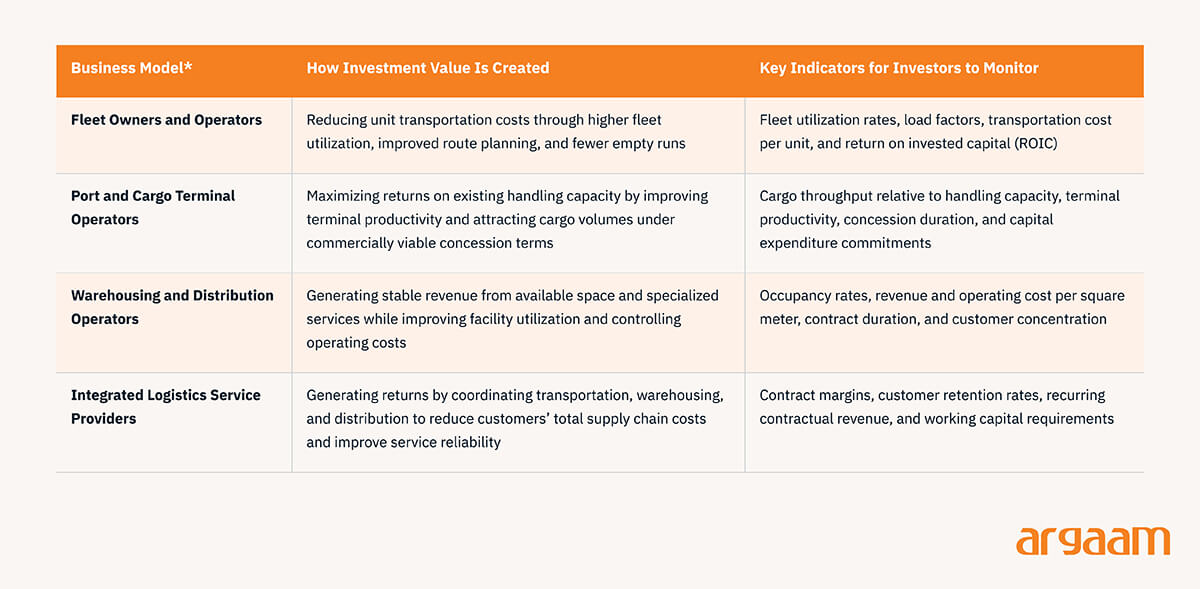
Argaam analytical framework based on business models rather than transport modes. These categories are not mutually exclusive, as a single company may operate across multiple segments of the logistics value chain. The framework does not rank investment attractiveness or represent actual returns.
Source: Argaam’s Sector Report “Transport and Logistics Sector in the Kingdom: An Analytical Review and Forward-Looking Outlook”
Finally, such differences do not imply that value will inevitably shift away from asset ownership toward service provision, or that less capital-intensive businesses will naturally yield higher returns.
Capital-heavy assets can generate attractive returns when supported by high barriers to entry and elevated operational utilization rates. Conversely, service providers may face margin erosion when competition intensifies, or delivery costs rise.
A market approaching a doubling in size by 2030 presents vast room for economic expansion, yet it does not offer a single, uniform investment opportunity. Value may reside in driving higher operational efficiency from an existing asset, securing a concession on favorable terms, building a distribution network that is difficult to replicate, or delivering a specialized service that generates tangible cost savings for customers.
From this perspective, the SAR 355.6 billion market forecast becomes the starting point of the investment analysis, rather than its conclusion.
While aggregate market size signals the sheer scale of anticipated activity, investment value is ultimately dictated by what companies can retain as bottom-line after accounting for the costs and risks of serving that market.
For an in-depth assessment of sub-markets, projects, demand drivers, and forecasts, refer to Argaam’s comprehensive Report on “Transport and Logistics Sector in the Kingdom”.
|