Picture a pilgrim in Cairo planning her Umrah. She may buy a package from a licensed agent down the road. She may book a hotel near the Grand Mosque on a global travel website and her flight somewhere else.
She may arrange part of the trip through Nusuk, the Saudi government's own Umrah platform. Or she may do a little of each. Whichever route she takes, she arrives at the same place and performs the same rites. But her money does not end up in the same hands.
That simple observation sits awkwardly with the way Umrah is usually discussed. The conversation is about numbers: how many pilgrims came, how many visas were issued, and whether the Kingdom will reach 30 million pilgrims a year by 2030.
By that measure, the story is already a success. In 2025, 18.03 million pilgrims came from abroad to perform Umrah, comfortably above the target of 15 million. Yet a headcount tells us remarkably little about who earns from all that travel. And the official figures, read closely, suggest that the market is less tidy than the targets imply.
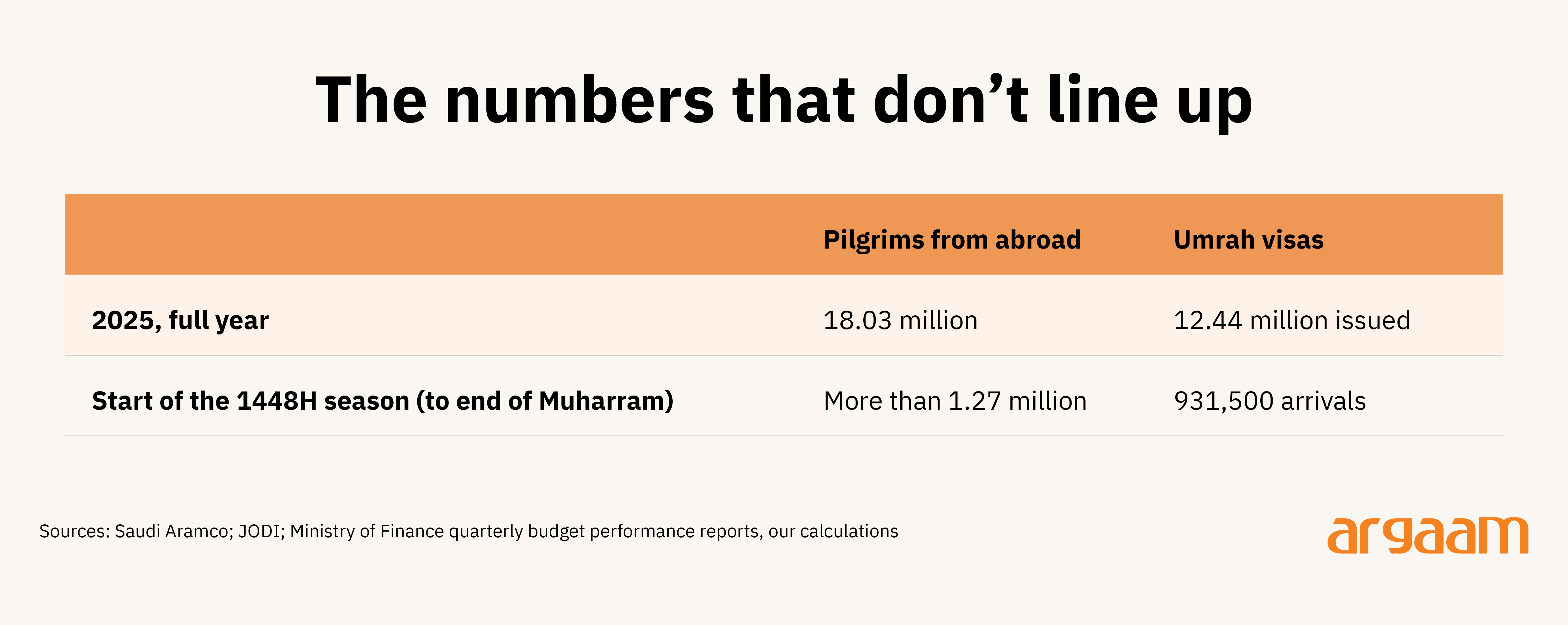
Look at the gap between the two columns. In both periods, the number of pilgrims is well above the number of Umrah visas, so a large share of pilgrims did not come on a dedicated Umrah visa.
They came on other kinds of visa, which means they may also have booked, paid and travelled in other ways. If that is true, which of the familiar assumptions about the Umrah market still hold?

A market with many doors
Consider who stands between a pilgrim and the Grand Mosque. There are travel agents in pilgrims' home countries, some protected by local rules that require pilgrims to use them.
There are global booking websites. There are Saudi travel groups that package flights, hotels and transport. There are hotel owners, transport operators and payment companies. And there is the state, whose platform now reaches every one of the Kingdom's largest Umrah markets.
The state's role deserves particular thought. Through Nusuk and related systems, the government issues permits, records bookings and inspects the companies that serve pilgrims. Since the current season began, the Ministry of Hajj and Umrah has carried out more than 32,000 inspection tours.
Nusuk is, at the same time, a channel through which pilgrims can book. What does it mean for a market when one participant also writes the rules for the others?
Two companies, two kinds of exposure
Our study looks closely at two listed companies that both depend on pilgrims, but in very different ways. Seera, one of the Kingdom's largest travel groups, earns from arranging and supplying trips. Jabal Omar earns from the hotel rooms it owns beside the Grand Mosque.
Both should benefit from more pilgrims. But would both benefit equally if the way pilgrims book were to change? The instinctive answer is that any shift towards booking through a state platform must hurt travel companies and leave hotel owners untouched.
That answer may be too quick. It depends on who actually sells to whom, which part of each trip carries the margin, and how much of the market is open to competition in the first place. Those are questions the headline numbers cannot answer.
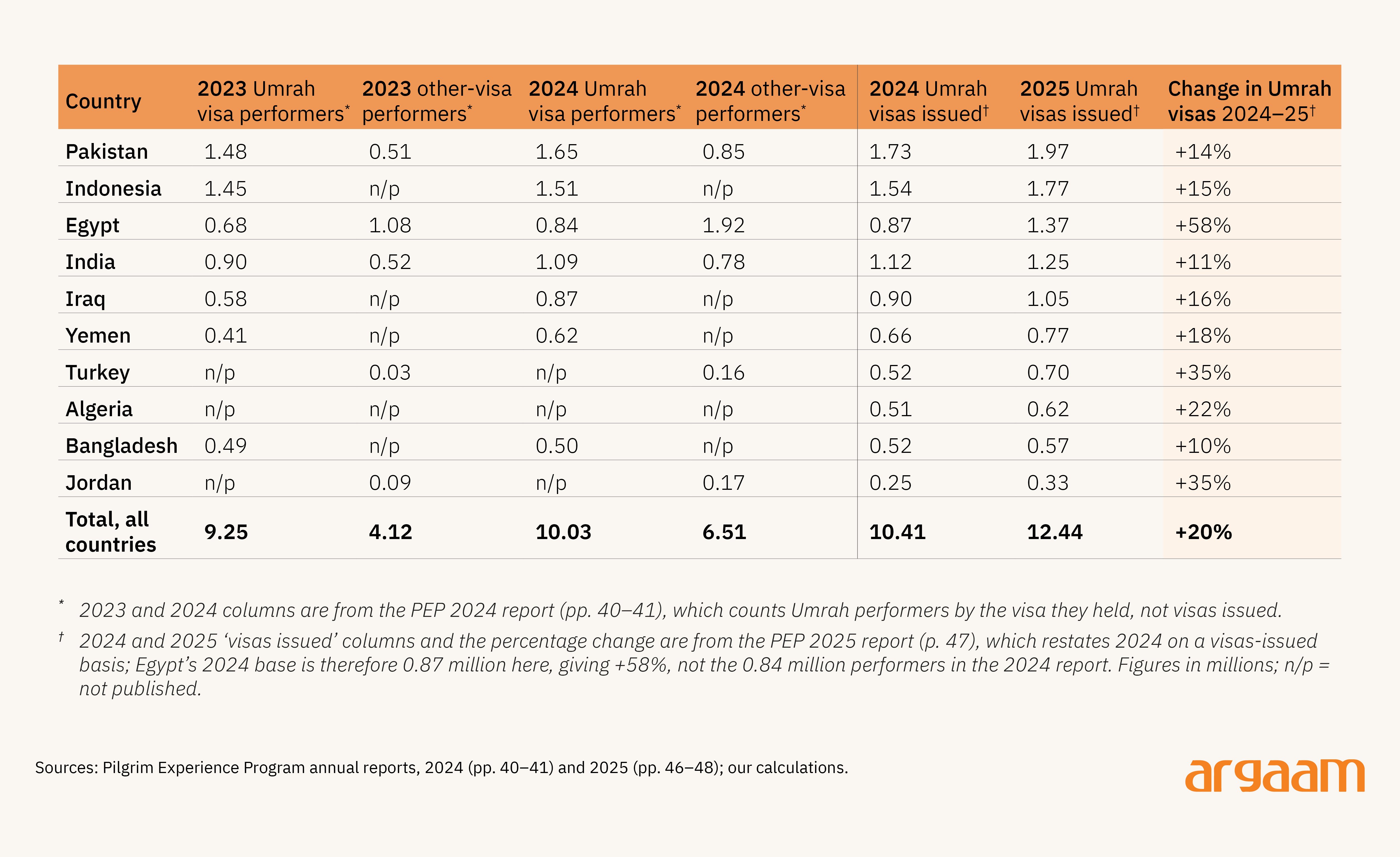
What the official figures don't say
That points to a wider problem. The data published on Umrah counts people well. It says much less about money: how much pilgrims spend, through which channels they book, how often bookings are cancelled, and who keeps what.
Without that information, it is hard for anyone outside government to judge whether the market is becoming more competitive, more concentrated, or simply more visible.
So ask yourself a few questions before reading on. If you were a travel agent in Cairo, would Nusuk worry you, or could it help you? If you owned hotel rooms in Makkah, would you care how your guests had booked? And if you were a policymaker, which numbers would you want to see before deciding whether the market is working well?
The Kingdom has shown it can bring pilgrims in their millions. The question our study sets out to answer is harder: when the 30 millionth pilgrim books her trip, whose system will she pass through, and who will be paid along the way?