Across GCC telecoms, the strategy decks have started to look alike. Data centres, cloud, enterprise, fintech — the same growth pools, the same ambitions, named by nearly every operator in the region. Yet the market refuses to price them alike. So what is actually separating them? Not the destination, but the route.
Some have built outright, some have partnered, some have brought in outside capital and kept only what they judged worth owning.
e&'s acquisitions and Omantel's 21.9% stake in Zain delivered step-changes that organic build alone could not.
And the recent wave of stake sales and capital recycling suggests a harder-edged view has taken hold: assembling a portfolio is the easy part.
Are investors still, though, rewarding that discipline — or still paying for breadth?
Argaam Intelligence’s new research paper has examined nine operators in the sector across the region to find out which factors the market is actually pricing, and which it appears to be ignoring.
Methodology: Rather than argue from anecdote, we tested it. Regression analysis measures how closely each financial factor moves with valuation across the peer group of nine operators in the GCC — stc, Mobily, Zain KSA, e&, du, Ooredoo, Zain Group, Omantel and Batelco.
For each, we took the EV/EBITDA multiple and tested it against scale, growth, margins, leverage, cash generation, return on equity, and regional footprint, one factor at a time.
The output tells you which relationships hold and which are noise. With nine operators, we treat the results as directional rather than statistically conclusive — but the pattern that emerges is not the one the sector narrative implies.

When Everyone Has a Sovereign Backer, Who Has an Edge?
State involvement is almost universal in GCC telecoms — which is precisely why it explains so little on its own. If nearly everyone has a sovereign backer, backing cannot be the differentiator.
What may matter is the character of that involvement: whether it underwrites patient capital and national ambition, or dilutes the discipline of commercial return. The two pull in opposite directions, and the market appears to sense the difference even where it cannot easily name it.
Mobily makes the point sharply. Absent direct sovereign control, and still carrying the memory of 2014, it trades at a discount few can fully account for. Why?

Why GCC Telecoms Earn More and Yield Less
The GCC telecom sector poses a question worth sitting with before reaching for an answer.
On the surface, the numbers are enviable. Median revenue growth of around 8% outpaces the low 1-2% grind of saturated Western markets.
Affluent demographics and thinner MVNO competition sustain ARPUs that US and European carriers cannot match.
And a median ROE near 17% holds its own against Western peers — achieved, notably, on materially less leverage. Then the friction. Despite those margins and that conservative balance sheet, free cash flow yields sit stubbornly below Western benchmarks.
There are two ways to read that, and they lead to opposite conclusions: which one do you think?
A) Either the region converts profit into cash less efficiently than its margins suggest — a structural issue hiding behind flattering income statements.
B) Or the market has already priced these operators generously, and the low yield is simply what a premium valuation looks like from the other side.
Which reading you accept determines whether the sector looks cheap or fully valued. We have examined the mechanics across nine operators — and the answer is not the same for all of them.
So the sector as a whole doesn't look mispriced. That closes one question and opens a harder one: if the market is broadly right about GCC telecoms, why does it rank the nine operators so differently?
Multiples tell you where the market has landed. They don't tell you why. Is the dispersion tracking scale, growth, margins, leverage, cash generation, returns — or something the numbers don't capture at all?
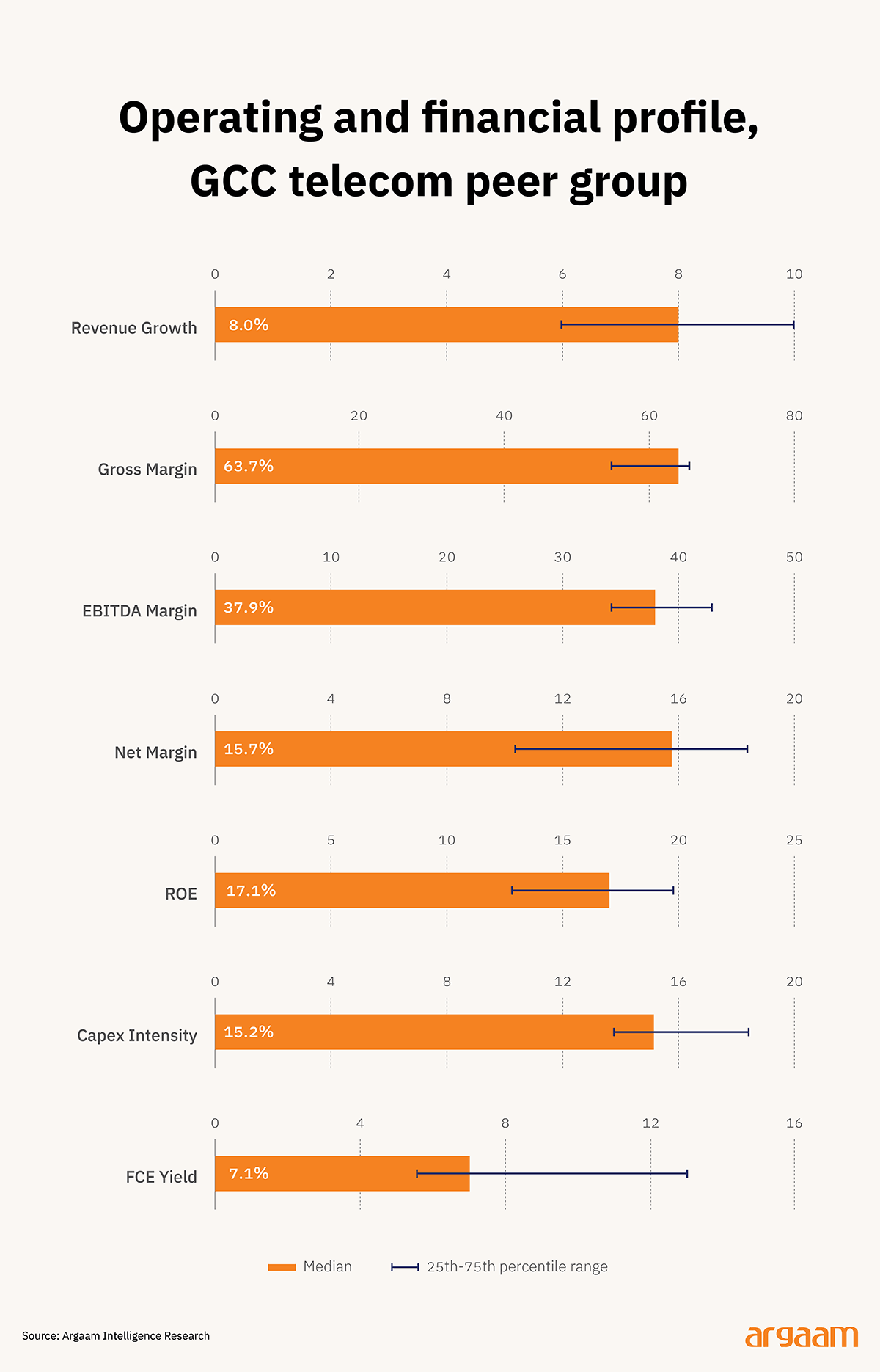
Figure 1 : Operating and financial profile, GCC telecom peer group
The typical operator looks strong: ~8% revenue growth, ~38% EBITDA margin, ~17% ROE.
Free cash flow yield is the exception — low against those returns, and unevenly spread across the group.
➤ Blue bar — median of the nine operators
➤ Red line — middle half of the group (25th–75th percentile)
➤ Scales — differ by panel; heights not comparable across panels
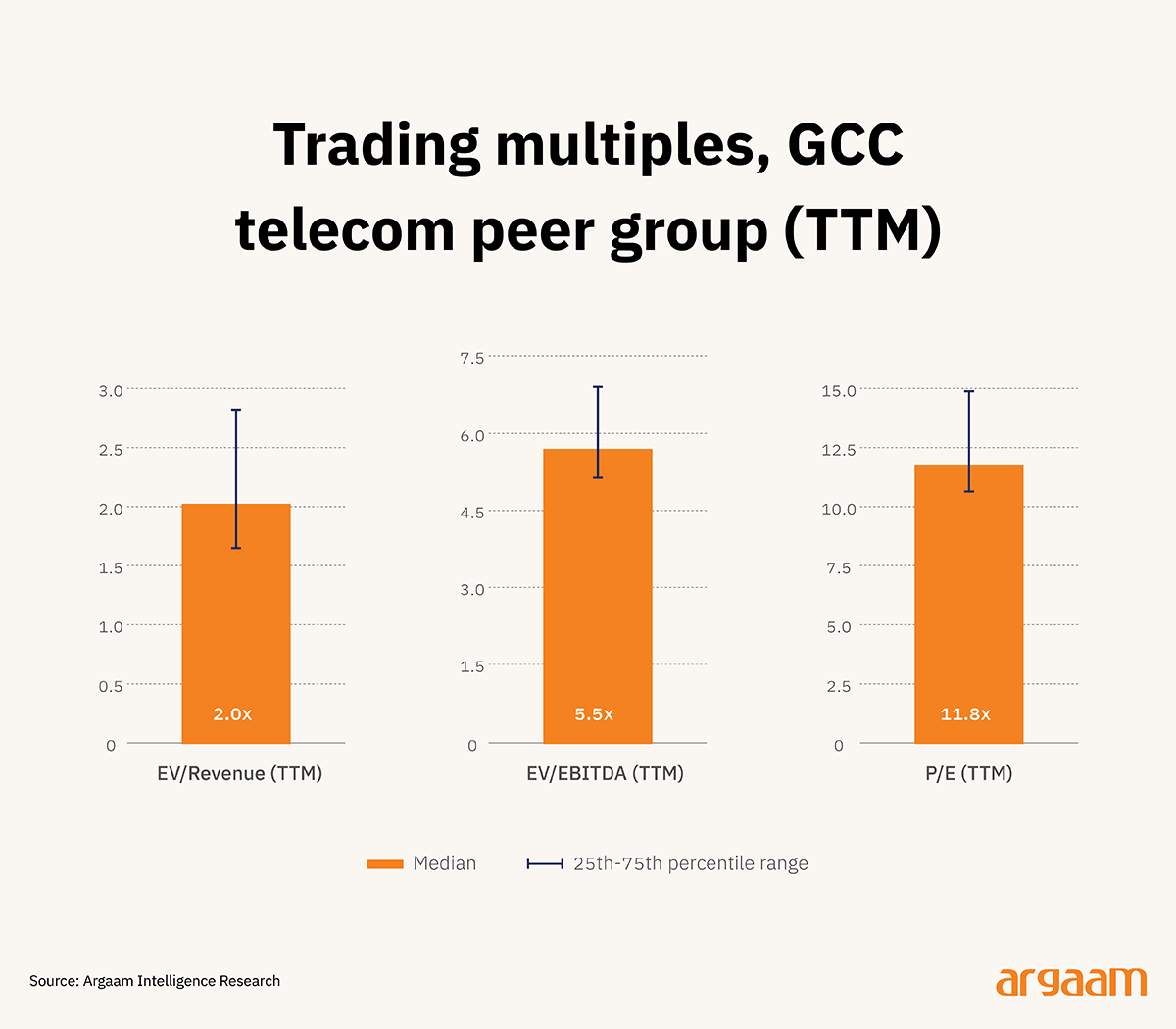
Figure 2 — Trading multiples, GCC telecom peer group (TTM)
At 5.5x EBITDA and 11.8x earnings, the sector is neither obviously cheap nor expensive against global telecom norms. The spread is the more telling feature: on EV/Revenue, the middle half alone runs from ~1.6x to ~2.8x — a wide gap across broadly similar businesses.
➤ Blue bar — median of the nine operators
➤ Red line — middle half of the group (25th–75th percentile)
➤ Basis — trailing twelve months; net debt simplified
We ran the numbers across all nine operators, testing valuation against every factor the sector narrative points to. The results are not what the strategy decks would predict.
Start with what the market appears to ignore. Growth — the thing every operator leads with — shows almost no relationship with valuation. Nor does EBITDA margin expansion.
The diversification race that has defined the past five years finds no clear premium in the data. Geography matters, though not in the way you would expect: it is home-market economics doing the work, not international reach.

The Discount That Won't Close
Etihad Etisalat (Mobily) trades at a discount that has survived more than one strategic overhaul, and every effort to close it.
The usual explanations don't get far. Mobily has moved into banking, cloud, cybersecurity, ICT and AI infrastructure, much as its peers have, chasing growth the core business no longer provides. Same market, same regulator, same playbook.
That's what makes it worth studying. Telecom operators share a common core business and face comparable conditions across the region, so there is little room to explain a price gap away as circumstance.
We will find out whether Mobily's valuation has kept up with how much the company has changed — or quietly fallen behind it.
Note: Transaction values are based on publicly disclosed activity during 2025. Legal fee ranges are derived from international transaction precedents and academic literature rather than Saudi-specific fee disclosures, which are not publicly available.
Estimates represent aggregate fees payable to all legal advisers involved in a transaction and should therefore be interpreted as indicative market-size estimates rather than actual revenues earned by firms operating in Saudi Arabia.
But a discount only means something against a benchmark. And the obvious one sits in the same market, under the same regulator, chasing the same adjacencies — at a premium Mobily has never come close to.
stc's premium looks easy to justify at first. Dominant by revenue and market share, majority-owned by the Public Investment Fund, roughly four times Mobily's market capitalisation, and no longer a pure telecom business at all — banking, IT services, cybersecurity, cloud and data centres now sit inside the group.
Then you open the segment disclosures. Core telecom still accounts for 64% of gross revenue and is growing at under 3%. The celebrated adjacencies contribute barely 5% between them, at gross margins well below the core business they are supposed to be lifting.
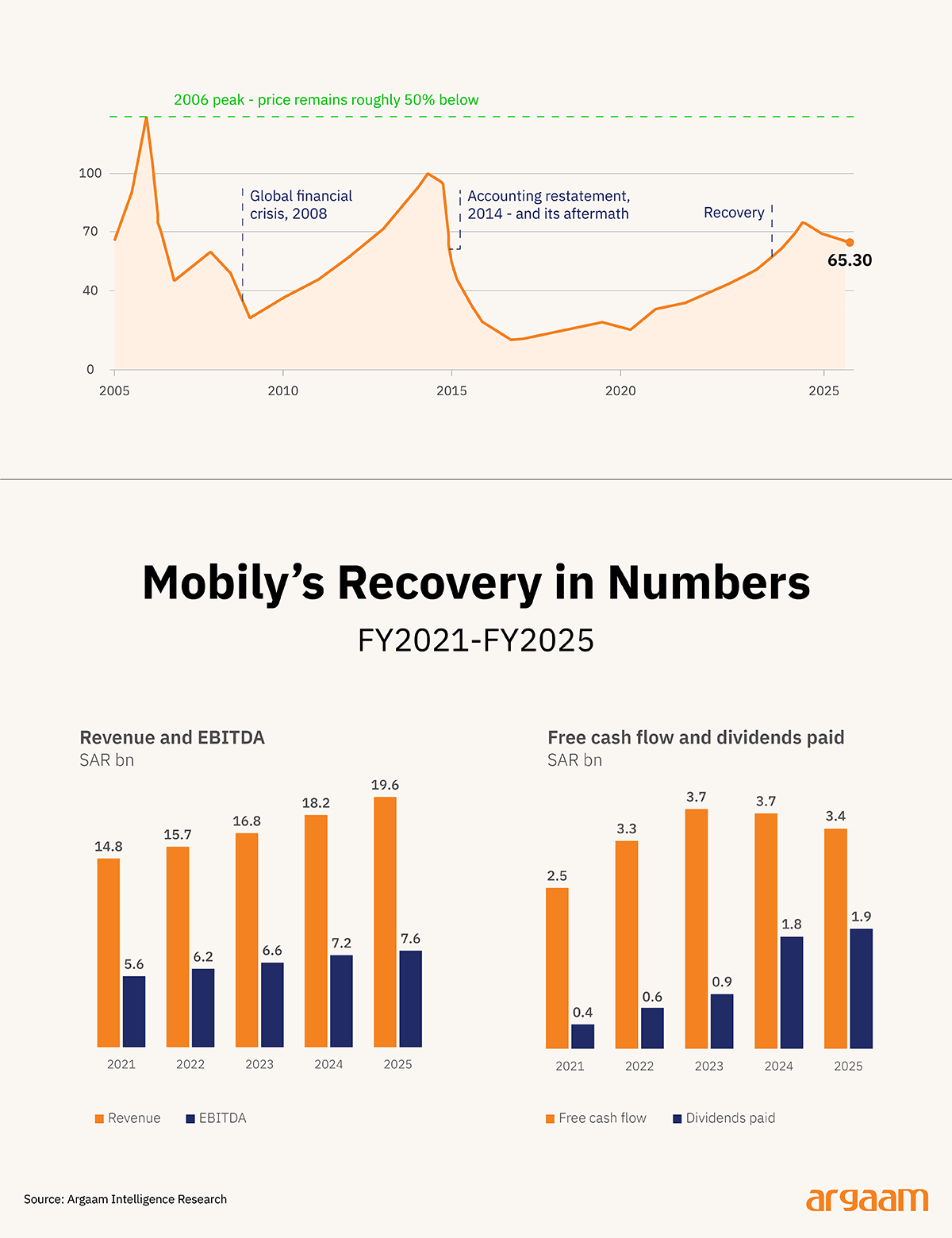
Over five years, Mobily has more than doubled its return on equity, expanded margins, grown faster than its peers, and cut leverage to a fraction of theirs. On the metrics that define telecom quality, it now leads the Saudi market.
The multiple has not followed. It has sat in a 7–8x EV/EBITDA band throughout, never approaching stc's premium, let alone closing on it. Fundamentals transformed; the discount intact.
Which raises the question the whole study circles back to: why does this market decline to re-rate an operator that has, by almost every measure, earned it? Our full analysis sets out the answer.
|